
Kitchen Respray for Eco Homes: Complete Guide UK
Every year, thousands of british homeowners seek ways to update their kitchens without adding to landfill waste. The truth is that kitchen renovations can generate up to 70 percent more waste when cabinets are replaced instead of resprayed. Choosing a kitchen respray makes it possible to refresh your home’s look and feel while reducing your carbon footprint and saving money. This guide shows how sustainable kitchen respraying benefits both the planet and your budget.
Table of Contents
- Defining Kitchen Respray For Eco Homes
- Types Of Eco-Friendly Kitchen Resprays
- Process Of In-Situ Kitchen Respraying
- Eco Benefits And Environmental Impact
- Costs, Savings, And Uk Legal Requirements
Key Takeaways
| Point | Details |
|---|---|
| Sustainable Home Improvement | Kitchen respraying minimises waste and conserves materials, making it an eco-friendly alternative to traditional kitchen renovations. |
| Cost-Effective Solution | Kitchen respraying ranges from £1,500 to £2,500, significantly cheaper than full kitchen replacements that can exceed £10,000. |
| Minimal Disruption | The in-situ process allows homeowners to continue using their kitchens during the renovation, with projects typically completed in 2-3 days. |
| Compliance with Regulations | Homeowners must adhere to UK legal requirements regarding low-VOC paint use and building regulations when undertaking kitchen respraying. |
Defining Kitchen Respray for Eco Homes
A kitchen respray represents an innovative and sustainable home improvement technique that transforms existing kitchen units without complete replacement. According to SprayWorks UK, this process involves refurbishing kitchen surfaces by applying professional paint coatings, offering an environmentally conscious alternative to traditional kitchen renovations.
The core principle of kitchen respraying revolves around material conservation and waste reduction. Instead of discarding entire kitchen units, homeowners can refresh their kitchen’s appearance by professionally repainting existing surfaces. This approach significantly minimises environmental impact by:
- Reducing construction waste
- Preventing unnecessary material disposal
- Conserving manufacturing resources
- Extending the lifecycle of existing kitchen infrastructure
Professional kitchen respraying involves meticulous surface preparation, precise paint application, and specialist techniques that deliver a factory-like finish. Trained technicians carefully clean, sand, prime, and coat kitchen units using high-quality, durable paint systems that can dramatically transform the aesthetic without structural replacement. By choosing a respray, eco-conscious homeowners can achieve a fresh kitchen look while demonstrating a commitment to sustainable home improvements.
Learn more about our approach in our guide to kitchen respray best practices, which provides comprehensive insights into this innovative home renovation method.
Types of Eco-Friendly Kitchen Resprays
Eco-friendly kitchen resprays offer homeowners a sustainable approach to kitchen transformation, focusing on minimising environmental impact while delivering stunning visual results. SprayWorks UK highlights that these innovative coating solutions utilize low-VOC (volatile organic compounds) paints and sustainable materials, ensuring a responsible renovation process.
The primary eco-friendly kitchen respray types include:
- Water-Based Acrylic Resprays: Extremely low chemical emissions
- Ceramic-Infused Coating Systems: Enhanced durability with minimal environmental footprint
- Recycled Material Paint Technologies: Leveraging sustainable manufacturing practices
- Biodegradable Paint Solutions: Environmentally conscious coating options
Professional eco-friendly kitchen resprays provide multiple finish options that cater to different aesthetic preferences while maintaining environmental integrity.
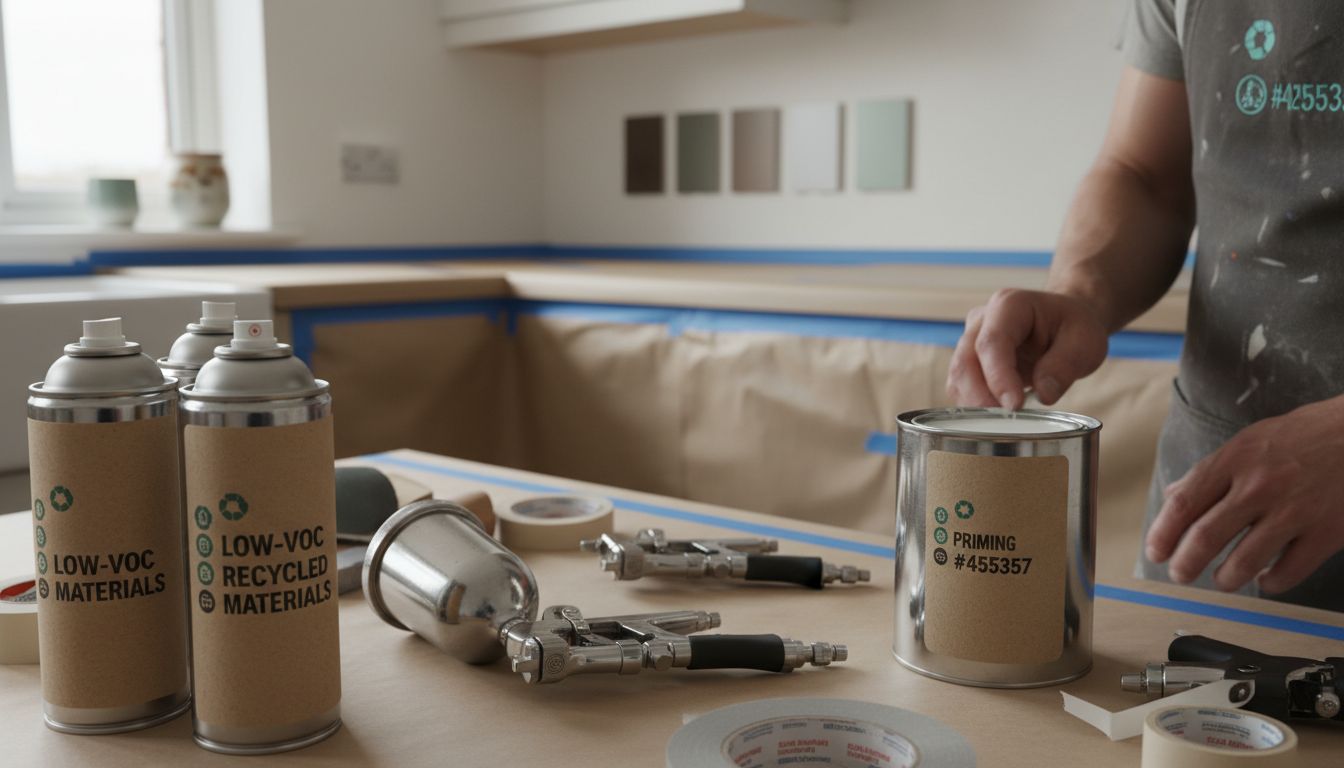 Homeowners can choose from:
- Matte finishes for subtle, contemporary looks
- Satin finishes offering gentle light reflection
- High-gloss finishes creating vibrant, modern appearances
For comprehensive insights into selecting the right eco-friendly kitchen respray technique, check out our guide to kitchen painting techniques, which explores the nuanced differences between various application methods.
Process of In-Situ Kitchen Respraying
In-situ kitchen respraying represents a transformative renovation technique that allows homeowners to refresh their kitchen without extensive disruption. SprayWorks UK explains that this process is designed to be quick and efficient, typically completing the entire transformation in a fraction of the time required for traditional kitchen renovations.
The comprehensive in-situ kitchen respraying process involves several critical stages:
- Comprehensive Surface Preparation
- Thorough cleaning of existing kitchen units
- Detailed inspection for structural integrity
- Removal of hardware and accessories
- Careful masking of surrounding areas
- Surface Restoration
- Precision sanding to create optimal paint adhesion
- Repairing minor damages or imperfections
- Applying specialist primer for long-lasting finish
- Professional Coating Application
- Using specialized spray equipment
- Applying multiple thin, even layers
- Ensuring consistent color and texture
- Maintaining minimal environmental disruption
One significant advantage of in-situ kitchen respraying is the ability to continue using your kitchen during most of the renovation process. Homeowners can expect minimal downtime, with most projects completed within 2-3 days, depending on kitchen size and complexity.
For additional insights into kitchen transformation techniques, explore our guide to kitchen respray for property developers, which offers professional perspectives on renovation strategies.
Eco Benefits and Environmental Impact
Kitchen respraying emerges as a powerful sustainable home improvement strategy that directly addresses environmental conservation challenges. SprayWorks UK highlights that this process significantly reduces waste and minimizes the carbon footprint associated with traditional kitchen renovations, offering homeowners an eco-conscious alternative to complete unit replacement.
The environmental benefits of kitchen respraying can be quantified through several key dimensions:
- Waste Reduction: Preventing entire kitchen units from entering landfill systems
- Resource Conservation: Eliminating manufacturing demands for new cabinetry
- Energy Savings: Reducing manufacturing and transportation emissions
- Material Preservation: Extending the lifecycle of existing kitchen infrastructure
Carbon footprint calculations reveal compelling insights into the environmental advantages. A typical kitchen respray can reduce renovation-related carbon emissions by up to 70% compared to complete kitchen replacements.
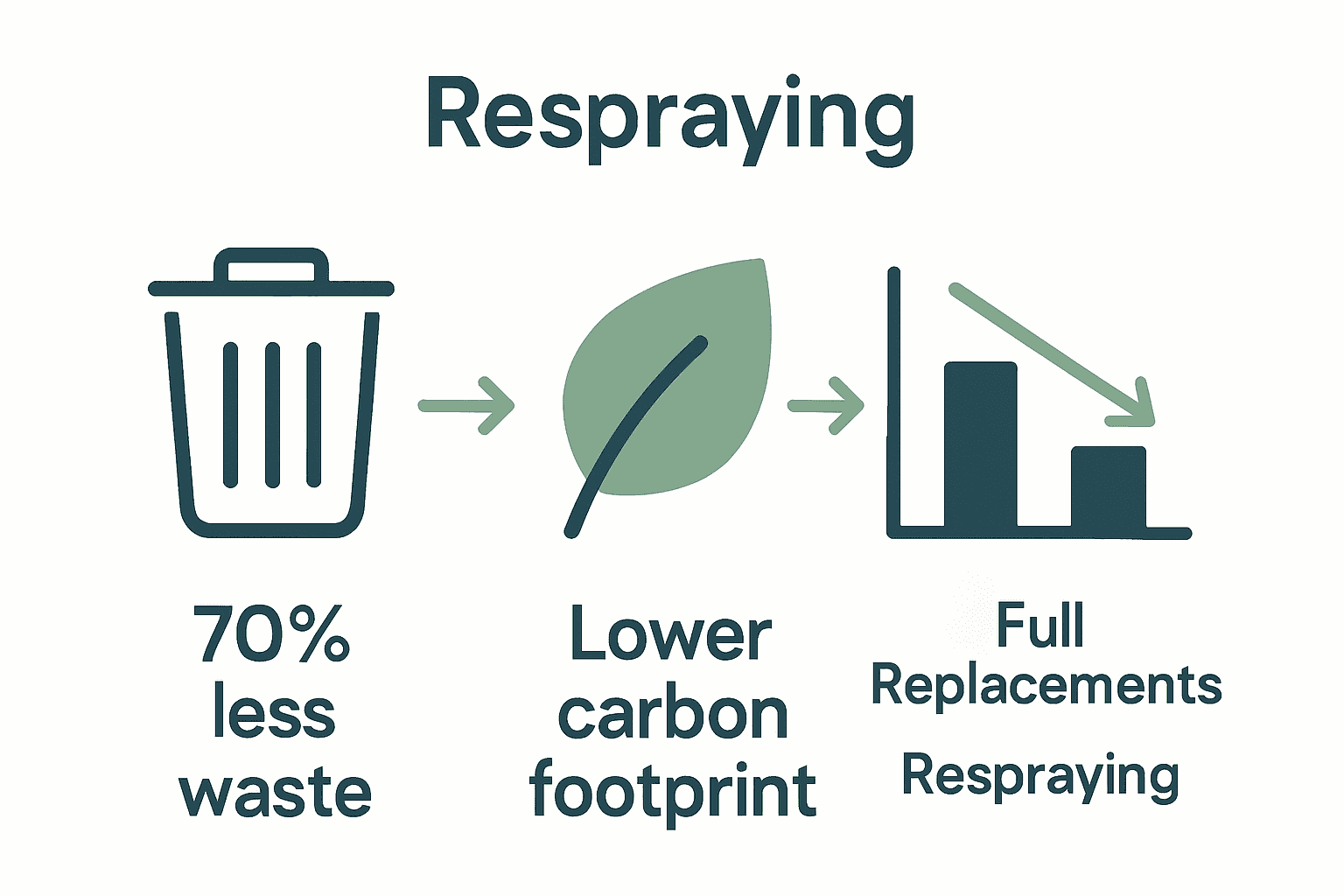 This approach not only preserves existing materials but also minimizes the extensive energy consumption required for manufacturing, transporting, and installing new kitchen units.
Homeowners committed to sustainable living can leverage kitchen respraying as a practical method of reducing their environmental impact. By choosing professional respray services, individuals directly contribute to circular economy principles, demonstrating that aesthetic improvements and environmental responsibility can coexist seamlessly.
To explore more about sustainable kitchen renovation techniques, check out our guide to kitchen respray best practices, which provides comprehensive insights into eco-friendly home improvement strategies.
Costs, Savings, and UK Legal Requirements
Kitchen respraying represents a financially strategic home improvement option that balances cost-effectiveness with aesthetic transformation. Furniture Revolution reports that UK homeowners can expect kitchen respray costs ranging from £1,500 to £2,500, which is substantially more economical compared to full kitchen replacements that can exceed £10,000.
Cost breakdown and potential savings include:
-
Direct Cost Comparison
- Kitchen Respray: £1,500 – £2,500
- Full Kitchen Replacement: £8,000 – £15,000
- Potential Savings: Up to 80%
-
Additional Financial Benefits
- Minimal disruption to home
- Reduced labour costs
- No extensive renovation requirements
- Faster project completion
UK legal requirements for kitchen respraying primarily focus on ensuring safe material usage and adherence to building regulations. Homeowners must consider:
-
Paint Material Compliance
- Low-VOC paint regulations
- Environmental protection standards
- Health and safety guidelines
-
Property Modification Considerations
- Building regulation permissions
- Potential listed building restrictions
- Insurance and warranty implications
For comprehensive insights into navigating kitchen respray regulations, explore our kitchen respray regulations guide, which provides detailed legal frameworks for UK homeowners.
Refresh Your Eco Home Kitchen with Professional Respraying
Are you ready to transform your kitchen while protecting the planet and your budget A kitchen respray offers an effective solution to refresh existing units without full replacement This method directly tackles challenges like waste reduction, carbon footprint minimisation and budget constraints by applying durable low-VOC coatings that last long and look stunning Discover how you can achieve a fresh, modern kitchen finish that aligns with sustainable living goals by exploring expert advice in our Uncategorized Archives – WordPress section

Take the next step today with our professional in-situ kitchen respray services at SKR Specialists We handle every aspect from surface preparation to final coating with precision and care Ensuring minimal disruption means you can enjoy your renewed kitchen faster while contributing to environmental preservation Visit our main page to learn more and start your eco-friendly kitchen transformation now
Frequently Asked Questions
What is a kitchen respray?
A kitchen respray is a sustainable home improvement technique that involves refurbishing existing kitchen units by applying professional paint coatings instead of replacing them entirely.
What types of eco-friendly kitchen resprays are available?
Eco-friendly kitchen resprays include water-based acrylic resprays, ceramic-infused coating systems, recycled material paint technologies, and biodegradable paint solutions, all designed to minimise environmental impact.
How long does the kitchen respraying process take?
The in-situ kitchen respraying process is typically quick, often completed within 2-3 days, allowing homeowners to continue using their kitchen with minimal disruption during the renovation.
What are the environmental benefits of kitchen respraying?
Kitchen respraying significantly reduces waste, conserves resources, lowers carbon emissions associated with manufacturing new units, and extends the lifecycle of existing kitchen materials.