
Why Avoid DIY Kitchen Spraying: Complete Guide UK
Most british homeowners looking to refresh their kitchens are surprised by how complex kitchen spraying can be. While saving money is tempting, over 80 percent of DIY projects end up with uneven finishes or costly do-overs. Understanding what truly goes into kitchen spraying matters if you want lasting results that look professional. This guide unpacks what DIY kitchen spraying really involves and highlights what sets expert finishes apart from amateur attempts.
Table of Contents
- Defining DIY Kitchen Spraying In The UK
- Common Misconceptions And Pitfalls
- Hidden Risks And Health Hazards
- Cost Analysis: DIY Vs Professional Service
- Professional Standards And Lasting Results
Key Takeaways
| Point | Details |
|---|---|
| DIY kitchen spraying requires extensive preparation | Success hinges on thorough cleaning, sanding, and appropriate paint selection to ensure adhesion and a professional finish. |
| Professional services deliver superior results | Experts utilise specialised equipment and techniques, providing consistent quality that surpasses amateur attempts. |
| Cost of DIY can exceed professional services | Initial savings can be misleading, as hidden costs often arise from mistakes and equipment purchases, making professional options more economical in the long run. |
| Health hazards are significant | DIY kitchen spraying can release toxic fumes and pose health risks, particularly in poorly ventilated spaces, necessitating careful consideration of safety measures. |
Defining DIY Kitchen Spraying in the UK
DIY kitchen spraying is a home improvement technique where homeowners attempt to refresh their kitchen cabinets and surfaces by applying paint using specialised equipment like high-volume low-pressure (HVLP) paint sprayers. This method involves applying paint directly onto existing kitchen surfaces to transform their appearance without complete replacement.
The process requires comprehensive surface preparation, which many DIY enthusiasts underestimate. Proper preparation involves thorough cleaning, extensive sanding, repairing surface imperfections, and ensuring optimal paint adhesion. Professional kitchen painting experts recommend meticulous surface preparation to achieve a smooth, durable finish that looks professional and withstands daily kitchen wear and tear.
Typically, DIY kitchen spraying involves several critical steps that demand significant technical skill and precision:
- Detailed surface cleaning and degreasing
- Comprehensive surface sanding and priming
- Selecting appropriate paint types for kitchen environments
- Using specialist spray equipment correctly
- Maintaining consistent spray techniques and paint application
While the prospect of saving money might seem appealing, DIY kitchen spraying presents numerous challenges that can lead to substandard results. Professional kitchen respray services possess specialised equipment, technical expertise, and refined techniques that consistently deliver superior finishes compared to amateur attempts.
Common Misconceptions and Pitfalls
Homeowners often harbour misconceptions about DIY kitchen spraying, believing it to be a simple and straightforward home improvement task. Common DIY painting mistakes reveal that amateur painters frequently underestimate the technical skills and precision required to achieve a professional finish.
One prevalent misconception is that kitchen spraying can be completed quickly without extensive preparation. In reality, proper surface preparation is critical and involves multiple intricate steps. DIY enthusiasts frequently make errors such as:
- Insufficient surface cleaning and degreasing
- Neglecting proper sanding techniques
- Using inappropriate paint types for kitchen environments
- Applying inconsistent paint layers
- Failing to protect surrounding areas from overspray
Another significant pitfall is the technical complexity of spray equipment. Inaccurate equipment handling can lead to uneven paint distribution, drips, and unsightly finishes. Professional kitchen respray services understand the nuanced techniques required to achieve smooth, consistent coverage across various surface materials and cabinet configurations.
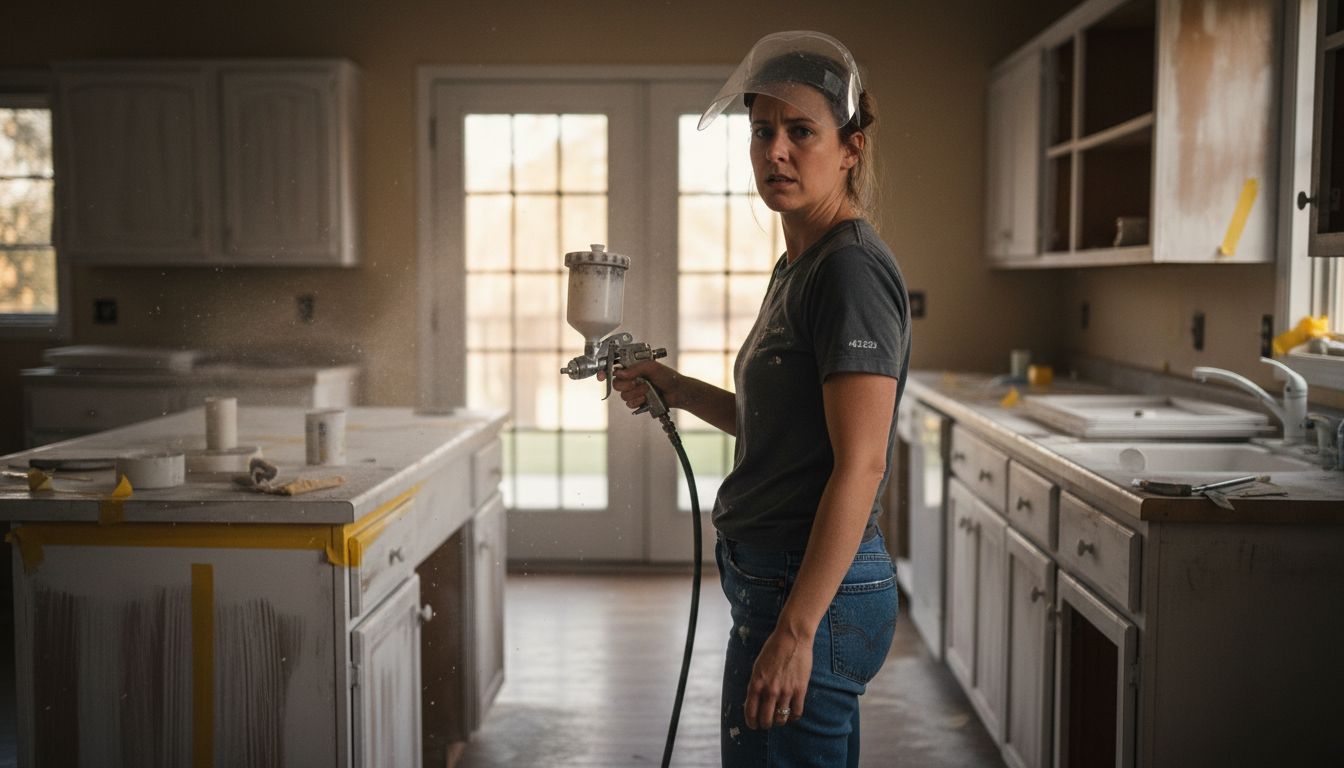
Ultimately, while DIY kitchen spraying might seem cost-effective, the potential for costly mistakes and subpar results often outweighs any initial savings. Professionals possess the specialised knowledge, equipment, and techniques to transform kitchen surfaces with precision and durability that amateur attempts rarely achieve.
Hidden Risks and Health Hazards
DIY kitchen spraying presents significant health and safety challenges that many homeowners overlook. Household chemical interactions can produce toxic fumes that pose serious risks to personal health, particularly in enclosed kitchen spaces with limited ventilation.
The primary health hazards associated with DIY kitchen spraying stem from multiple factors:
- Exposure to volatile organic compounds (VOCs) in paint
- Potential respiratory irritants from spray equipment
- Risk of chemical splashes and skin contact
- Inadequate personal protective equipment
- Improper handling of chemical-based painting materials
Airborne chemical releases can significantly impact individuals with respiratory sensitivities, such as asthma or allergies. Professional kitchen respray services understand these risks and employ specialised techniques to minimise chemical exposure. They utilise advanced respiratory protection, precise application methods, and industrial-grade ventilation to protect both workers and homeowners.
Beyond immediate health concerns, improper DIY kitchen spraying can create long-term environmental risks. Incorrect paint disposal, chemical spillage, and inappropriate surface preparation can lead to contamination of kitchen surfaces, potentially compromising food safety and creating lasting health implications for household residents.
Cost Analysis: DIY vs Professional Service
Kitchen respray costs reveal a stark contrast between DIY and professional approaches that extends far beyond initial monetary investment. While homeowners might be tempted by the apparent savings of a do-it-yourself project, the true financial implications are significantly more complex.
Initial cost comparisons demonstrate a dramatic difference:
- DIY approach: Approximately £200 for materials and basic equipment
- Professional service: Typically starting around £1,400
- Hidden DIY costs include:
- Potential equipment purchases
- Replacement materials for mistakes
- Time investment
- Additional protective gear
- Potential surface repair or complete redecoration
Professional kitchen respraying services offer comprehensive value that transcends the initial price tag. Their expertise ensures precise application, uses high-grade equipment, and provides warranties that protect your investment. Amateur attempts frequently result in uneven finishes, requiring complete do-overs that can ultimately cost substantially more than professional services.
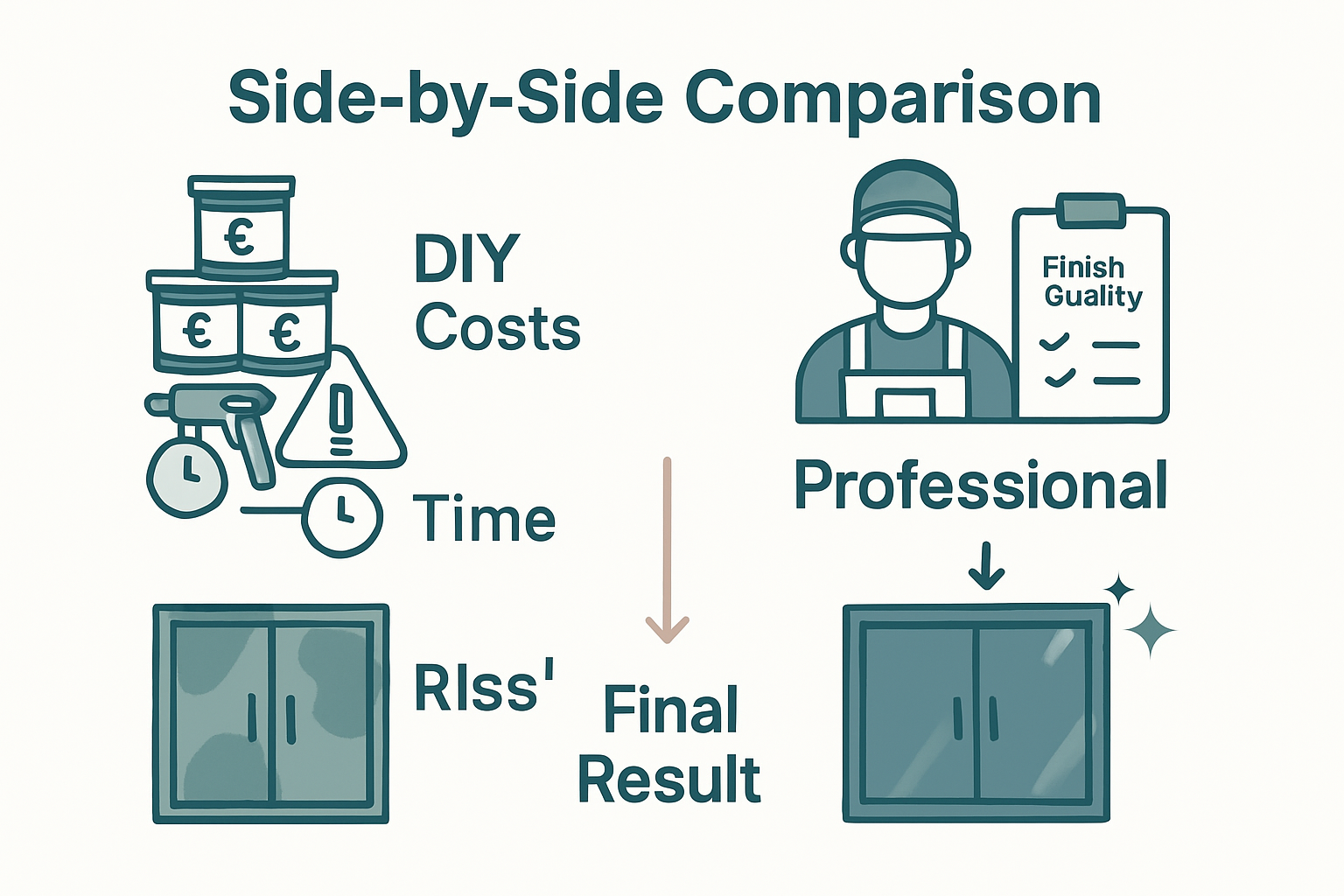
Ultimately, while the upfront cost of professional kitchen respraying might seem intimidating, the long-term financial and aesthetic benefits far outweigh the short-term savings of a DIY approach. Professionals bring specialised skills, superior materials, and guaranteed results that protect your kitchen’s appearance and value.
Professional Standards and Lasting Results
Kitchen spray coating professionals employ rigorous standards that distinguish their work from amateur attempts. These experts utilise sophisticated techniques that ensure comprehensive surface preparation, precise application, and exceptional durability far beyond what DIY methods can achieve.
The hallmarks of professional kitchen respraying include:
- Comprehensive surface assessment and preparation
- Specialised industrial-grade equipment
- Precise colour matching technologies
- Advanced paint application techniques
- Multi-layered protective coating processes
- Systematic quality control measures
Professional kitchen painting techniques involve meticulous processes that guarantee long-lasting aesthetic and functional results. Professionals understand substrate requirements, use premium materials, and apply specialist techniques that create a finish resistant to daily kitchen wear, moisture, and temperature variations. Their approach considers factors like surface material, existing finish, and environmental conditions to deliver a transformative yet durable solution.
Beyond immediate visual appeal, professional kitchen respraying represents an investment in your property’s long-term value. The precision, expertise, and advanced methodologies employed ensure that kitchen surfaces maintain their pristine appearance, resist degradation, and continue looking professionally finished for years after application.
Choose Professional Kitchen Respraying for Flawless Results
Taking on DIY kitchen spraying might seem tempting but it often leads to costly mistakes and health risks as highlighted in the article. The challenges of thorough surface preparation, handling specialised spray equipment, and avoiding harmful chemical exposure are significant hurdles for any homeowner. You deserve a kitchen finish that not only looks impeccable but lasts through daily use without compromise.
Discover expert insights in our Uncategorized Archives and see how our professional kitchen respray service delivers superior quality with precision and safety.

Transform your kitchen confidently by choosing the experts who respray kitchens in-situ, ensuring minimal disruption and outstanding durability. Visit us at SKR Specialists today to secure a free consultation and protect your home investment with a flawless professional finish.
Frequently Asked Questions
What is DIY kitchen spraying?
DIY kitchen spraying is a home improvement technique where homeowners use specialised equipment to paint kitchen cabinets and surfaces, aiming to refresh their appearance without a full replacement.
What are the main challenges of DIY kitchen spraying?
The main challenges include inadequate surface preparation, improper use of spray equipment, and the risk of uneven paint application, which often leads to disappointing results compared to professional finishes.
What are the health risks associated with DIY kitchen spraying?
Health risks include exposure to volatile organic compounds (VOCs) in paint, potential respiratory irritants from aerosolised paint, skin contact with chemicals, and inadequate protection without the proper personal protective equipment.
How do the costs of DIY kitchen spraying compare to professional services?
While DIY kitchen spraying may seem cheaper at around £200 for materials, hidden costs such as equipment, replacement materials, and possible redo expenses can make it more expensive than hiring professional services, which typically start at around £1,400.