
On-site Kitchen Respray: Cost-effective Kitchen Renewal
Most British homeowners are surprised to learn that an on-site kitchen respray can cost as little as 25 percent of a full kitchen renovation. With busy families across the United Kingdom looking for ways to refresh their homes without weeks of mess or massive bills, this innovative process is quickly changing the way kitchens are updated. Discover how this approach gives British kitchens a factory-fresh look in just days, while keeping disruption to your daily routine to a minimum.
Table of Contents
- What Is On-site Kitchen Respray?
- How The Respray Process Works In-situ
- Types Of Kitchens And Surfaces Suitable
- Costs, Timescales, And Value For Money
- Risks, Maintenance, And What To Avoid
Key Takeaways
| Point | Details |
|---|---|
| On-site Kitchen Respray | A cost-effective method to refresh kitchen surfaces without complete renovations, minimising disruption. |
| Surface Compatibility | Melamine, solid wood, and laminate are ideal for respraying; professional assessment ensures suitability. |
| Efficiency and Value | Resprays typically take 2-5 days, with costs around £3,500, significantly cheaper than full replacements. |
| Maintenance and Care | Proper cleaning techniques are essential to maintain the finish; avoid harsh chemicals and abrasive materials. |
What Is On-site Kitchen Respray?
An on-site kitchen respray represents an innovative home improvement technique that transforms existing kitchen surfaces without complex removal processes. This professional painting method allows homeowners to refresh kitchen aesthetics efficiently and cost-effectively, breathing new life into tired kitchen spaces.
The core principle of an on-site kitchen respray involves professionally repainting kitchen cabinets, worktops, and other surfaces directly where they are installed. Unlike traditional kitchen renovations that require complete dismantling, this approach minimises disruption and keeps the existing kitchen infrastructure intact. Skilled technicians use specialised paint and application techniques to create a smooth, durable finish that looks virtually indistinguishable from a brand-new installation.
Key advantages of an on-site kitchen respray include significant cost savings compared to full kitchen replacements, dramatically reduced project timelines, and minimal household disruption. Homeowners can expect transformative results within days rather than weeks, with professional respraying techniques delivering a factory-like finish. The process works exceptionally well for kitchens with structurally sound cabinets that simply need aesthetic rejuvenation.
Pro Tip – Surface Selection: Always ensure your kitchen surfaces are suitable for respraying by consulting professionals who can assess material compatibility and provide tailored recommendations for optimal results.
How The Respray Process Works In-situ
The in-situ kitchen respray process is a meticulous, professional technique designed to transform kitchen surfaces without extensive renovation. Kitchen transformation techniques involve carefully preparing, cleaning, and refinishing existing cabinetry and surfaces directly within the kitchen space, minimising disruption and maximising efficiency.
Typically, the process begins with comprehensive surface preparation. Skilled technicians thoroughly clean and degrease all surfaces, carefully sanding and repairing any imperfections to ensure a smooth base for painting. They use specialist masking techniques to protect surrounding areas like worktops, appliances, and flooring, creating a controlled workspace that prevents accidental paint spread or damage.
The actual respraying involves using high-grade, durable paint specifically formulated for kitchen environments. Professional spraying equipment allows for an ultra-smooth, factory-like finish that traditional brush or roller methods cannot achieve. Technicians apply multiple thin layers of paint, allowing precise drying time between coats to create a robust, long-lasting surface that resists chipping, peeling, and general wear.
Pro Tip – Surface Preparation: Always ensure thorough surface cleaning and light sanding before respraying to guarantee optimal paint adhesion and a flawless final finish.
Types Of Kitchens And Surfaces Suitable
Not every kitchen surface is identical, which means understanding surface compatibility is crucial for successful respraying. Kitchen spray finishes vary significantly depending on the underlying material, with some surfaces being more receptive to professional respraying techniques than others.
Melamine, wooden, and laminate kitchen cabinets are typically the most suitable candidates for in-situ respraying. Melamine surfaces offer excellent paint adhesion when properly prepared, while solid wooden cabinets provide a robust base that can be transformed dramatically. Laminate surfaces require specialised preparation, including thorough degreasing and precise sanding to ensure the new paint bonds effectively. PVC and vinyl-wrapped kitchen units can also be successfully resprayed, though they demand meticulous surface treatment to achieve optimal results.
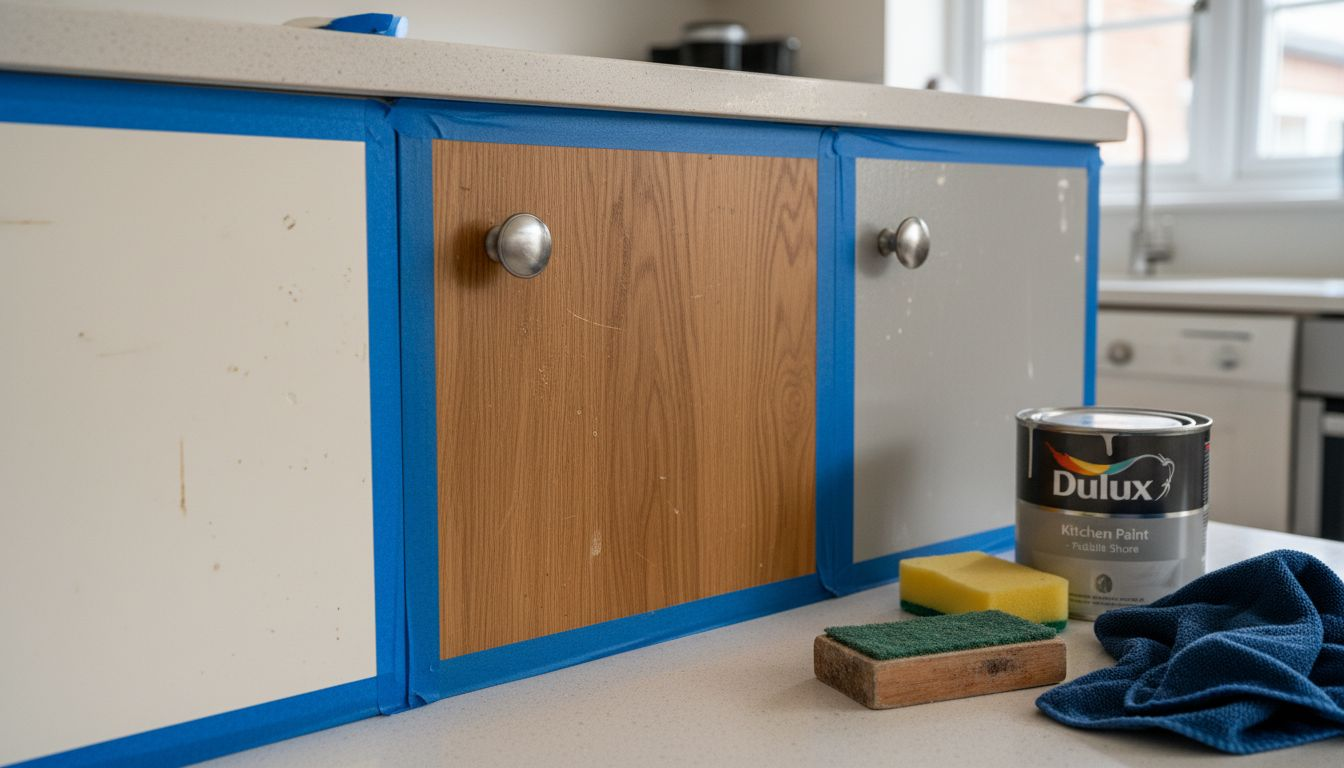
Some surfaces present more challenges and might require additional assessment before respraying. Heavily damaged wooden surfaces with extensive wear, cabinets with significant structural damage, or units with multiple layers of existing paint may need repair or replacement. Stainless steel and metal surfaces can be resprayed, but they demand specific primers and techniques to guarantee paint durability. Ceramic tiles and glass splashbacks can also be successfully transformed, provided technicians use appropriate specialist paints designed for these materials.
Pro Tip – Surface Assessment: Arrange a professional consultation to evaluate your specific kitchen surfaces, ensuring you receive tailored advice about their suitability for respray and potential preparation requirements.
The table below highlights the compatibility and requirements for various kitchen surface types when considering respraying:
| Surface Type | Compatibility | Key Preparation Step | Special Consideration |
|---|---|---|---|
| Melamine | Highly suitable | Degreasing and light sanding | Excellent adhesion when cleaned |
| Laminate | Suitable | Intensive sanding required | Needs primer for best results |
| Solid Wood | Highly suitable | Repair any damage, sand evenly | Avoid over-saturated wood |
| PVC/Vinyl-wrapped | Suitable with care | Gentle sanding, strong adhesion | Risk of peeling if not prepped |
| Stainless Steel | Possible, less common | Use bonding primer, degrease well | Specialist paint essential |
| Ceramic/Glass | Possible, specialist | Abrasive sanding, special paint | Durable finish depends on paint |
Costs, Timescales, And Value For Money
Kitchen resprays represent a financially savvy alternative to complete kitchen renovations, with costs significantly lower than full replacements. Kitchen respray costs typically start around £3,500, depending on kitchen size, complexity, and specific surface requirements, offering homeowners a budget-friendly transformation option.
The time investment for a professional kitchen respray is remarkably efficient compared to traditional renovation methods. Most projects can be completed within 2-3 days, minimising household disruption and allowing families to return to normal routines quickly. Factors influencing project duration include kitchen size, surface complexity, number of cabinets, and the specific preparation work required. Larger kitchens or those with intricate details might extend to 4-5 days, but this remains substantially quicker than weeks-long full kitchen replacement projects.
Value for money becomes particularly compelling when comparing respray costs against complete kitchen renovation. While a full kitchen replacement can easily exceed £15,000, a professional respray delivers a dramatic aesthetic transformation at approximately 20-25% of that cost. The process not only saves significant financial resources but also preserves existing kitchen infrastructure, reduces waste, and provides a factory-fresh finish that can extend the perceived life of your kitchen by 10-15 years. Additional benefits include minimal disruption, reduced environmental impact, and the ability to dramatically change colour and style without structural modifications.
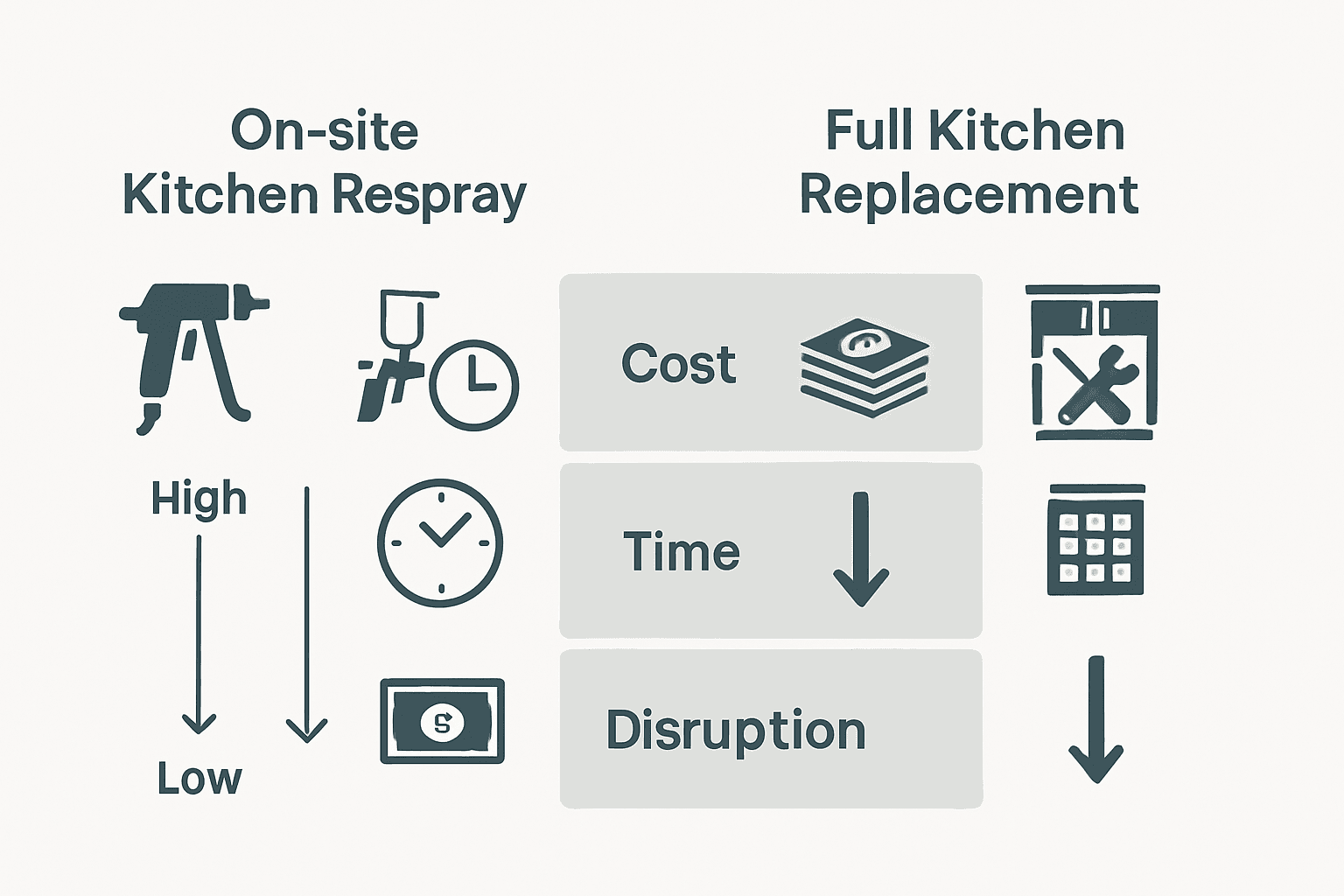
Here is a quick comparison of common kitchen renovation options versus on-site kitchen respraying:
| Aspect | On-site Kitchen Respray | Full Kitchen Replacement |
|---|---|---|
| Cost | £3,500 to £5,000 typical | Over £15,000 commonly |
| Duration | 2–5 days | 3–6 weeks |
| Household Disruption | Minimal, kitchen usable soon | Major, kitchen out of action |
| Environmental Impact | Low waste, surfaces reused | High waste, replaces old |
| Finish Longevity | 10–15 years | 15–20 years |
Pro Tip – Cost Comparison: Always request detailed quotes from multiple professionals, comparing not just total cost but also included preparation, materials, and warranty provisions to ensure comprehensive value assessment.
Risks, Maintenance, And What To Avoid
While kitchen respraying offers tremendous benefits, understanding potential risks and maintenance requirements is crucial for long-term satisfaction. Kitchen respray techniques demand careful consideration to prevent common pitfalls that could compromise your investment.
Several critical risks can arise from improper respraying or selecting unqualified professionals. Poor surface preparation might result in paint peeling, chipping, or uneven coverage, which can occur when technicians rush the process or use inappropriate materials. Moisture-rich environments like kitchens require specialist paint systems that resist humidity, grease, and temperature fluctuations. Homeowners should be wary of providers offering significantly cheaper rates, as this often indicates compromised preparation techniques or inferior paint quality that will deteriorate rapidly.
Maintenance plays a pivotal role in preserving your resprayed kitchen’s appearance and durability. Avoid abrasive cleaning materials that can scratch the new surface, opting instead for soft microfibre cloths and gentle, non-acidic cleaning solutions. Harsh chemicals, scouring pads, and aggressive cleaning techniques can compromise the paint’s integrity, leading to premature wear. Regular gentle cleaning, immediate wiping of spills, and avoiding direct impact will help maintain the finish’s pristine appearance. Additionally, extreme temperature variations, prolonged direct sunlight exposure, and significant humidity can potentially impact the respray’s longevity.
Pro Tip – Professional Selection: Always verify a respraying professional’s credentials, request comprehensive portfolios demonstrating previous work, and seek detailed warranties that cover potential paint performance issues.
Refresh Your Kitchen with Expert On-site Respraying
Are you facing the challenge of ageing kitchen surfaces that look tired but dread the upheaval and cost of a full renovation The article highlights how an on-site kitchen respray offers an efficient and cost-effective solution with minimal disruption and a factory-like finish. If your goal is to transform your kitchen quickly while saving money and extending its lifespan by up to 15 years then our professional respray service is the perfect choice. We specialise in in-situ kitchen respraying tailored to many surface types such as melamine, laminate and solid wood ensuring a flawless, durable upgrade.

Discover how to achieve a stunning kitchen transformation without the usual hassle by exploring our expert insights in the Uncategorized Archives – WordPress. Ready to revitalise your kitchen today Trust our skilled technicians to deliver exceptional results that enhance your home’s appeal and value. Contact us now through our website https://skrspecialists.co.uk for a consultation and personalised quote to start your cost-effective kitchen renewal journey. Learn more about how our proven process can bring your dream kitchen to life at skrspecialists.co.uk.
Frequently Asked Questions
What is an on-site kitchen respray?
An on-site kitchen respray is a professional painting technique that allows homeowners to refresh existing kitchen surfaces, such as cabinets and worktops, without the need for complete removal or renovation. It effectively transforms the kitchen’s aesthetic while saving time and costs.
How long does the kitchen respray process take?
Typically, most kitchen respray projects can be completed within 2 to 5 days, depending on the size and complexity of the kitchen. This is significantly quicker than traditional kitchen renovations, which can take several weeks.
What types of surfaces are suitable for respraying?
Suitable surfaces for kitchen respraying include melamine, solid wood, laminate, PVC, and vinyl-wrapped cabinets. It’s essential to consult with professionals to ensure that your particular surface type is appropriate for the respraying process.
How do I maintain a resprayed kitchen?
To maintain a resprayed kitchen, avoid using abrasive cleaning materials and harsh chemicals that could damage the finish. Regular gentle cleaning with soft microfiber cloths and non-acidic cleaning solutions is recommended to preserve the appearance and longevity of the paint.