
Kitchen Transformations Explained: Affordable UK Respray Impact
Nearly 80 percent of British homeowners want to refresh their kitchens without enduring the stress or cost of a full renovation. For families across England, creating a stylish kitchen on a budget is no longer a far-fetched dream. Smart kitchen transformations make it possible to dramatically enhance your space using proven techniques like respraying, signature finishes, and strategic design upgrades. Discover which affordable British methods truly deliver a fresh, elegant look while protecting your finances.
Table of Contents
- Defining Kitchen Transformations And Common Myths
- Types Of Kitchen Respray Methods In Britain
- How Professional Kitchen Respraying Works
- Typical Costs And Financial Implications
- Risks, Limitations, And How To Avoid Mistakes
- Kitchen Resprays Compared With Full Renovation And Door Replacement
Key Takeaways
| Point | Details |
|---|---|
| Cost-Effective Transformation | Kitchen respraying is a significantly cheaper alternative to full renovations, typically costing between £600 to £2,500. |
| Strategic Respray Methods | Different surfaces require specific preparation and techniques, with methods ranging from lacquer-based sprays to advanced ceramic coatings. |
| Functional Improvements | Focus on ergonomic layouts and accessibility can greatly enhance both the aesthetic and practical aspects of kitchen transformations. |
| Professional Assistance Recommended | Engaging experienced respray specialists is crucial to avoid common pitfalls and ensure a high-quality finish. |
Defining Kitchen Transformations and Common Myths
Kitchen transformations represent strategic home improvements that dramatically alter living spaces without complete reconstruction. Unlike traditional renovations, these updates focus on reimagining existing structures through cost-effective methods like respraying, which can breathe new life into tired kitchen environments. Historical kitchen design approaches reveal that functional changes have always been central to domestic spaces, challenging the misconception that kitchen updates must be prohibitively expensive.
Common myths surrounding kitchen transformations often prevent homeowners from exploring innovative refresh strategies. Many believe substantial changes require total replacement of cabinetry, appliances, and surfaces. However, contemporary approaches demonstrate that strategic respray techniques can achieve remarkable aesthetic upgrades at a fraction of traditional renovation costs. Surface restoration emerges as a sophisticated alternative to complete overhauls, allowing families to modernise their cooking spaces without significant financial investment.
Understanding kitchen transformation involves recognising that improvements extend beyond mere visual changes. Community-focused design principles suggest that functional adaptations should prioritise accessibility, practicality, and personal style. Homeowners can transform kitchens by considering ergonomic layouts, colour psychology, and material durability – elements that contribute to both aesthetic appeal and practical utility.
Kitchen Update Pro Tip: Consider conducting a detailed assessment of your existing kitchen layout before initiating any transformation project, focusing on functional improvements that enhance both visual appeal and practical usability.
Types of Kitchen Respray Methods in Britain
Modern kitchen respray techniques in the United Kingdom offer homeowners diverse approaches for transforming existing spaces without complete renovation. Kitchen planning strategies reveal multiple techniques tailored to different surface materials and aesthetic requirements. These methods range from traditional spray painting to advanced ceramic coating applications, each designed to provide durable, high-quality finishes that breathe new life into tired kitchen environments.
The primary respray methods in British homes typically include lacquer-based techniques, specialised primer applications, and precision spray painting. Wooden cabinet resprays involve meticulous surface preparation, including thorough cleaning, sanding, and priming to ensure optimal paint adhesion. Ceramic coating represents a premium option, offering exceptional durability and a factory-like finish that withstands daily kitchen wear and tear. Professional technicians often employ specialist equipment to achieve smooth, uniform coverage across various kitchen surfaces.

Technical considerations play a crucial role in selecting appropriate respray methods. Different materials like laminate, wood, metal, and MDF require unique preparation techniques and specific paint formulations. Professionals assess surface condition, existing finish, and homeowner preferences to recommend the most suitable respray approach. Factors such as kitchen usage, lighting conditions, and desired colour palette significantly influence the selected transformation technique.
The table below summarises the key considerations for selecting a kitchen respray method in Britain:
| Material Type | Recommended Respray Technique | Durability Level | Colour Options |
|---|---|---|---|
| Wood | Lacquer-based spray | High | Extensive |
| Laminate | Specialised primer coating | Medium | Moderate |
| Metal | Precision spray painting | High | Limited |
| MDF | Primer and lacquer | Medium | Wide choice |
Respray Selection Pro Tip: Always request colour samples and finish demonstrations before committing to a complete kitchen respray to ensure the final result matches your aesthetic expectations.
How Professional Kitchen Respraying Works
Professional kitchen respraying represents a sophisticated transformation process that goes far beyond simple painting. Kitchen respray specialists employ a systematic approach combining technical expertise, specialised equipment, and precision techniques to deliver exceptional results. The process begins with comprehensive surface assessment, where professionals evaluate existing kitchen components, identifying potential challenges and determining the most appropriate restoration strategy.
The technical workflow involves multiple intricate stages designed to ensure superior finish and longevity. Surface preparation becomes critical, involving thorough cleaning, degreasing, and careful sanding to create an optimal base for paint application. Professionals use industrial-grade decontamination methods to remove years of accumulated grease, dirt, and previous finishes. Specialised primers are then applied to enhance paint adhesion, creating a smooth foundation that prevents chipping, peeling, and premature wear.
Advanced spray techniques distinguish professional respraying from amateur attempts. Technicians utilise high-efficiency spray equipment that delivers consistent, ultra-fine paint layers, ensuring uniform coverage and a factory-like finish. Compressed air spraying allows precise application across various surfaces, including wooden cabinetry, laminate, and metal fixtures. Colour matching technologies enable exact replication of desired shades, while advanced drying techniques guarantee rapid turnaround and minimal disruption to household routines.
Professional Respray Pro Tip: Always request a comprehensive consultation and detailed preparation plan before commissioning a kitchen respray to understand the full scope of the transformation process.
Typical Costs and Financial Implications
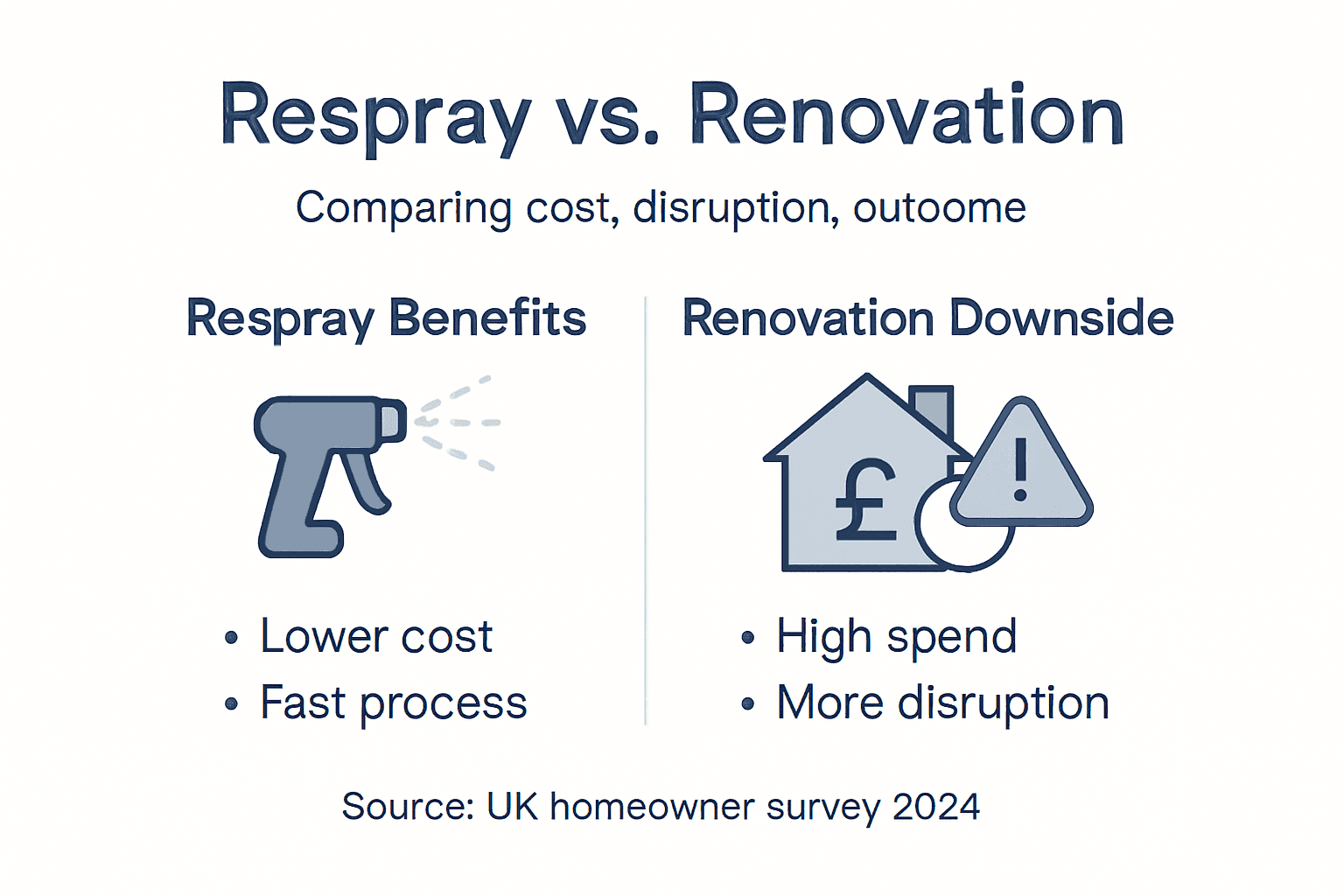
Kitchen respraying offers a remarkably cost-effective alternative to complete kitchen renovations, providing homeowners with significant financial advantages. Kitchen transformation techniques demonstrate that professional respraying can deliver dramatic aesthetic improvements at a fraction of traditional remodelling expenses. Typically, a full kitchen respray ranges between £600 to £2,500, depending on kitchen size, complexity, and current surface conditions, representing a substantial saving compared to full replacement costs that can easily exceed £10,000.
Cost breakdown becomes critical for homeowners considering this transformation strategy. Different surface materials influence pricing, with wooden kitchen units generally requiring more intricate preparation and potentially costing more than laminate surfaces. Factors such as the number of cabinet doors, additional fixtures, intricate design elements, and required colour complexity directly impact overall project expenses. Professional specialists typically charge between £40 to £70 per square metre, offering transparent pricing structures that help homeowners budget effectively.
Financial implications extend beyond immediate renovation costs, presenting long-term economic benefits. A professional respray can significantly increase property value, enhance aesthetic appeal, and protect underlying surfaces from deterioration. Homeowners can expect a potential return on investment of 70-80% through improved kitchen aesthetics, reduced maintenance requirements, and extended surface longevity. Compared to traditional renovation methods, respraying minimises disruption, reduces waste, and provides a sustainable approach to kitchen transformation.
Budget Planning Pro Tip: Request detailed quotes from multiple kitchen respray specialists, ensuring they provide comprehensive breakdown of preparation, materials, and labour costs to avoid unexpected financial surprises.
Risks, Limitations, and How to Avoid Mistakes
Kitchen respraying, while transformative, presents several potential risks that homeowners must carefully navigate. Kitchen renovation hazards encompass technical challenges and safety considerations that can significantly impact project success. Common risks include improper surface preparation, incompatible paint selection, inadequate ventilation, and potential damage to underlying surfaces if professional techniques are not meticulously applied.
Technical limitations represent another critical consideration for homeowners contemplating kitchen respraying. Not all surface materials respond equally well to respray treatments, with certain laminate, melamine, and heavily damaged surfaces potentially requiring complete replacement. Factors such as existing surface condition, previous paint layers, and material integrity directly influence the feasibility and long-term durability of the respray process. Professional assessment becomes crucial in determining whether respraying represents a viable renovation strategy or whether more extensive interventions are necessary.
Avoiding potential mistakes requires comprehensive understanding and strategic planning. Homeowners should prioritise professional consultation, requesting detailed surface assessments and comprehensive preparation strategies. Key recommendations include verifying specialist credentials, examining previous project portfolios, and understanding the specific chemical compositions and application techniques appropriate for individual kitchen environments. Potential pitfalls such as colour mismatches, uneven coverage, premature paint degradation, and surface contamination can be mitigated through careful selection of experienced, reputable kitchen respray specialists who demonstrate technical expertise and commitment to quality.
Risk Management Pro Tip: Invest time in thorough research and professional consultations, requesting detailed project portfolios and chemical compatibility assessments before committing to any kitchen respray transformation.
Kitchen Resprays Compared with Full Renovation and Door Replacement
Homeowners face multiple strategic options when considering kitchen improvements, each with distinct financial and practical implications. Building work regulations highlight the complexity of renovation choices, demonstrating that kitchen transformations are not one-size-fits-all solutions. Respraying emerges as a remarkably cost-effective alternative, offering aesthetic renewal at a fraction of traditional renovation expenses, typically requiring 10-20% of the investment needed for complete kitchen overhauls.
Comparative analysis reveals significant distinctions between respraying, door replacement, and full renovations. Door replacement represents an intermediate option, costing approximately 40-60% of a complete kitchen refit. This approach involves replacing cabinet doors and potentially updating hardware, providing a moderate visual refresh. Full renovations, conversely, demand comprehensive changes including structural modifications, electrical work, plumbing updates, and potentially relocating kitchen layouts, making them the most expensive and disruptive transformation strategy.
Each approach carries unique advantages and limitations. Respraying offers minimal disruption, rapid completion times, and exceptional cost-effectiveness, making it ideal for homeowners seeking aesthetic improvements without extensive structural changes. Door replacement provides a more substantial transformation than respraying while remaining more budget-friendly than complete renovations. Full kitchen renovations represent the most extensive option, allowing complete reimagining of space and functionality but requiring significant financial investment, longer project timelines, and potential regulatory compliance considerations.
This comparison highlights the practical impact of different kitchen transformation strategies:
| Approach | Typical Cost (UK) | Disruption Level | Visual Change | Recommended For |
|---|---|---|---|---|
| Respraying | £600 – £2,500 | Minimal | Strong | Quick refresh |
| Door Replacement | £4,000 – £6,000 | Moderate | Moderate | Mid-range update |
| Full Renovation | £10,000+ | Extensive | Complete | Major overhaul |
Renovation Strategy Pro Tip: Conduct a thorough assessment of your kitchen’s current condition, budget constraints, and long-term aesthetic goals before selecting your transformation approach, prioritising solutions that balance cost-effectiveness with desired visual impact.
Transform Your Kitchen with Expert Respraying Solutions
If you have read about the affordable and impactful kitchen transformations through professional respraying, it is clear that the main challenge lies in achieving a stunning update without the high costs and disruptions of a full renovation. Many homeowners want to refresh tired surfaces and enhance their kitchen’s visual appeal while keeping practical usability and durability in mind. Respraying offers a proven solution to these pain points by delivering factory-like finishes with minimal disruption and impressive longevity.
At SKR Specialists, we understand the importance of meticulous surface preparation, colour matching, and specialist application techniques discussed in the article. Our expertise in in-situ kitchen respraying means you do not have to endure long periods without your kitchen or face excessive costs. Choose from a range of finishes suited to wood, laminate, or MDF to create a refreshed space that reflects your personal style and budget. Discover how respraying stands apart from costly door replacements or full renovations in our Uncategorized Archives.

Ready to transform your kitchen affordably and efficiently while avoiding common renovation pitfalls? Visit our website at https://skrspecialists.co.uk today for a consultation and let us guide you through every step to achieve an outcome that exceeds your expectations.
Frequently Asked Questions
What are kitchen transformations?
Kitchen transformations are strategic home improvements that update and enhance existing kitchen spaces without complete reconstruction, often using cost-effective methods like respraying.
How much does a kitchen respray typically cost?
A full kitchen respray generally ranges between £600 to £2,500, depending on the size and complexity of the kitchen, making it a more affordable option compared to full renovations.
What is the difference between kitchen respraying and full renovations?
Kitchen respraying involves updating the existing surfaces for aesthetic improvement at a lower cost (10-20% of a full renovation cost), while full renovations require extensive changes, including structural and layout modifications.
What are common risks associated with kitchen respraying?
Common risks include improper surface preparation, incompatible paint selection, and potential damage to underlying surfaces if not executed expertly. It’s crucial to hire qualified professionals to mitigate these risks.
Recommended
- 7 Inspiring Kitchen Transformation Examples for UK Homes – WordPress
- Kitchen Facelift Explained: Cost-Effective Transformation UK – WordPress
- The Essential Guide to Kitchen Refurbishment – WordPress
- What Is Kitchen Cabinet Refinishing? Complete Overview – WordPress
- L.A. Story: A Budget Kitchen Makeover, DIY Countertop Hack Included | Shutter World