
What Is Degreasing and Why It Matters in Kitchens
Persistent grease buildup around cooker hoods and cabinets can quickly spoil the look of your kitchen and threaten hygiene. For homeowners across England aiming for flawless kitchen respraying, effective degreasing ensures surfaces stay clean, safe, and ready for a professional finish. Discover how comprehensive degreasing protects your kitchen from hidden grime, improves respraying results, and supports lasting food safety by removing contaminants before they become a problem.
Table of Contents
- Defining Degreasing In Domestic Kitchens
- Types Of Degreasers And Their Effectiveness
- How Proper Degreasing Supports Kitchen Respraying
- Risks Of Skipping Or Improper Degreasing
- Best Practices For Safe And Thorough Degreasing
Key Takeaways
| Point | Details |
|---|---|
| Importance of Degreasing | Degreasing is essential for a hygienic kitchen, preventing bacteria growth and maintaining appliance efficiency. |
| Choosing the Right Degreaser | Select degreasers based on surface material to ensure effective cleaning without damaging surfaces. |
| Impact on Kitchen Respraying | Thorough degreasing is crucial for paint adhesion, leading to a smooth and professional finish in kitchen respraying. |
| Risks of Inadequate Cleaning | Skipping proper degreasing can result in surface degradation, health hazards, and costly repairs. |
Defining Degreasing in Domestic Kitchens
Degreasing is a critical kitchen maintenance process involving the comprehensive removal of accumulated grease, oils, and food residues from cooking surfaces and equipment. Identifying grease contamination points represents the first essential step in maintaining a hygienic food preparation environment.
In domestic kitchens, degreasing goes beyond simple cleaning. It involves systematically targeting areas where cooking oils, fats, and food particles build up, creating potential breeding grounds for bacteria and grime. These areas typically include:
- Cooker hoods and extraction fans
- Stovetop surfaces
- Kitchen worktops and splashbacks
- Oven exteriors and interior walls
- Cabinet fronts near cooking zones
The accumulation of grease isn’t just an aesthetic issue. Persistent grease buildup can lead to multiple problems, including reduced appliance efficiency, potential fire hazards, and compromised food hygiene standards. Proper degreasing techniques help prevent these risks by thoroughly removing sticky residues and protecting kitchen surfaces.
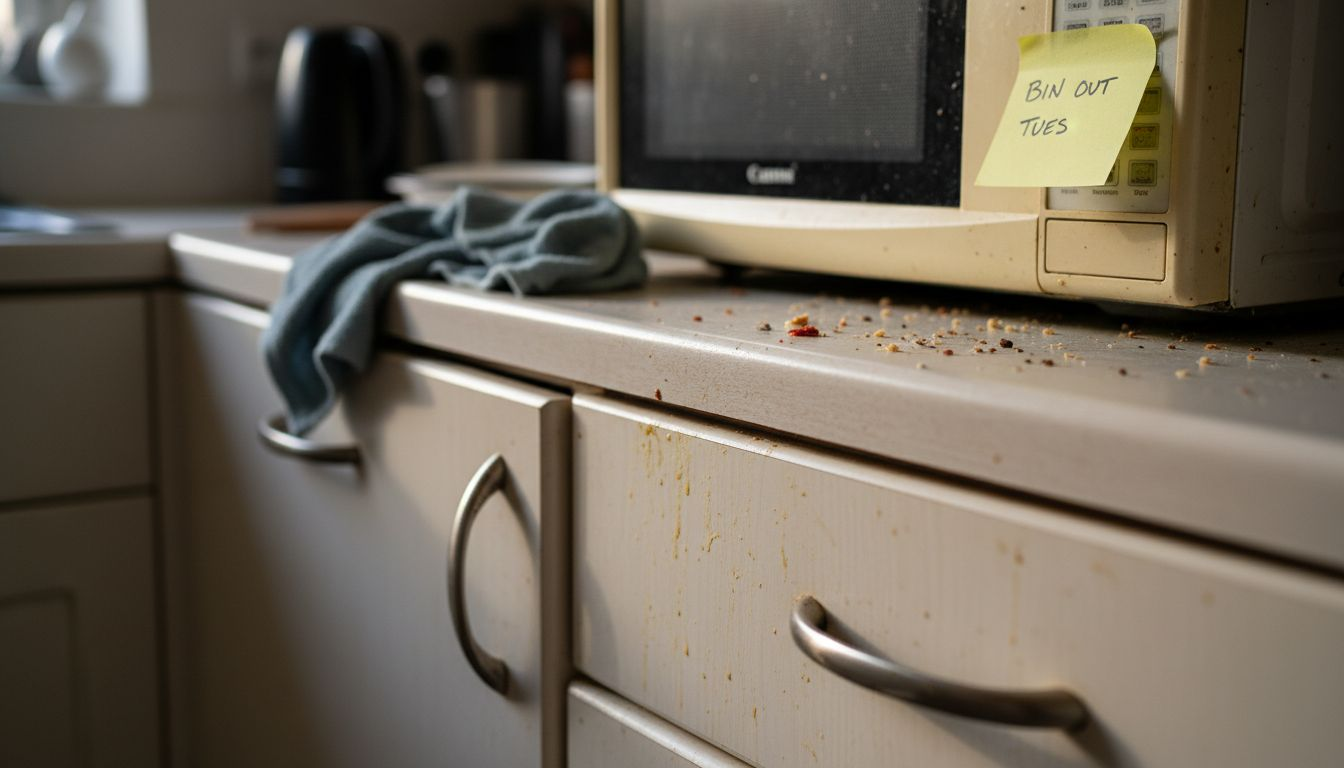
Professional kitchen maintenance experts recommend a multi-step approach to effective degreasing. This involves selecting appropriate cleaning agents, using the right tools, and understanding the specific materials of your kitchen surfaces. Different surfaces – whether stainless steel, ceramic, or painted cabinets – require tailored degreasing strategies to prevent damage while ensuring thorough cleaning.
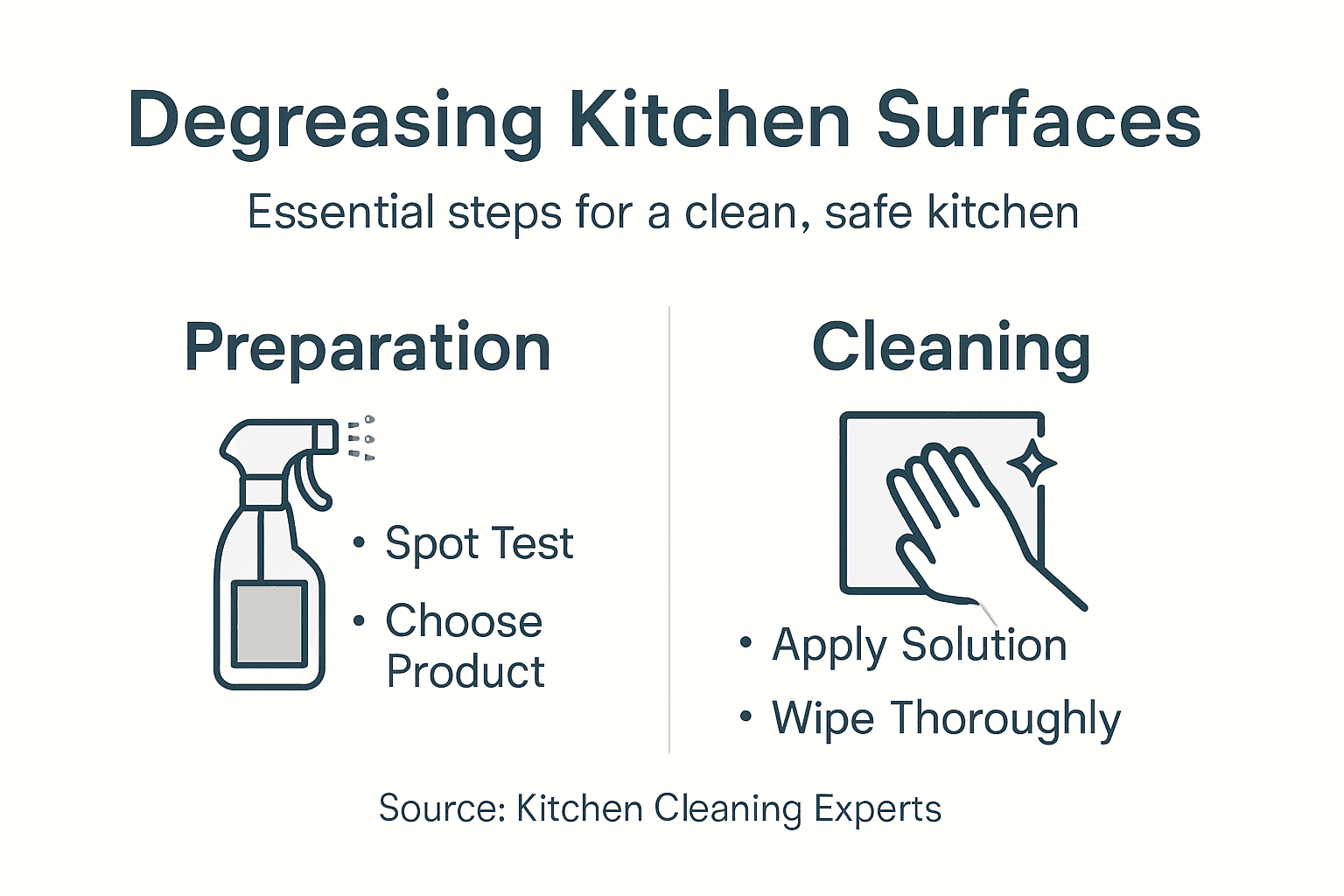
Pro tip: Always test your chosen degreasing solution on a small, inconspicuous area first to ensure it doesn’t damage or discolour your kitchen surfaces.
Types of Degreasers and Their Effectiveness
Kitchen degreasers represent a diverse range of cleaning solutions designed to tackle grease and grime effectively. Degreasing solvent categories typically fall into three primary groups: organic solvent-based, water-based detergents, and mechanical cleaning methods.
The main types of degreasers include:
- Solvent-based degreasers
- Extremely effective at breaking down tough grease
- Rapid penetration of stubborn residues
- Potential health and environmental risks
- Water-based detergents
- Environmentally safer option
- Lower chemical toxicity
- Moderate grease removal capabilities
- Mechanical degreasers
- Pressure washing techniques
- Physical removal of grease buildup
- Minimal chemical intervention
Eco-friendly degreasing alternatives have gained significant traction in recent years. Modern formulations now prioritise biodegradable substances and safer chemical compositions while maintaining high degreasing performance. These newer solutions aim to balance effective cleaning with reduced environmental impact.
Professional kitchen maintenance experts recommend selecting degreasers based on specific surface materials and cleaning requirements. Stainless steel surfaces, ceramic tiles, and painted cabinets may require different approaches to ensure thorough cleaning without causing damage or discolouration.
Here is a comparison of degreaser types and their suitability for common kitchen surfaces:
| Degreaser Type | Stainless Steel | Ceramic Tiles | Painted Cabinets |
|---|---|---|---|
| Solvent-based | Highly effective, may cause streaks | Very effective, use caution | Risk of paint damage |
| Water-based detergent | Safe, moderate efficacy | Gentle and safe | Safest, preserves paint |
| Mechanical methods | No residue, may scratch | Good for rough tiles | Risk of abrasion |
Choosing the right degreaser involves balancing effectiveness, safety, and surface compatibility.
Pro tip: Always check manufacturer recommendations and test your chosen degreaser on a small, inconspicuous area before full application to prevent potential surface damage.
How Proper Degreasing Supports Kitchen Respraying
Kitchen respraying requires meticulous surface preparation, with degreasing playing a critical role in achieving a flawless finish. Surface preparation techniques are fundamental to ensuring that new paint adheres correctly and maintains its quality over time.
The importance of thorough degreasing in kitchen respraying can be broken down into several key aspects:
- Paint Adhesion
- Removes contaminants that block paint bonding
- Ensures uniform surface coverage
- Prevents premature paint failure
- Surface Integrity
- Creates a consistent surface profile
- Eliminates potential paint imperfections
- Supports long-lasting finish quality
- Aesthetic Outcomes
- Prevents blotching and uneven colouration
- Enables smooth, professional-looking results
- Maintains the intended colour and finish
Professional resprayers understand that grease, oil, and accumulated kitchen grime can significantly compromise the paint’s ability to bond with the surface. Even microscopic layers of contamination can create barriers that prevent proper paint adhesion, leading to potential peeling, bubbling, or uneven colouration.
A clean surface is the foundation of a perfect kitchen respray.
Different kitchen surfaces – from wooden cabinets to metal appliance panels – require specific degreasing approaches. Stainless steel might need different cleaning agents compared to laminate or painted surfaces, making it crucial to select the right degreasing method for each material.
The following table clarifies how thorough degreasing impacts kitchen respraying results:
| Preparation Step | Impact on Paint Finish | Long-term Result |
|---|---|---|
| Incomplete degreasing | Paint may peel or bubble | Poor durability, early failure |
| Complete degreasing | Smooth, even adhesion | Lasting professional look |
| Incorrect product | Surface discolouration | Reduced resale appeal |
Pro tip: Invest in a professional-grade degreasing solution specifically designed for your kitchen’s surface materials to ensure optimal respray results.
Risks of Skipping or Improper Degreasing
Inadequate degreasing can transform a simple kitchen maintenance task into a potential disaster. Degreasing solvent risks extend far beyond surface appearance, potentially compromising both surface integrity and personal safety.
The primary risks of skipping or incorrectly performing degreasing include:
- Surface Degradation
- Poor paint adhesion
- Increased likelihood of corrosion
- Premature finish deterioration
- Health Hazards
- Chemical exposure risks
- Potential respiratory irritation
- Skin contact dangers
- Functional Complications
- Reduced surface durability
- Compromised kitchen hygiene
- Increased maintenance requirements
Workplace safety assessments underscore the critical nature of proper degreasing. Inadequate cleaning can create microscopic barriers that prevent proper paint bonding, leading to visible defects like peeling, bubbling, or uneven colouration. These issues not only compromise the aesthetic appeal but can also create potential health risks through surface contamination.
Cutting corners in degreasing is a false economy that leads to costly repairs and potential health hazards.
Professional kitchen maintenance experts highlight that different surfaces require specific degreasing approaches. Ceramic, stainless steel, and wooden surfaces each demand unique cleaning techniques to ensure optimal preparation and long-lasting results.
Pro tip: Invest in professional-grade cleaning tools and consult manufacturer guidelines to ensure comprehensive and safe degreasing across different kitchen surface types.
Best Practices for Safe and Thorough Degreasing
Kitchen degreasing requires a systematic and careful approach to ensure both effectiveness and safety. Effective degreasing techniques begin with understanding the unique challenges of different kitchen surfaces and selecting appropriate cleaning methods.
The essential steps for safe and thorough degreasing include:
- Preparation
- Remove loose debris and food particles
- Clear workspace and protect sensitive areas
- Gather appropriate cleaning tools
- Product Selection
- Choose eco-friendly surfactants
- Consider surface-specific cleaning agents
- Evaluate commercial vs. homemade solutions
- Application Process
- Follow manufacturer’s recommended dwell times
- Use appropriate wiping techniques
- Ensure complete and even coverage
Solvent emission reduction strategies emphasise the importance of minimising chemical use while maximising cleaning efficiency. Professional cleaners recommend using minimal amounts of cleaning agents, focusing on targeted application and thorough removal.
Precision in degreasing matters more than the quantity of cleaning solution used.
Different kitchen surfaces demand unique approaches. Wooden surfaces require immediate drying to prevent damage, while stainless steel might tolerate more aggressive cleaning techniques. Understanding these nuances is crucial for maintaining both cleanliness and surface integrity.
Pro tip: Always perform a spot test on a small, hidden area before applying any degreasing solution across an entire surface to prevent potential damage.
Ensure Your Kitchen Respray Lasts with Expert Degreasing
The challenge of properly removing stubborn grease and grime before a kitchen respray is crucial to achieving a flawless and durable finish. As discussed in “What Is Degreasing and Why It Matters in Kitchens”, inadequate degreasing can lead to paint failure, surface damage, and wasted time and money. Do not let hidden grease ruin your kitchen renovation efforts.

Our professional kitchen respray service specialises in in-situ transformations where expert degreasing is a vital first step. We understand the importance of thorough surface preparation to guarantee lasting adhesion, vibrant colour, and a smooth finish free from blemishes. Discover how our tailored cleaning and respray techniques safeguard the quality of your kitchen surfaces. Take action today to protect your investment and enjoy a beautifully renewed kitchen. Visit SKR Specialists to learn more and arrange your consultation now.
Frequently Asked Questions
What is degreasing in a kitchen?
Degreasing in a kitchen refers to the process of removing accumulated grease, oils, and food residues from cooking surfaces and equipment, ensuring a hygienic food preparation environment.
Why is proper degreasing important in kitchens?
Proper degreasing is crucial to prevent grease buildup, which can lead to reduced appliance efficiency, fire hazards, and compromised food hygiene standards. It also prepares surfaces for any subsequent painting or respraying.
What types of degreasers are available for kitchen use?
Common types of kitchen degreasers include solvent-based degreasers, which are highly effective but may pose health risks; water-based detergents, which are safer but less potent; and mechanical methods, such as pressure washing, that physically remove grease.
How can I safely degrease different kitchen surfaces?
To safely degrease different surfaces, choose a compatible cleaning agent based on the material (e.g., stainless steel, ceramic, or painted surfaces), follow manufacturer instructions, and perform a spot test in an inconspicuous area to avoid damage.