
Kitchen Respray for Period Homes: Complete Guide
Over half of british period homeowners prefer kitchen respray to renovation when restoring character features. Traditional homes carry stories in every cabinet and original detail, yet updating these spaces often risks losing their charm. Discover how kitchen respraying saves time and money while maintaining historic authenticity, offering a smart alternative to full replacement for those looking to rejuvenate their treasured british kitchens.
Table of Contents
- Defining Kitchen Respray For Period Homes
- Types Of Surfaces And Paint Finishes Used
- Respray Process And Preservation Techniques
- Suitability For Listed And Heritage Properties
- Cost Factors And Comparing Alternatives
Key Takeaways
| Point | Details |
|---|---|
| Cost-Effective Solution | Kitchen respraying serves as a budget-friendly alternative to full kitchen renovations, often costing significantly less. |
| Preservation of Integrity | This method facilitates the restoration of period homes while maintaining original architectural elements and historical features. |
| Minimal Disruption | Respraying generally requires less time, with typical projects being completed in 2-3 days, compared to extensive renovations. |
| Customisation Options | Homeowners can choose from various paint finishes and colours to suit the historical design of their kitchens. |
Defining Kitchen Respray for Period Homes
A kitchen respray is a specialised restoration technique designed specifically for preserving and rejuvenating kitchen surfaces in period homes, offering a cost-effective alternative to complete kitchen replacement. Unlike traditional renovation methods, respraying involves applying professional-grade paint directly onto existing kitchen units, cabinets, and surfaces to transform their appearance while maintaining the home’s original architectural character.
For period homes, kitchen respraying represents a nuanced preservation approach that respects historical aesthetic integrity. Skilled technicians use precision painting techniques to restore worn kitchen elements without dismantling the entire space. This method allows homeowners to refresh their kitchen’s look while keeping original cabinetry, worktops, and structural elements intact. Learn more about kitchen respray best practices to understand the intricate process of maintaining period home aesthetics.
The process involves several critical steps: thorough surface preparation, careful colour selection that complements period design, specialist paint application, and precise finishing techniques. Homeowners can expect a professional respray to provide multiple benefits including cost savings, minimal disruption, and the ability to dramatically transform kitchen spaces without extensive structural modifications. Typical respraying projects for period homes can be completed within 2-3 days, compared to weeks required for full kitchen renovations.
Key characteristics of kitchen respraying for period homes include:
- Preservation of original architectural details
- Minimal invasive work
- Environmentally friendly alternative to full replacement
- Customisable colour options
- Significantly lower cost compared to complete kitchen renovation
By choosing a kitchen respray, period home owners can breathe new life into their spaces while honouring the unique historical character of their property.
Types of Surfaces and Paint Finishes Used
Kitchen respraying involves a sophisticated approach to surface selection and paint finishes, particularly for period homes where preserving architectural authenticity is paramount. Different kitchen surfaces require specialised treatment, from wooden cabinetry to laminate worktops, each demanding unique preparation and painting techniques to ensure durability and aesthetic appeal.
When considering surfaces for kitchen respraying, professionals typically work with materials like:
- Wooden kitchen units
- Laminate cabinets
- MDF surfaces
- Melamine-faced chipboard
- Metal cabinet frames
- Ceramic tiles
Each material requires a specific paint system to guarantee optimal adhesion and longevity. Explore our comprehensive guide on kitchen paint finish types to understand the nuanced approach needed for different surface materials in period home kitchens.
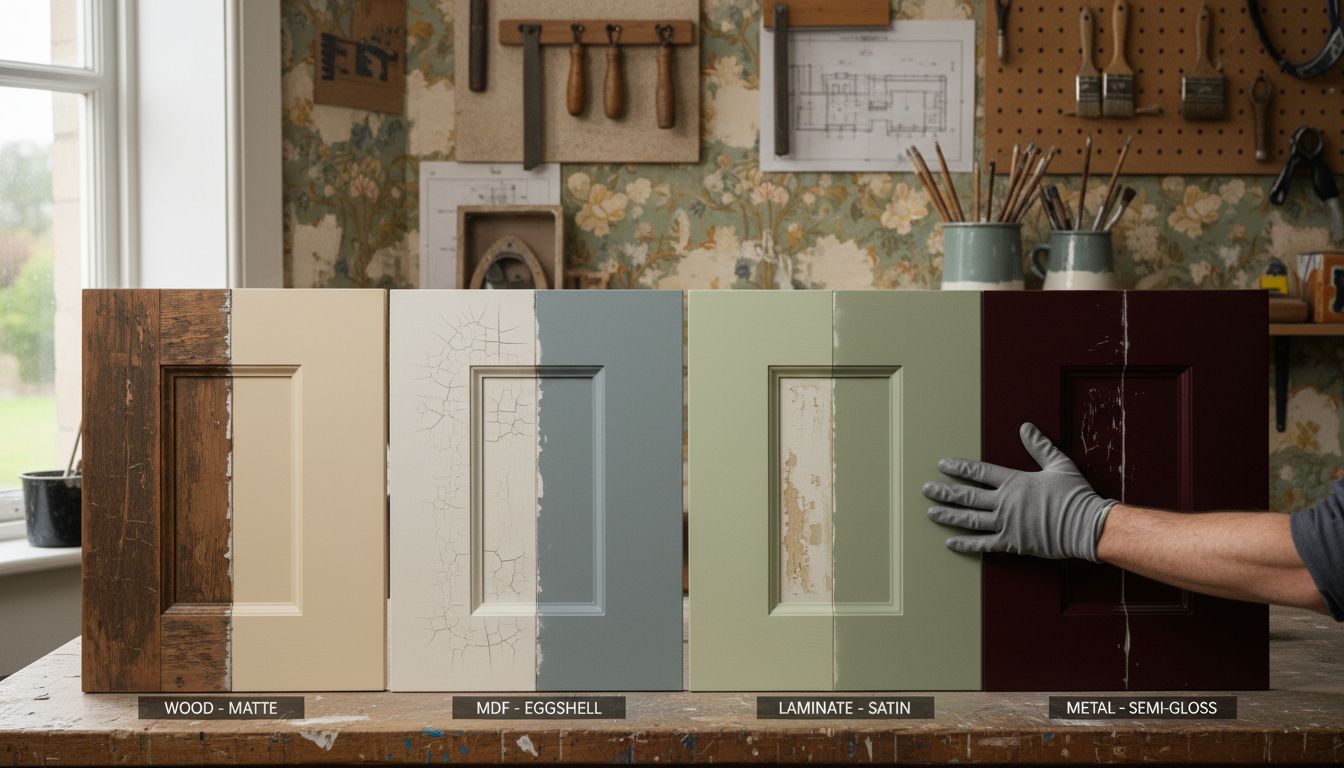
Paint finishes play a crucial role in the visual and functional outcome of a kitchen respray. Professionals typically recommend:
- Matte finishes: Ideal for hiding surface imperfections, providing a subtle, elegant look
- Eggshell finishes: Offering slight sheen and improved washability
- Satin finishes: Providing moderate shine and excellent durability
- Semi-gloss finishes: Delivering high durability and easy cleaning
The selection of paint finish depends on multiple factors including kitchen usage, natural light, architectural period, and homeowner preferences. Professional resprayers conduct thorough surface assessment to recommend the most suitable finish that balances aesthetic requirements with practical performance.
Respray Process and Preservation Techniques
Kitchen respraying for period homes demands a meticulously planned approach that balances preservation techniques with modern restoration methods. The process goes far beyond simple painting, requiring specialised skills to maintain the historical integrity of original kitchen elements while delivering a fresh, contemporary appearance.
Understanding the intricacies of kitchen spray coating reveals a comprehensive multi-stage process that includes:
- Comprehensive surface assessment
- Thorough cleaning and degreasing
- Precise surface preparation
- Protective masking of surrounding areas
- Professional spray application
- Careful quality control and finishing
Preservation techniques are paramount when working with period home kitchens. Skilled technicians employ specialist methods to protect original architectural features, ensuring that the respraying process enhances rather than compromises the kitchen’s historical character. This involves:
- Minimal invasive intervention
- Careful colour matching to period-appropriate palettes
- Preservation of original cabinet structures
- Gentle surface preparation techniques
- Use of heritage-compatible paint systems
The technical aspects of kitchen respraying require extraordinary attention to detail. Professionals use advanced spray equipment that provides ultra-smooth, factory-like finishes while maintaining the delicate balance between modern restoration and historical authenticity. Preparation is key – technicians spend significant time carefully cleaning, sanding, and priming surfaces to ensure optimal paint adhesion and a flawless final result that respects the kitchen’s original craftsmanship.
Suitability for Listed and Heritage Properties
Kitchen respraying in listed and heritage properties represents a delicate restoration approach that demands exceptional expertise and careful compliance with conservation regulations. Homeowners must navigate a complex landscape of preservation requirements while seeking to refresh their historical spaces.
According to Historic England, updating kitchens in listed buildings requires meticulous consideration to preserve historic features. Respraying existing units can be a suitable method, but it’s crucial to consult local planning authorities for necessary consents. Sussex Architect confirms that altering kitchens in Grade II listed buildings is possible, provided the changes do not compromise the building’s historic character.
Key considerations for kitchen respraying in heritage properties include:
- Maintaining original architectural integrity
- Using period-appropriate colour palettes
- Minimising structural alterations
- Preserving original material characteristics
- Ensuring reversible restoration techniques
Professional conservationists recommend a comprehensive assessment before undertaking any restoration work. This involves detailed documentation, careful material analysis, and a thorough understanding of the property’s historical significance. Specialists must demonstrate that the proposed respraying technique will neither damage nor permanently alter the kitchen’s fundamental historical essence, ensuring that any intervention respects the building’s architectural heritage.
Cost Factors and Comparing Alternatives
Kitchen respraying presents a strategic alternative to full kitchen renovation, offering homeowners a cost-effective solution for transforming their kitchen spaces. The financial considerations involve multiple dynamic factors that extend beyond simple price comparisons, requiring a nuanced understanding of long-term value and restoration potential.
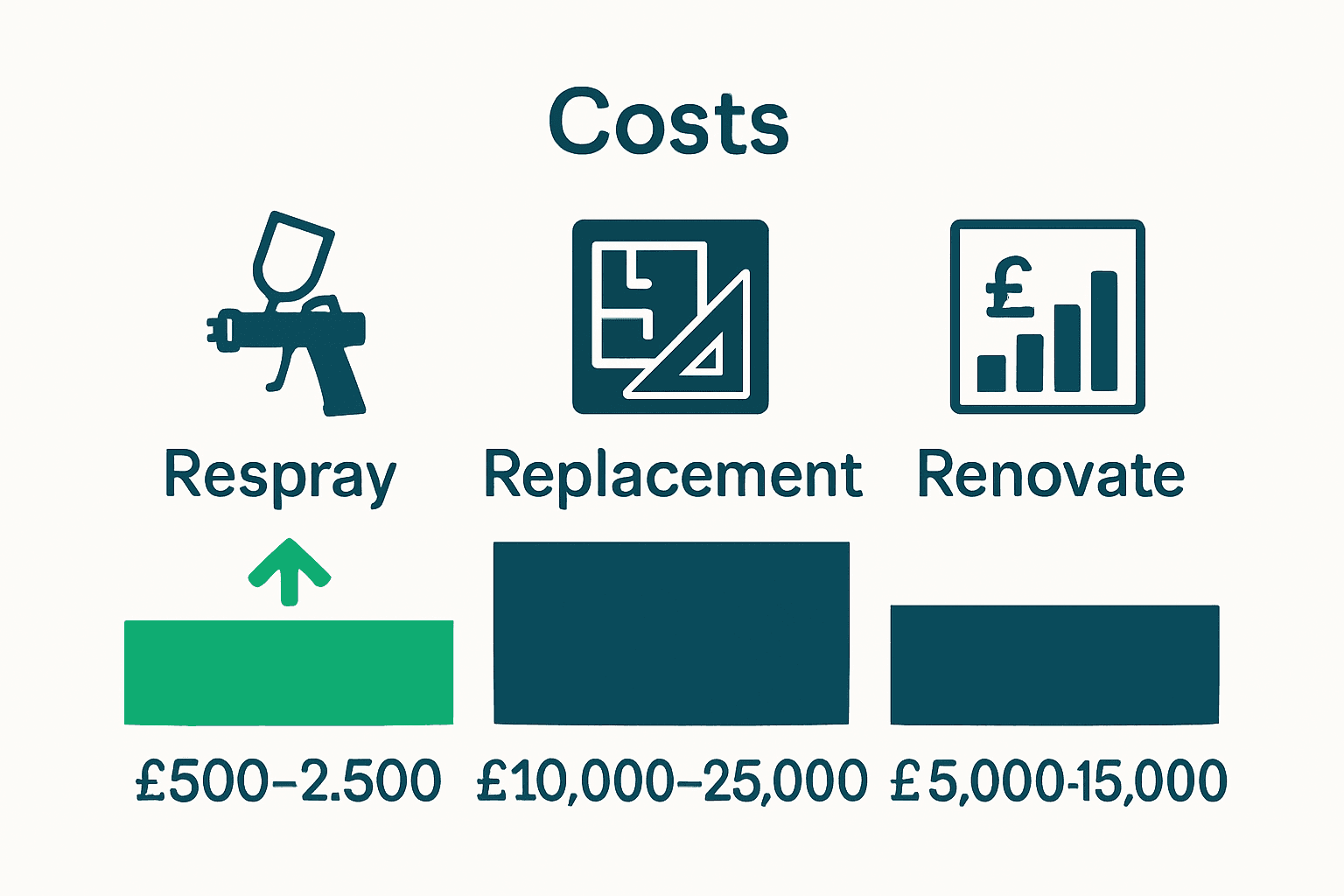
Learn more about the comprehensive cost analysis of kitchen respraying to understand the financial implications. Comparing kitchen respraying against traditional renovation reveals significant cost advantages:
Cost Comparison Overview:
- Full Kitchen Replacement: £10,000 – £25,000
- Complete Kitchen Renovation: £5,000 – £15,000
- Professional Kitchen Respray: £500 – £2,500
Key cost factors influencing kitchen respraying pricing include:
- Kitchen size and layout complexity
- Number of units and surfaces
- Preparation work required
- Chosen paint system and finish quality
- Accessibility of kitchen space
- Additional restoration requirements
Beyond direct financial considerations, kitchen respraying offers substantial indirect savings. The process minimises disruption, reduces waste, and preserves existing kitchen infrastructure, making it an environmentally conscious and economically sensible choice for homeowners seeking significant aesthetic improvements without extensive structural modifications.
Refresh Your Period Home Kitchen with Expert Respraying Solutions
Restoring the beauty of your period home’s kitchen can be challenging when you want to preserve original details while updating the look. Kitchen respraying offers a cost-effective, minimally invasive way to rejuvenate cabinetry and surfaces without full replacement. If maintaining authentic character and achieving a flawless finish are your goals, our professional service specialises in in-situ kitchen resprays tailored to period homes.
Discover how our expert approach respects heritage elements using precise colour matching and specialist paint systems. Start your transformation today by exploring our Uncategorized Archives for insights and examples. Don’t wait to protect your property’s unique charm while enjoying a refreshed kitchen environment. Connect with us at https://skrspecialists.co.uk to schedule your consultation and see how we can help you preserve history with style.
Frequently Asked Questions
What is a kitchen respray and how does it work for period homes?
A kitchen respray is a restoration technique that involves applying professional-grade paint to existing kitchen surfaces in period homes, transforming their appearance while preserving the original architectural character. It includes thorough surface preparation, careful colour selection, and specialist paint application to rejuvenate kitchen units and cabinets without complete replacement.
How long does a kitchen respray typically take?
Most kitchen respraying projects for period homes can be completed within 2 to 3 days, a significant reduction in time compared to weeks required for full kitchen renovations, ensuring minimal disruption to your home.
What types of surfaces can be resprayed in a kitchen?
Kitchen respraying can be performed on various surfaces including wooden kitchen units, laminate cabinets, MDF surfaces, melamine-faced chipboard, metal cabinet frames, and ceramic tiles, each requiring specific treatment for optimal results.
Is kitchen respraying suitable for listed and heritage properties?
Yes, kitchen respraying can be suitable for listed and heritage properties, but it is crucial to maintain original architectural integrity and consult local planning authorities for compliance with conservation regulations before proceeding.
Recommended
- Kitchen Hygiene and Respray: Complete UK Guide – WordPress
- The Essential Guide to Kitchen Refurbishment – WordPress
- Complete Guide to Kitchen Respray Best Practices – WordPress
- Complete Guide to Kitchen Respray for Open‑Plan Homes – WordPress
- How to Choose Paint Finish: Guide for Kitchen Upgrades
- Painting Over Stained Cabinets: Easy Kitchen Upgrades 2025