
What Is Kitchen Paint Durability? Complete Overview
Over 60 percent of kitchen paint failures stem from poor durability choices or mistakes during application. The kitchen is one of the toughest places for painted surfaces, with constant moisture, heat, and daily cleaning putting paint to the test. Choosing the right paint and mastering the application process keeps your walls looking fresh and protects them from the wear and tear of everyday cooking and cleaning.
Table of Contents
- Defining Kitchen Paint Durability Standards
- Different Types Of Kitchen Paint Finishes
- How Paint Application Affects Durability
- Factors Impacting Paint Longevity In Kitchens
- Avoiding Common Paint Durability Mistakes
Key Takeaways
| Point | Details |
|---|---|
| Durable Paint Selection | Choose paints designed for high-moisture environments to ensure lasting performance in kitchens. |
| Importance of Finishes | Opt for finishes like satin and semi-gloss for ease of cleaning and durability against daily wear. |
| Proper Application Techniques | Focus on thorough surface preparation and appropriate application methods to enhance paint longevity. |
| Avoid Common Mistakes | Ensure adequate priming and avoid rushing the process to prevent premature paint failure. |
Defining Kitchen Paint Durability Standards
Kitchen paint durability represents the ability of a painted surface to withstand daily wear, moisture exposure, temperature variations, and cleaning demands in one of the most high-traffic areas of your home. Homebuilding highlights that paint performance critically depends on its base composition and intended usage environment.
When evaluating kitchen paint durability, several key factors come into play. Water-based paints offer significant advantages for kitchen environments, providing quick-drying properties and easier cleanup compared to traditional oil-based alternatives. According to Homebuilding, specialized kitchen and bathroom emulsion paints are engineered to provide enhanced protection in areas prone to condensation and humidity.
Key Durability Standards Include:
- Resistance to moisture and steam
- Ability to withstand frequent cleaning
- Capability to resist staining and grease buildup
- Long-term color retention
- Smooth, washable finish that maintains appearance
Professional kitchen paint durability assessments typically involve rigorous testing that simulates real-world kitchen conditions. This includes repeated washing cycles, exposure to temperature fluctuations, and resistance to common kitchen substances like cooking oils, food splatters, and cleaning chemicals. Kitchen Paint Touch-Up Explained: Complete UK Guide provides comprehensive insights into maintaining paint quality over time, emphasizing the importance of selecting paints specifically designed for kitchen environments.
Ultimately, kitchen paint durability isn’t just about initial appearance but sustained performance. Homeowners should prioritize paints that offer a balance between aesthetic appeal and practical resilience, ensuring their kitchen surfaces remain pristine and protected against daily challenges.
Different Types Of Kitchen Paint Finishes
Kitchen paint finishes play a critical role in determining both the aesthetic appeal and functional performance of your kitchen surfaces. Homebuilding highlights the nuanced differences between various paint finishes, revealing how each type offers unique characteristics suited to different kitchen environments.
Types of Kitchen Paint Finishes:
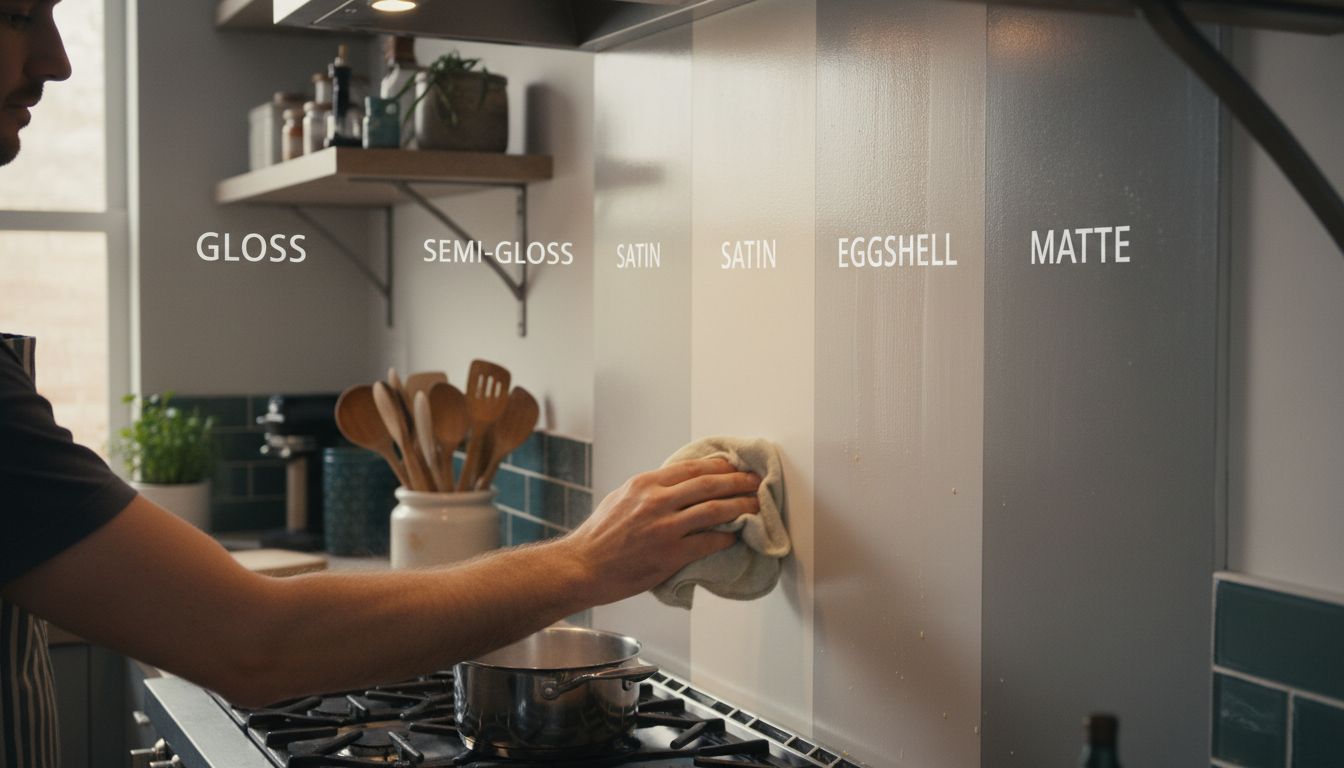
- Gloss: Highly reflective and extremely durable
- Semi-Gloss: Moderate shine with excellent cleanability
- Satin: Balanced sheen with practical surface performance
- Eggshell: Soft, subtle finish with slight light reflection
- Matte: Non-reflective finish ideal for hiding surface imperfections
According to Homebuilding, satin finishes provide an optimal balance between matte and gloss, offering fewer visible flaws while maintaining excellent cleanability. This makes satin an exceptional choice for kitchen walls and surfaces that require frequent washing. 7 Types of Kitchen Paint Every UK Homeowner Should Know provides comprehensive insights into selecting the most appropriate finish for different kitchen areas.
Professional painters recommend considering factors like moisture exposure, light reflection, and cleaning requirements when selecting a kitchen paint finish. Gloss and semi-gloss finishes excel in high-moisture areas due to their water-resistant properties, while eggshell offers a more subtle aesthetic that can beautifully complement traditional kitchen designs. Understanding these nuances helps homeowners make informed decisions that balance both visual appeal and practical durability.
Ultimately, the right kitchen paint finish transforms your space, protecting surfaces while creating the desired aesthetic atmosphere.
 Whether you prefer the sleek, modern look of high-gloss or the understated elegance of an eggshell finish, careful selection ensures your kitchen remains both beautiful and functional for years to come.
How Paint Application Affects Durability
The durability of kitchen paint is intrinsically linked to its application technique, with professional preparation and precise implementation being critical determinants of long-term performance. Homebuilding emphasizes that proper priming and undercoating are fundamental steps in creating a resilient paint surface that can withstand daily kitchen challenges.
Key Factors in Paint Application That Impact Durability:
- Surface preparation
- Primer selection
- Number of paint coats
- Application method
- Drying and curing conditions
- Quality of painting tools
According to Homebuilding, paint durability is remarkably consistent when proper priming and preparation techniques are employed, though subtle differences emerge between finish types. Satin finishes, for instance, demonstrate slightly enhanced resistance to scuffs, making them particularly suitable for high-traffic kitchen areas. The Essential Guide to Paint in Kitchen Renovation provides comprehensive insights into selecting the most appropriate application techniques for optimal kitchen paint performance.
Professional painters understand that application is a nuanced process involving multiple critical steps. Thorough surface cleaning, addressing imperfections, selecting the right primer, and using high-quality tools can significantly extend paint longevity. Temperature, humidity, and application technique all play crucial roles in determining how well the paint adheres and resists wear. Novice painters might find eggshell finishes more forgiving, while experienced professionals can achieve exceptional results with various paint types.
Ultimately, kitchen paint durability is a complex interplay between material quality, application technique, and ongoing maintenance. By investing time in proper surface preparation, selecting appropriate primers, and applying paint with precision, homeowners can create kitchen surfaces that remain vibrant and protected for years, effectively combining aesthetic appeal with practical functionality.
Factors Impacting Paint Longevity In Kitchens
Kitchen paint longevity is a complex interplay of environmental conditions, material quality, and maintenance practices that directly influence the performance and appearance of painted surfaces. Homebuilding highlights the critical importance of selecting specialized paints designed to withstand unique kitchen environments, particularly those prone to condensation and moisture challenges.
Primary Factors Affecting Kitchen Paint Durability:
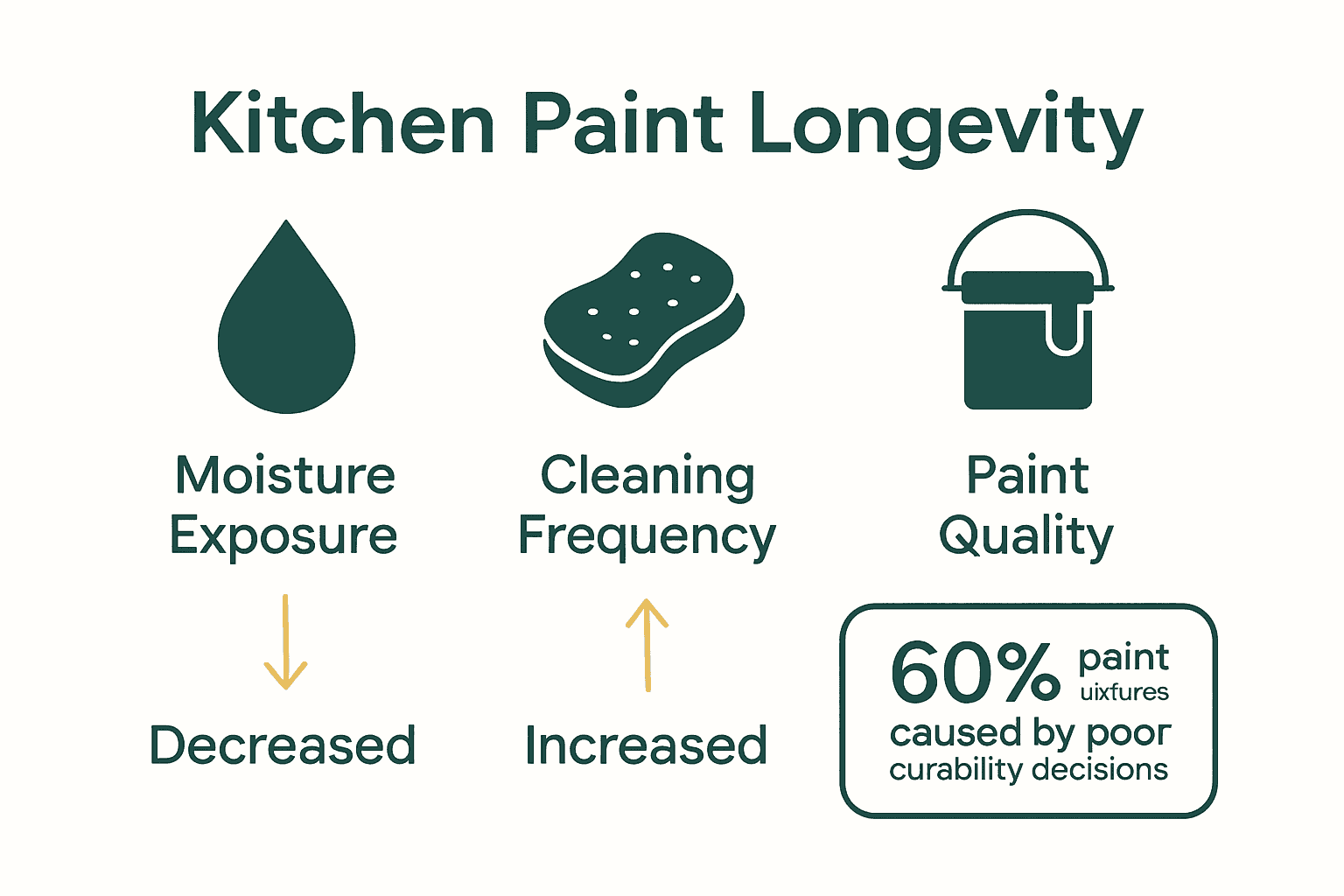
- Moisture exposure
- Temperature fluctuations
- Cooking activity intensity
- Cleaning frequency
- Surface preparation
- Paint quality and type
- Ventilation conditions
According to Homebuilding, satin finishes offer superior performance in high-traffic and moisture-prone areas, providing enhanced cleaning capabilities and reflective properties that contribute to longer-lasting paint surfaces. Kitchen Paint Finish Guide for a Flawless Update provides comprehensive strategies for selecting paint that can withstand the demanding kitchen environment.
Environmental factors play a significant role in paint degradation. Constant exposure to steam, grease splatter, temperature variations, and frequent cleaning can rapidly compromise paint integrity. Professional painters recommend using moisture-resistant paints specifically formulated for kitchen spaces, implementing proper ventilation, and adopting regular maintenance practices to mitigate potential damage. The key is understanding that paint longevity extends beyond initial application, requiring ongoing care and strategic selection.
Ultimately, kitchen paint durability is an investment in your home’s aesthetic and functional quality. By carefully considering environmental challenges, selecting high-performance paint products, and maintaining surfaces proactively, homeowners can ensure their kitchen walls remain vibrant, clean, and protected against the unique stresses of this high-activity space.
Avoiding Common Paint Durability Mistakes
Kitchen paint durability can quickly deteriorate when homeowners overlook critical preparation and application techniques. Homebuilding emphasizes that proper priming and undercoating are fundamental steps in creating a resilient paint surface that protects against premature wear and damage.
Most Frequent Paint Durability Mistakes:
- Skipping surface preparation
- Using low-quality paint
- Neglecting primer application
- Improper paint thickness
- Ignoring environmental conditions
- Rushing the painting process
- Inadequate cleaning between coats
According to Homebuilding, paint durability remains consistent when proper priming techniques are employed, with satin finishes offering slightly enhanced scuff resistance. This nuance underscores the importance of understanding paint application fundamentals. Understanding Kitchen Touch-Ups: A Homeowner’s Guide provides comprehensive insights into maintaining paint quality and avoiding common pitfalls that compromise surface longevity.
Novice painters often make critical errors that significantly reduce paint durability. Rushing through surface preparation, applying paint in inappropriate temperature conditions, or using incorrect tools can lead to premature paint failure. Professional painters recommend thorough surface cleaning, addressing imperfections, selecting appropriate primers, and allowing adequate drying time between coats. Temperature, humidity, and application technique are crucial factors that directly impact how well paint adheres and resists everyday wear.
Ultimately, preventing paint durability mistakes requires patience, knowledge, and a methodical approach. By investing time in proper preparation, selecting high-quality materials, and understanding the nuanced requirements of kitchen environments, homeowners can create paint surfaces that remain vibrant, protective, and aesthetically pleasing for years to come.
Enhance Your Kitchen Paint Durability with Expert Respray Solutions
Understanding the challenges of kitchen paint durability including moisture resistance, frequent cleaning, and long-term appearance is essential. If you want to avoid common paint mistakes and achieve a flawless kitchen finish that stands the test of time, professional kitchen respray services provide the perfect solution. At SKR Specialists, we specialise in respraying kitchens in-situ, using expert techniques that ensure your kitchen cabinets and surfaces receive durable, high-quality finishes designed for busy kitchen environments.
Discover how our services address key issues like proper surface preparation, optimal paint application, and selecting finishes that balance durability with aesthetic appeal by exploring our Uncategorized Archives. Don’t settle for short-lived paint jobs when you can transform your kitchen with proven expertise. Visit SKR Specialists today to book your kitchen respray and protect your investment now.
Frequently Asked Questions
What is kitchen paint durability?
Kitchen paint durability refers to how well paint can withstand daily wear, moisture, temperature changes, and cleaning in the kitchen environment. It is influenced by the paint’s composition, application techniques, and maintenance practices.
What factors affect the durability of kitchen paint?
Key factors impacting kitchen paint durability include moisture exposure, temperature fluctuations, cleaning frequency, surface preparation, paint type and quality, and ventilation conditions within the kitchen.
How does paint application influence kitchen paint durability?
The application of kitchen paint is crucial for its durability. Proper surface preparation, primer selection, the number of coats, and the application method all significantly contribute to how well the paint adheres and withstands everyday wear and tear.
What types of finishes are best for kitchen paint durability?
Finishes like semi-gloss and satin are recommended for kitchen paint durability due to their moisture resistance, ease of cleaning, and ability to hide surface imperfections. Gloss finishes also offer high durability but can highlight flaws, while matte finishes are less durable against moisture and stains.