What Is a Spray Booth? Kitchen Respray Impact
Choosing how to refresh your kitchen can feel overwhelming when you want both style and savings. Kitchens across England are seeing a rise in professional kitchen respraying solutions thanks to their ability to deliver a flawless finish without the cost and disruption of full renovation. Learn how spray booths create a controlled environment that is engineered for pristine results while protecting your family and meeting all modern safety standards.
Table of Contents
- Spray Booth Explained: Meaning And Core Purpose
- Types Of Spray Booths Used In Kitchen Resprays
- How Spray Booths Function For Superior Results
- Legal And Safety Standards In The UK
- Comparing Spray Booths To Alternative Methods
Key Takeaways
| Point | Details |
|---|---|
| Purpose of Spray Booths | Spray booths are designed for high-quality painting and coating, ensuring worker safety and environmental protection. |
| Types of Spray Booths | Different configurations like cross draft and downdraft are suited to various kitchen respray requirements. |
| Regulatory Compliance | UK regulations such as COSHH require regular safety checks and compliance to ensure a safe working environment. |
| Advantages Over Traditional Methods | Spray booths provide better finish quality and efficiency compared to manual painting methods, reducing material waste and enhancing durability. |
Spray Booth Explained: Meaning And Core Purpose
A spray booth represents a specialised, enclosed workspace engineered specifically for professional painting and coating applications. These meticulously designed environments are critical for achieving high-quality finishes while maintaining stringent safety standards. Controlled painting environments require precise engineering that manages airflow, filtration, and contamination prevention.
The core purpose of a spray booth extends far beyond simple painting containment. These sophisticated systems serve multiple critical functions: protecting worker health, controlling environmental emissions, and ensuring paint application quality. Key objectives include extracting potentially harmful chemical fumes, preventing dust and particulate contamination, and creating a stable atmosphere that supports consistent coating performance.
Spray booths incorporate advanced ventilation technologies that systematically manage air movement and filtration. They typically feature sophisticated air handling units that create positive or negative pressure zones, effectively capturing overspray and filtering out potentially dangerous particulates. This design ensures that paint particles are contained, workers remain protected, and the surrounding environment remains uncontaminated.
Pro tip: When considering a professional kitchen respray, always verify that your service provider uses certified spray booth facilities to guarantee superior finish quality and safety standards.
Types Of Spray Booths Used In Kitchen Resprays
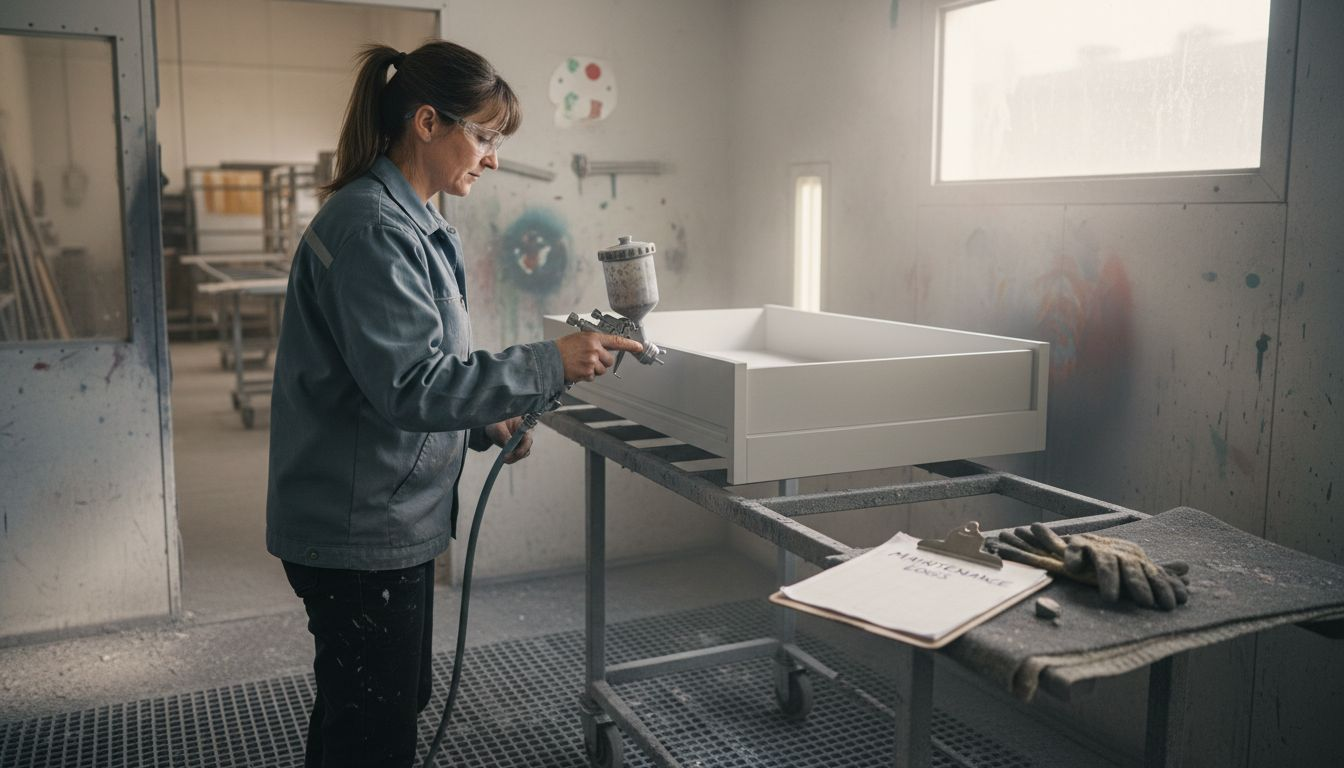
In professional kitchen respraying, several specialised spray booth configurations offer unique advantages for achieving exceptional coating results. Spray booth types are strategically selected based on specific project requirements, kitchen dimensions, and desired finish quality. The primary configurations include cross draft, downdraft, side draft, and open face booths, each engineered to manage airflow and paint application with precision.
The cross draft booth represents a popular choice for smaller kitchen respray projects. This configuration draws air horizontally from the front of the booth to the rear, creating a straightforward airflow pattern that effectively manages paint particulates. Smaller kitchen renovation teams often prefer cross draft booths due to their compact design and cost-effectiveness, making them ideal for residential-scale painting environments.
For more complex kitchen respray requirements, downdraft booths offer superior contamination control. These advanced systems channel air vertically from the ceiling downwards, creating an optimal environment for achieving immaculate paint finishes. The vertical airflow mechanism ensures that paint overspray and particulates are efficiently captured and filtered, minimising the risk of imperfections and maintaining extremely high hygiene standards throughout the coating process.
Pro tip: When selecting a spray booth for kitchen respraying, prioritise models that offer comprehensive filtration systems and precise airflow management to guarantee a flawless, professional-grade finish.
For clarity, here is a comparison of main spray booth types used in kitchen resprays:
| Spray Booth Type | Airflow Direction | Key Benefit | Typical Application |
|---|---|---|---|
| Cross Draft | Front to rear (horizontal) | Cost-effective, compact design | Small-scale kitchen projects |
| Downdraft | Ceiling to floor (vertical) | Superior contamination control | Complex respray tasks |
| Side Draft | Side walls to sides | Minimal overspray in work area | Mid-sized kitchens |
| Open Face | Open front, rear exhaust | Easy access, simple setup | Prepping or minor touch-ups |
How Spray Booths Function For Superior Results
Spray booths operate through a sophisticated system of environmental control designed to create optimal painting conditions. Spray booth functionality revolves around precise air management, filtration, and contamination prevention. These engineered environments carefully regulate multiple critical parameters to ensure exceptional coating quality and worker safety.
The core mechanism involves a complex air circulation system that meticulously filters incoming air and controls directional airflow. Intake filtration removes microscopic dust and particulates, preventing contamination during the painting process. Strategically positioned extraction systems actively remove potentially harmful chemical fumes, creating a safe working environment while simultaneously maintaining the ideal atmospheric conditions for paint adhesion and finish quality.
Temperature and humidity control represent another crucial aspect of spray booth functionality. Sophisticated environmental management systems maintain consistent temperature and moisture levels, which are essential for achieving uniform paint coverage and optimal drying conditions. Built-in lighting systems further enhance the painting process by providing even, shadow-free illumination that allows painters to detect and address potential imperfections during application.
Pro tip: Regularly calibrate your spray booth’s environmental control systems to maintain peak performance and consistently superior coating results.
Legal And Safety Standards In The UK
UK regulations for spray booth operations are stringently defined by multiple legislative frameworks, with the Control of Substances Hazardous to Health (COSHH) Regulations 2002 serving as the primary governance mechanism. Spray booth legal compliance requires businesses and professionals to implement comprehensive safety protocols that protect worker health and environmental standards.
The COSHH Regulations mandate specific requirements for spray booth operations, particularly focusing on controlling exposure to hazardous substances such as isocyanates found in two-pack paints. Key legal obligations include conducting regular maintenance and thorough examinations of Local Exhaust Ventilation (LEV) systems, with mandatory testing intervals set at a minimum of every 14 months. Booth construction must utilise non-combustible materials and ensure proper ventilation to mitigate potential health and safety risks.
Additionally, the Health and Safety Executive (HSE) enforces strict guidelines regarding respiratory protection and environmental controls. Professionals must use air-fed breathing apparatus certified to British standards, maintain negative pressure inside the spray booth, and conduct quarterly breathing air tests. Non-compliance can result in significant legal consequences, including potential enforcement actions, operational shutdowns, and substantial financial penalties for businesses that fail to meet these rigorous safety standards.
Pro tip: Maintain comprehensive documentation of all safety tests, equipment certifications, and maintenance records to demonstrate consistent compliance with UK regulatory requirements.
The following table summarises key UK spray booth legal requirements and their importance:
| Requirement | Regulatory Source | Business Impact |
|---|---|---|
| Regular LEV system checks (14 mo.) | COSHH Regulations 2002 | Ensures compliance, worker safety |
| Use non-combustible materials | COSHH, HSE | Reduces fire and health risks |
| Quarterly air quality testing | Health and Safety Executive | Maintains legal documentation |
| Certified air-fed respirators | British Standards, HSE | Protects painters from chemicals |
Comparing Spray Booths To Alternative Methods
Spray booths represent a sophisticated approach to surface coating that significantly outperforms traditional painting methods. Kitchen respray techniques demonstrate remarkable advantages in precision, efficiency, and overall finish quality compared to manual brush or roller applications. The controlled environment of spray booths ensures a level of consistency and quality that alternative methods simply cannot match.
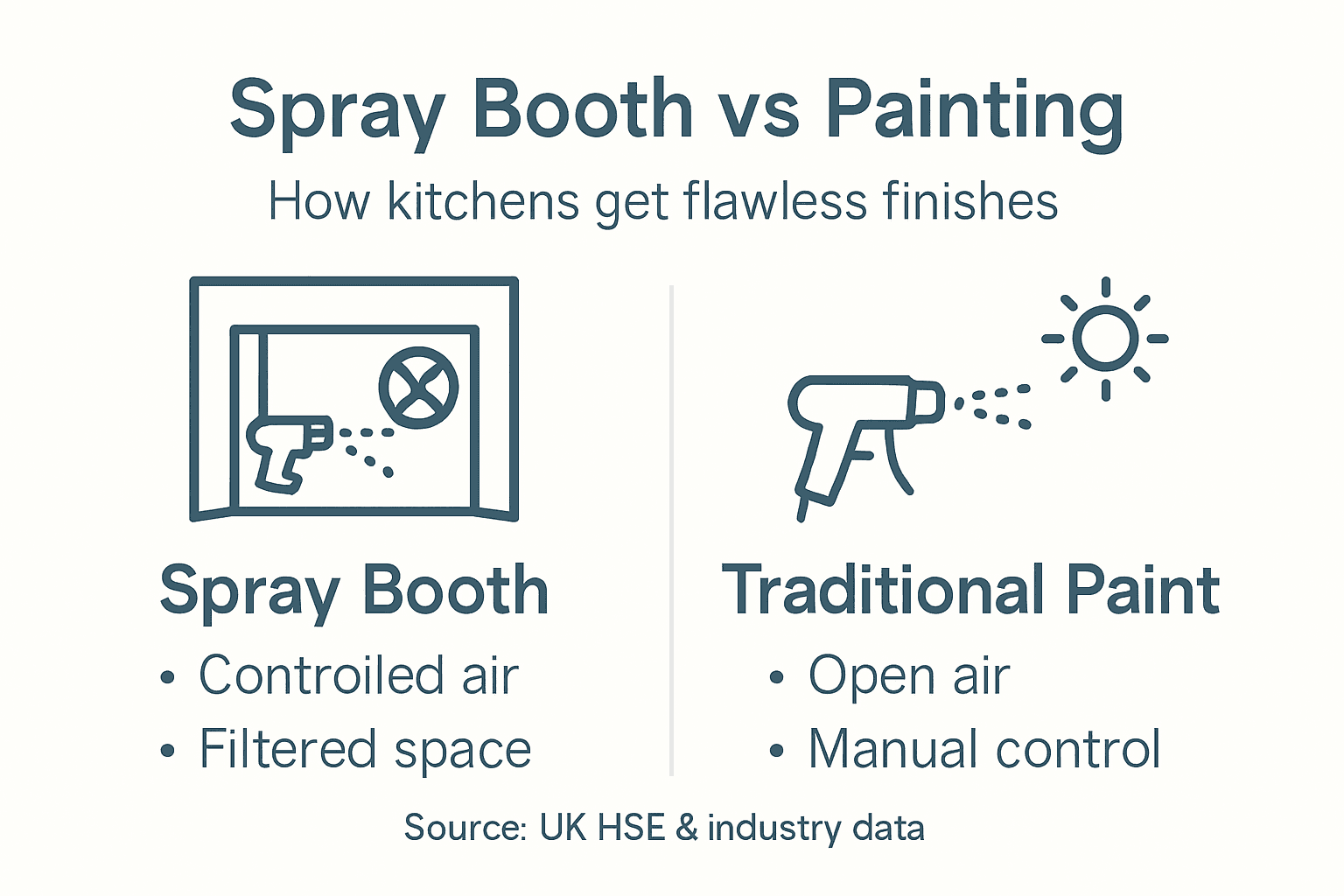
Unlike open-air spraying or conventional painting techniques, spray booths provide comprehensive environmental control that minimises contamination risks. Traditional methods such as brush painting or roller application introduce multiple variables that compromise finish quality: uneven stroke patterns, dust contamination, and inconsistent paint distribution. Spray booths eliminate these challenges by creating a sealed, filtered environment with precise airflow management that guarantees uniform paint coverage and exceptional surface adhesion.
Economically, spray booth technology proves more cost-effective for kitchen resprays compared to complete kitchen replacements or multiple manual painting attempts. The advanced filtration and controlled application reduce material waste, minimise the need for touch-ups, and deliver a more durable finish that maintains its aesthetic appeal for significantly longer periods. This approach not only saves homeowners money but also provides a professional-grade result that enhances the kitchen’s overall appearance and longevity.
Pro tip: When considering a kitchen respray, prioritise service providers with dedicated spray booth facilities to ensure the highest quality, most consistent finish possible.
Discover the Power of Professional Kitchen Respraying with Certified Spray Booths
The challenge of achieving a flawless, long-lasting kitchen finish often lies in controlling airflow, contamination, and safety while applying paint. As covered in the article, spray booths provide the essential controlled environment professionals need to deliver superior quality results that protect both the kitchen and the health of those involved. If you want to avoid uneven finishes and ensure your kitchen looks pristine for years, understanding the importance of advanced spray booth technology is key.
At SKR Specialists, we specialise in in-situ kitchen resprays using professional spray booth techniques that guarantee a smooth, durable finish. By choosing our expert services, you benefit from meticulous airflow management, expert contamination control, and compliance with UK safety standards. Ready to transform your kitchen with the highest quality respray available Visit our kitchen respray service page to learn more and book your consultation now.
Frequently Asked Questions
What is the primary function of a spray booth?
A spray booth is designed to provide a controlled environment for professional painting and coating applications. It protects worker health by managing harmful fumes and contaminants while ensuring high-quality finishes.
What types of spray booths are commonly used for kitchen resprays?
Common types include cross draft, downdraft, side draft, and open face booths. Each type is selected based on specific project requirements, such as kitchen size and desired finish quality.
How do spray booths improve the painting process compared to traditional methods?
Spray booths significantly enhance the painting process by providing a sealed and filtered environment, minimising contamination and ensuring uniform paint coverage, which traditional methods like brush or roller applications often fail to achieve.
What safety regulations should be followed when operating a spray booth?
Operators must adhere to the COSHH Regulations, which include maintaining regular checks on Local Exhaust Ventilation systems, using non-combustible materials, and ensuring proper airflow and air quality testing to protect worker health and safety.
Recommended
- Understanding What is Kitchen Spray Coating – WordPress
- Kitchen Spray Painting Explained: Cost, Process, Value – WordPress
- Kitchen Spray Finishes: What Homeowners in England Need to Know – WordPress
- Complete Guide to Kitchen Respray Best Practices – WordPress
- Cleaning Materials Melbourne | Onyx Removals