
Kitchen Spray Painting Explained: Cost, Process, Value
Most British homeowners aiming for a kitchen refresh without major expense are surprised to learn that spray painting can slash renovation costs by up to 80 percent. The demand for modern, cost-efficient updates has turned spray techniques into a trusted solution for transforming cabinets and surfaces. Discover how advanced spray painting methods give kitchens a factory-finish look while staying affordable and environmentally mindful, making it a smart choice for those wanting impressive results without the fuss of full replacement.
Table of Contents
- What Kitchen Spray Painting Involves
- Types of Spray Paints and Finishes
- The Step-by-Step Respray Process
- Cost Comparison: Spray Painting Vs. Replacement
- Durability, Maintenance, and Common Pitfalls
Key Takeaways
| Point | Details |
|---|---|
| Spray Painting Offers A Professional Finish | The technique provides a smooth, uniform coating that surpasses traditional methods, ensuring exceptional aesthetic results. |
| Cost-Effective Alternative To Replacement | A kitchen respray can significantly reduce renovation costs, offering savings of up to 80% compared to full kitchen replacement. |
| Importance Of Surface Preparation | Proper cleaning, sanding, and priming are crucial for achieving the desired finish and longevity of the paint. |
| Need For Regular Maintenance | Implementing a gentle cleaning regime is essential for preserving the appearance of spray-painted surfaces for 10-15 years. |
What Kitchen Spray Painting Involves
Kitchen spray painting is a specialised decorative and protective technique that transforms kitchen surfaces using advanced coating technologies. Unlike traditional painting methods, spray painting delivers a smooth, uniform finish by applying paint as a fine mist, which allows for faster and more precise coverage across cabinetry and woodwork. Spray techniques generate paint particles in a more controlled manner, enabling professionals to achieve exceptional results that traditional brush or roller applications cannot match.
The process involves carefully preparing surfaces by cleaning, sanding, and priming kitchen elements like cupboard doors, drawer fronts, and cabinet frames. Skilled technicians use professional-grade spray equipment to apply multiple thin layers of paint, ensuring an even distribution that eliminates brush marks and provides a factory-like finish. Kitchen spray painting is recognised within construction industry schemes as a professional painting and decorating service, which means it adheres to strict industry standards and quality protocols.
Professional kitchen spray painting encompasses several critical stages, including surface preparation, colour selection, primer application, and final coating. Technicians must manage environmental factors like temperature and humidity to ensure optimal paint adhesion and durability. The technique works on various materials including wooden, laminate, and metal surfaces, making it a versatile solution for kitchen renovation.
Expert Tip: Always request colour samples and finish examples before committing to a full kitchen respray to ensure the final result matches your aesthetic vision.
Types of Spray Paints and Finishes
Kitchen spray painting involves an array of paint types and finishes, each designed to meet specific aesthetic and functional requirements for homeowners. Professional painting techniques utilise different spray equipment and coating systems that enable remarkable transformation of kitchen surfaces. The primary categories include waterborne, solvent-borne, and speciality two-pack paint systems, each offering unique characteristics in terms of durability, finish, and application method.
Waterborne paints have gained significant popularity in recent years due to their lower volatile organic compound (VOC) content and environmentally friendly profile. These paints provide excellent coverage and are particularly suitable for kitchens requiring a clean, modern appearance. Solvent-borne alternatives offer superior adhesion and are often preferred for surfaces requiring maximum durability. Two-pack paint systems, which involve mixing a base coat with a hardener, deliver exceptional resistance to wear, chemicals, and moisture – making them ideal for high-traffic kitchen environments.
The range of finishes available is equally diverse, spanning from ultra-matte surfaces that conceal imperfections to high-gloss coatings that reflect light and create a sleek, contemporary look. Painting and decorating professionals are trained in applying specialised techniques that can mimic complex textures like marble or wood grain, providing homeowners with unprecedented customisation options. Technicians carefully select paint types based on the specific material of kitchen surfaces, ensuring optimal adhesion and longevity.
Below is a reference table for common spray paint types used in kitchens:
| Paint Type | Durability | VOC Content | Best For |
|---|---|---|---|
| Waterborne | Moderately high | Very low | Modern, eco-friendly kitchens |
| Solvent-borne | Very high | Moderate to high | Heavy-use, high traffic areas |
| Two-pack System | Exceptional | Low to moderate | Surfaces needing extra resistance |
Pro Tip: Always consult with professional spray painters about the most suitable paint type for your specific kitchen surface material and desired aesthetic outcome.
The Step-by-Step Respray Process
Professional kitchen respraying involves a meticulous, multi-stage process designed to transform kitchen surfaces with precision and durability. The journey begins with comprehensive surface preparation, which is crucial for achieving a flawless finish. Technicians start by thoroughly cleaning kitchen cabinets, removing years of grease, grime, and accumulated residue using specialised degreasing agents that break down stubborn kitchen buildup.
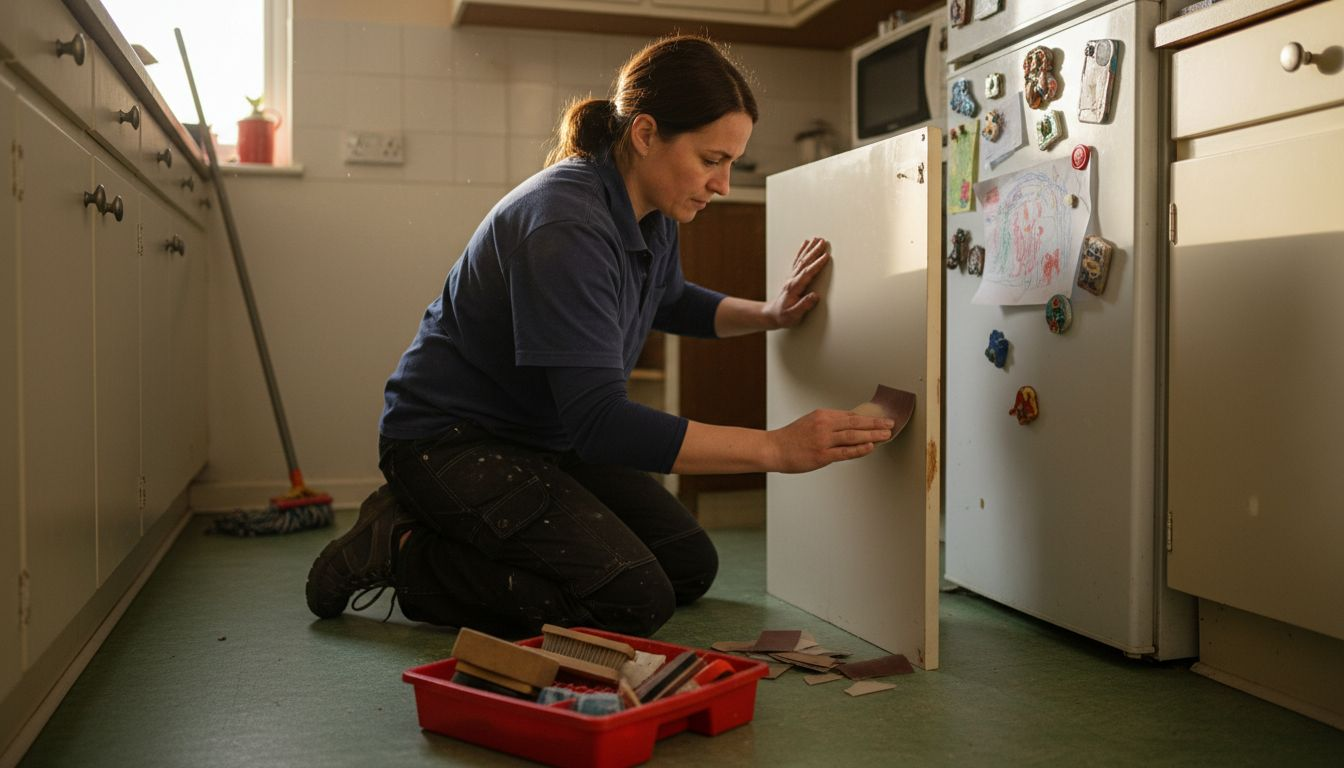
The next critical stage involves detailed surface repair and sanding. Professionals carefully inspect each surface for imperfections, filling minor chips, dents, or scratches with specialist fillers that create a smooth base for painting. Spray painting requires careful equipment selection and environmental management to ensure optimal results. Sanding helps create a slightly rough texture that allows paint to adhere more effectively, with technicians using progressively finer sandpaper to achieve a perfectly smooth foundation.
Once the surface is prepared, the actual spraying process begins with the application of a high-quality primer matched to the specific surface material. Professional spray technicians use precision spray equipment to apply thin, even coats that provide excellent coverage and create a uniform base for the final colour. Multiple light coats are applied rather than a single heavy coat, allowing each layer to dry and ensuring a smooth, professional finish. The final topcoat is sprayed using specialised techniques that minimise overspray and create a durable, factory-like finish that transforms the entire kitchen appearance.
Pro Tip: Request before and after photographs from your spray painting professional to understand the full potential of the transformation and set realistic expectations for your kitchen respray project.
Cost Comparison: Spray Painting vs. Replacement
Kitchen renovation costs can be dramatically reduced through professional spray painting techniques, offering homeowners a budget-friendly alternative to complete kitchen replacement. Whereas a full kitchen replacement might cost between £10,000 and £25,000, a comprehensive kitchen respray typically ranges from £1,500 to £5,000, representing potential savings of up to 80% on renovation expenses. This significant cost difference makes spray painting an attractive option for homeowners seeking a fresh kitchen aesthetic without the substantial financial investment of total replacement.
The cost-effectiveness of spray painting extends beyond the initial financial outlay. Traditional kitchen replacement involves extensive labour, multiple tradespeople, potential structural modifications, and weeks of disruption. In contrast, professional spray painting offers a more economical and less invasive renovation solution, with most projects completed within 2-3 days. The method preserves existing kitchen infrastructure, reduces material waste, and minimises the environmental impact associated with complete unit replacement.
Beyond pure monetary considerations, spray painting provides additional value through customisation and preservation. Homeowners can select from a vast array of colours and finishes, effectively breathing new life into existing cabinetry without the expense and hassle of total replacement. The process allows for targeted restoration, addressing wear and tear while maintaining the original kitchen layout and structural integrity. Professional spray painting techniques can extend the lifespan of kitchen units by 10-15 years, making it a sustainable and cost-effective renovation strategy.
Here’s a summary of key differences between kitchen spray painting and full replacement:
| Aspect | Spray Painting | Full Replacement |
|---|---|---|
| Typical Cost | £1,500–£5,000 | £10,000–£25,000 |
| Project Duration | 2–3 days | 2–4 weeks |
| Disruption Level | Minimal, kitchen remains usable | Major, kitchen often unusable |
| Environmental Impact | Low material waste | High waste, new materials |
| Lifespan Extension | Adds 10–15 years | New units, similar lifespan |
| Customisation | Wide range of finishes, colours | Replacement layouts, limited finishes |
Pro Tip: Request detailed quotes from multiple spray painting professionals and compare not just the price, but the range of finishes, warranty offerings, and portfolio of previous kitchen transformations.
Durability, Maintenance, and Common Pitfalls
Kitchen spray painting requires a systematic approach to maintenance that ensures long-lasting aesthetic appeal, with specific cleaning protocols crucial for preserving the painted finish. Professional spray-painted kitchen surfaces can maintain their pristine appearance for 10-15 years when properly cared for, but this longevity depends entirely on implementing a consistent and gentle cleaning regime. Homeowners must avoid aggressive cleaning techniques that could compromise the delicate paint finish, instead opting for soft microfibre cloths and mild, non-abrasive cleaning solutions.

The most common pitfalls in kitchen spray painting stem from improper surface preparation, inadequate application techniques, and subsequent maintenance challenges. Maintenance services emphasise preventative measures and timely interventions to protect the painted surface from potential degradation. Potential issues include paint chipping, colour fading, and surface irregularities, which typically arise from rushed preparation, using incompatible cleaning products, or exposing painted surfaces to excessive moisture and heat. Professional spray painters recommend specific aftercare instructions, including avoiding direct contact with hot cookware, using protective mats, and cleaning surfaces with gentle, pH-neutral cleaning agents.
Environmental factors and usage patterns significantly impact the durability of spray-painted kitchen surfaces. High-traffic areas like cooking zones and cabinet handles require more frequent, careful maintenance to prevent premature wear. Kitchens with excessive humidity, direct sunlight exposure, or dramatic temperature fluctuations may experience faster paint degradation. Professional spray painting techniques include applying robust, multi-layer protective coatings that offer enhanced resistance to daily kitchen challenges, including heat, moisture, and mechanical stress. These advanced coating technologies provide superior protection compared to traditional painting methods, ensuring a more resilient and long-lasting finish.
Pro Tip: Keep a log of maintenance activities and professional touch-ups to track the condition of your spray-painted kitchen surfaces and schedule preventative interventions before significant wear occurs.
Transform Your Kitchen Affordably with Professional Spray Painting
If you have been considering a kitchen refresh but are overwhelmed by the high cost and long disruption of a full replacement the specialised service of kitchen spray painting offers the ideal solution. This article highlights the critical value of precision surface preparation and expert spray techniques that deliver a factory-like finish all within days and at a fraction of the usual cost. Avoid common pitfalls such as poor adhesion or fading by choosing professional respray services that understand kitchen-specific challenges like moisture and heat. Discover how you can extend the life of your existing kitchen units by up to 15 years with minimal environmental impact.

Ready to enjoy a stunning new kitchen appearance without extensive downtime or expense Explore our Uncategorized Archives – WordPress for insights and testimonials from satisfied clients. Visit our main site at https://skrspecialists.co.uk to learn more about our in-situ kitchen respray services and get a personalised quote. Take the first step to transform your kitchen today with a cost-effective, high-quality spray painting solution designed to meet your style and durability requirements.
Frequently Asked Questions
What is kitchen spray painting?
Kitchen spray painting is a professional technique that uses advanced coating technologies to transform kitchen surfaces with a smooth, uniform finish by applying paint as a fine mist.
How much does kitchen spray painting typically cost?
A comprehensive kitchen respray typically ranges from £1,500 to £5,000, offering significant savings compared to full kitchen replacement costs that can range from £10,000 to £25,000.
What is the step-by-step process of kitchen spray painting?
The process involves thorough cleaning and preparation of surfaces, surface repair and sanding, primer application, and multiple thin layers of final coatings to achieve a durable and professional finish.
How do I maintain my spray-painted kitchen surfaces?
To maintain a spray-painted kitchen, use soft microfibre cloths and mild, non-abrasive cleaning solutions, and avoid aggressive cleaning techniques to prevent damage to the painted finish.