
Cost of Kitchen Respray Explained: Save Without Mess
Most British homeowners are surprised to learn that a kitchen respray can achieve a stunning transformation for a fraction of the usual cost of renovation. With the average full kitchen replacement in England reaching over £10,000, many are seeking alternatives that refresh their space while keeping disruption and expenses low. This guide clears up the common myths about kitchen resprays, showing how professional methods unlock stylish new looks and lasting value without a complete remodel.
Table of Contents
- Kitchen Respray Defined And Common Myths
- Types Of Kitchen Finishes And Techniques Available
- Step-By-Step Kitchen Respray Process In The UK
- Main Factors Affecting Respray Cost Estimates
- Kitchen Respray Versus Replacement Or Diy Costs
- Mistakes To Avoid With Kitchen Respray Projects
Key Takeaways
| Point | Details |
|---|---|
| Kitchen Respray Process | A professional kitchen respray involves meticulous surface preparation, precise painting techniques, and the use of specialised equipment for optimal results. |
| Cost-Effective Solution | Kitchen respraying can significantly reduce renovation costs, typically ranging between 10-20% of full kitchen replacement expenses. |
| Professional Expertise Required | DIY respraying often leads to poor results; hiring experts ensures high-quality finishes and durability. |
| Proper Surface Preparation | Thorough cleaning, sanding, and priming are crucial to prevent issues like peeling and uneven finishes. |
Kitchen respray defined and common myths
A kitchen respray represents an innovative home improvement technique that allows homeowners to completely transform their kitchen’s aesthetic without the substantial cost and disruption of a full renovation. Kitchen respray terminology encompasses the professional process of applying fresh paint or coating directly onto existing kitchen surfaces, primarily focusing on cabinet doors, drawer fronts, and other fixed elements.
Contrary to popular misconceptions, kitchen respraying is not a simple do-it-yourself weekend project. Professional respraying requires meticulous surface preparation, including thorough cleaning, sanding, priming, and applying multiple precise paint layers to ensure durability and a flawless finish. The process demands specialised equipment, expert technique, and an understanding of surface materials to achieve a high-quality result that looks seamless and professional.
Common myths surrounding kitchen resprays often mislead homeowners about the process and outcomes. Many believe that respraying is a quick, inexpensive solution that can be completed by anyone with basic painting skills. However, the reality is far more complex. Professional kitchen respraying involves detailed surface assessment, precise colour matching, industrial-grade paint application, and careful consideration of surface texture and material compatibility. Without proper preparation and professional expertise, a DIY respray can result in uneven coverage, premature paint failure, and an unprofessional appearance.
Top tip: Always request a comprehensive consultation and detailed quote from professional kitchen respray specialists to understand the full scope of your specific kitchen transformation project.
Types of kitchen finishes and techniques available
Kitchen surface finishes have evolved significantly, offering homeowners an array of options to transform their kitchen’s appearance and functionality. Kitchen spray finishes encompass a range of techniques that provide durable, aesthetically pleasing solutions for modernising kitchen spaces without complete renovation.
The primary techniques for kitchen surface finishing include spray painting, brushing, and rolling, each delivering distinct aesthetic and protective qualities. Spray painting offers the most uniform and professional finish, allowing for seamless coverage on cabinet doors, drawer fronts, and fixed kitchen elements. This method provides superior smoothness compared to traditional brush or roller applications, minimising visible brush strokes and ensuring a factory-like finish. Professionals use specialised industrial-grade spray equipment that enables precise colour matching and application across various surface materials.
Material-specific finishes play a crucial role in determining the longevity and appearance of kitchen surfaces. Options range from traditional water-based paints to advanced lacquers, polyurethane coatings, and acrylic finishes. Each finish type offers unique benefits: lacquers provide exceptional durability and a high-gloss appearance, polyurethane coatings deliver robust protection against moisture and wear, while acrylic finishes offer versatility in colour and texture. Low-VOC (volatile organic compound) paint options have also gained popularity, providing environmentally conscious homeowners with sustainable finishing solutions that minimise harmful emissions.
Below is a comparison of common kitchen surface finish types and their unique benefits:
| Finish Type | Durability Level | Appearance | Suitability |
|---|---|---|---|
| Lacquer | Very high | High-gloss, smooth | Modern kitchens |
| Polyurethane | Excellent moisture resistance | Subtle sheen | High-traffic areas |
| Acrylic | Versatile, moderate | Wide colour options | Custom designs |
| Water-based paint | Basic | Matte or satin | Eco-conscious homes |
Pro tip: Always consult with professional kitchen respray specialists to determine the most suitable finish for your specific kitchen surface material and aesthetic preferences.
Step-by-step kitchen respray process in the UK
A professional kitchen respray involves a meticulous, multi-stage process that transforms kitchen surfaces with precision and expertise. Kitchen respray best practices ensure a high-quality finish that revitalises kitchen spaces without the extensive cost and disruption of a complete renovation.
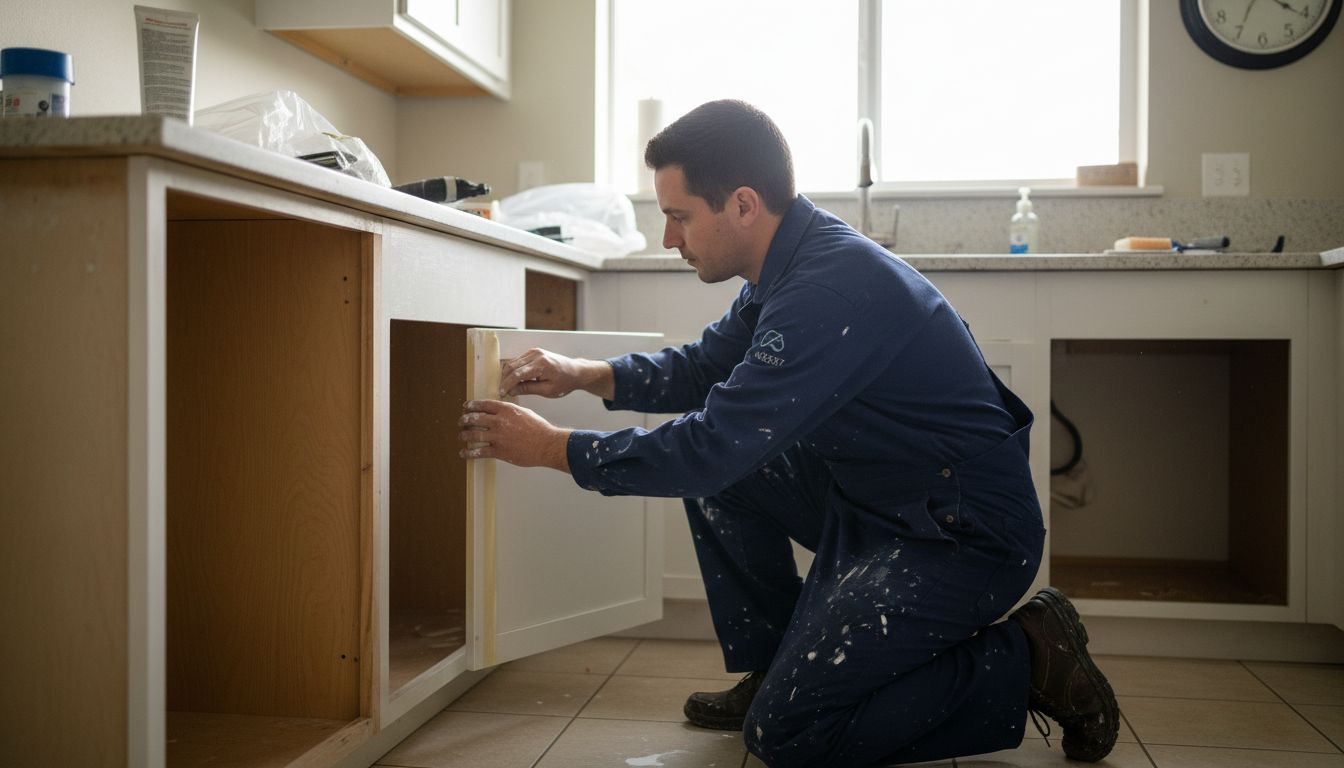
The initial stages of the kitchen respray process focus on comprehensive surface preparation. This critical phase begins with thorough cleaning and degreasing of all surfaces to remove accumulated grime, cooking residues, and oils that could compromise paint adhesion. Professionals then carefully inspect the kitchen surfaces, addressing any existing damage, filling minor imperfections, and sanding the areas to create a smooth, uniform base. The sanding process is crucial, as it helps the primer and subsequent paint layers adhere more effectively, ensuring a flawless and long-lasting finish.
Once the surface preparation is complete, the actual painting process begins with the application of a high-quality primer specifically selected for the kitchen surface material. Professionals apply the primer using industrial-grade spray equipment, which allows for even, consistent coverage that traditional brushing or rolling cannot achieve. After the primer has cured, multiple thin layers of specialised kitchen paint are applied, with each coat carefully allowed to dry between applications. This layering technique ensures maximum durability, colour depth, and a smooth, factory-like finish. The final stage typically involves applying a protective clear topcoat that enhances the paint’s resistance to moisture, scratches, and everyday kitchen wear and tear.
Pro tip: Ensure your kitchen environment is clean, dust-free, and maintained at a consistent temperature during the respray process to achieve the most professional and long-lasting results.
Main factors affecting respray cost estimates
Undertaking a kitchen respray involves a complex calculation of various interconnected factors that directly influence the overall project cost. Cost of kitchen respraying depends on multiple variables that homeowners should carefully consider before commissioning a professional service.
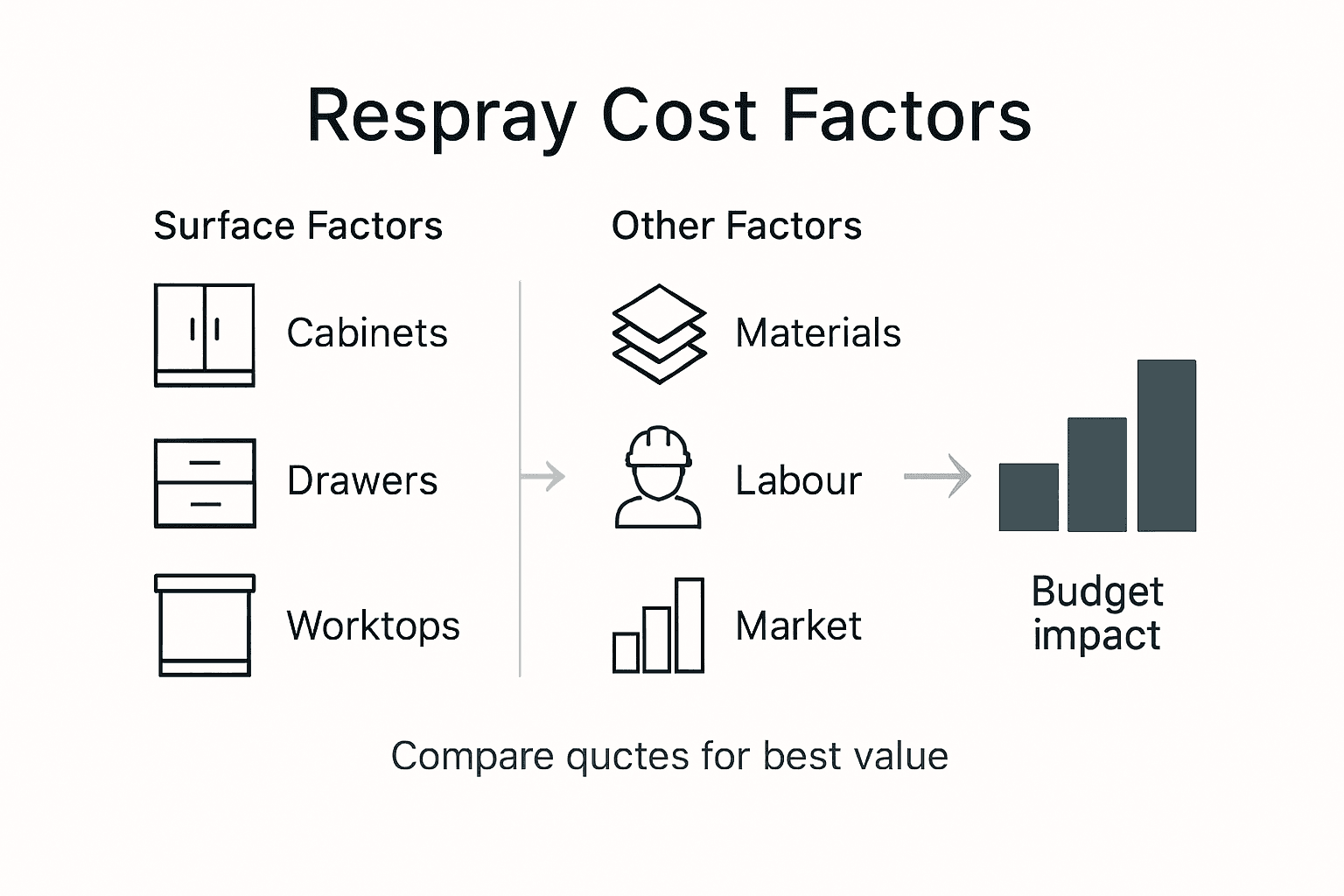
The primary cost determinants include the physical characteristics and condition of kitchen surfaces. The number of cabinet doors, drawer fronts, and additional surfaces requiring treatment significantly impacts pricing. Surface preparation complexity plays a crucial role, with kitchens featuring extensive damage, intricate designs, or multiple material types demanding more labour-intensive preparation. Professionals must assess existing surface conditions, potentially requiring repairs, filling imperfections, or additional sanding, which incrementally increases project expenses. The total square meterage of surfaces needing treatment represents another fundamental pricing factor, with larger kitchen spaces naturally commanding higher investment.
Market economic conditions and material selection also substantially influence respray cost estimates. Recent UK construction and renovation sectors have experienced significant material price fluctuations, driven by supply chain challenges and broader inflationary pressures. Paint quality, brand selection, and specific finish types create further pricing variations. High-performance, specialist kitchen paints with enhanced durability and moisture resistance typically command premium pricing compared to standard options. Additionally, labour charges vary depending on the complexity of the project, the expertise of the professionals involved, and regional economic differences across different parts of the United Kingdom.
Pro tip: Request comprehensive quotes from multiple professional kitchen respray specialists, ensuring they provide detailed breakdowns of surface preparation, material costs, and labour charges to understand the full scope of your potential investment.
Kitchen respray versus replacement or DIY costs
Homeowners seeking kitchen transformation face a critical decision between complete replacement, DIY modifications, and professional respraying. Kitchen renewal options demonstrate that respraying represents a financially strategic approach to kitchen renovation, offering substantial savings compared to traditional replacement methods.
Full kitchen replacements typically involve astronomical costs, often ranging from £10,000 to £25,000, depending on kitchen size and selected materials. In stark contrast, professional kitchen respraying can deliver a comprehensive aesthetic transformation for a mere fraction of those expenses, usually between 10-20% of full replacement costs. DIY attempts, while seemingly economical, carry significant risks. Amateur painters frequently encounter challenges with surface preparation, paint application, and achieving a professional-grade finish. Common DIY pitfalls include uneven coating, improper surface treatment, and using inappropriate materials, which can ultimately result in additional expenses for correction or complete professional intervention.
Professional kitchen respray services provide numerous advantages beyond mere cost-effectiveness. Skilled technicians utilise industrial-grade equipment and specialist techniques that ensure superior durability, precise colour matching, and a factory-like finish impossible to replicate through DIY methods. These professionals understand surface compatibility, prepare surfaces meticulously, and apply multiple layers of specialised paint, creating a finish that withstands daily kitchen demands. Moreover, professional respraying introduces minimal disruption, typically completing the entire project within 2-3 days, compared to weeks of potential upheaval associated with full kitchen replacements.
The following table summarises key cost, time, and result differences between kitchen respray, full replacement, and DIY efforts:
| Method | Estimated Cost Range | Typical Time Required | Result Quality |
|---|---|---|---|
| Professional respray | £1,000–£3,000 | 2–3 days | Factory-like finish |
| Full replacement | £10,000–£25,000 | 2–4 weeks | Brand new kitchen |
| DIY respray | £200–£500 | 3+ days | Often uneven finish |
Pro tip: Request comprehensive quotes from multiple professional respray specialists, comparing not just total costs but also the specific preparation, materials, and warranty offerings to ensure you receive optimal value.
Mistakes to avoid with kitchen respray projects
Kitchen respray projects require meticulous attention to detail, with numerous potential pitfalls that can compromise the final result. Kitchen respray troubleshooting highlights critical errors that homeowners and amateur painters must carefully avoid to achieve a professional-quality finish.
Surface preparation represents the most crucial stage where significant mistakes frequently occur. Inadequate cleaning and degreasing can prevent proper paint adhesion, leading to peeling, bubbling, or uneven finishes. Homeowners often underestimate the importance of thorough surface preparation, which involves comprehensive cleaning, precise sanding, and addressing any existing surface imperfections. Skipping or rushing this stage can result in costly rework and a substandard appearance. Furthermore, using inappropriate cleaning materials or failing to remove all grease, grime, and previous coatings can create a foundation that prevents paint from bonding correctly to the surface.
Environmental and technical mistakes can equally undermine a kitchen respray project. Painting in unsuitable conditions such as high humidity, extreme temperatures, or dusty environments can catastrophically affect the final finish. Amateur painters frequently make critical errors like applying paint in thick layers, which causes unsightly runs and uneven textures, or using incorrect paint types incompatible with kitchen surface materials. Safety considerations are equally important, with inadequate ventilation and improper protective equipment posing significant risks. Professional resprayers understand the nuanced requirements of different surface materials, ambient conditions, and specialist equipment needed to achieve a flawless, durable finish that withstands daily kitchen demands.
Pro tip: Invest in professional consultation before attempting a kitchen respray, as expert guidance can help you avoid costly mistakes and achieve a superior, long-lasting finish.
Transform Your Kitchen and Save with Expert Respraying
Understanding the true cost of kitchen respray and the challenges of full replacement can be overwhelming. The article highlights key concerns such as avoiding DIY mistakes, ensuring professional-grade finishes, and managing costs without sacrificing quality. If you are seeking a durable and flawless respray that saves both money and time, expert assistance is essential. With professional surface preparation and industrial-grade materials, you can expect a kitchen transformation that feels brand new, without the mess or disruption.

Discover how professional kitchen respray services deliver exceptional results right in your home. Learn more about our approach and stainless expertise in the Uncategorized Archives – WordPress section. Ready to rethink your kitchen makeover? Visit our main landing page today to request a personalised quote and take the first step towards an affordable, high-quality kitchen refresh that lasts.
Frequently Asked Questions
What factors influence the cost of a kitchen respray?
The cost of a kitchen respray is influenced by several factors, including the number of surfaces being treated, the complexity of the surface preparation required, the types of materials used, and current market conditions affecting paint prices and labour charges.
How does the cost of kitchen respraying compare to complete kitchen replacement?
Professional kitchen respraying typically costs 10-20% of a full kitchen replacement, making it a more budget-friendly option for significant aesthetic transformations without the need for extensive renovations.
Can I attempt a kitchen respray myself to save costs?
While DIY kitchen respraying may seem cost-effective, it carries risks such as improper surface preparation and poor application techniques, which can lead to uneven finishes and increased long-term expenses for correction. Professional resprayers provide expertise, ensuring a high-quality result.
What is the typical timeframe for a professional kitchen respray?
A professional kitchen respray usually takes around 2-3 days to complete, minimising disruption in comparison to the weeks required for a full kitchen replacement.