
Kitchen Respraying: Transforming Cabinets for Less
Most British homeowners hesitate when facing the hefty costs and disruption of a full kitchen renovation. With the average cabinet replacement in England easily exceeding £5,000, it is no wonder many are turning to smarter alternatives that deliver a stunning transformation without the steep expense. Discover how modern respraying techniques offer a cost-effective way to give your kitchen a professional new look while preserving your existing cabinetry.
Table of Contents
- What Is Kitchen Respraying? Core Principles Explained
- In-Situ Respraying: The Step-By-Step Process
- Choosing Paints and Finishes For Longevity
- Cost, Savings, and Value Compared to Replacement
- Risks, Limitations, and What to Avoid
Key Takeaways
| Point | Details |
|---|---|
| Cost Effectiveness | Kitchen respraying offers a significantly lower cost alternative to full cabinet replacement, with expenses starting around £800 compared to £5,000 to £15,000. |
| Quick Transformation | The respraying process usually takes 2-3 days, minimising disruption to household routines while revitalising the kitchen. |
| Surface Versatility | This technique can be applied to various materials including wood, laminate, and MDF, providing a flexible solution for updating kitchen aesthetics. |
| Professional Quality Finish | Utilising advanced equipment and specialised paints ensures a durable, factory-like finish that resists wear and tear in high-traffic kitchen environments. |
What Is Kitchen Respraying? Core Principles Explained
Kitchen respraying is an innovative home improvement technique that transforms existing kitchen cabinetry through professional painting methods. This process allows homeowners to completely refresh their kitchen’s appearance without the substantial expense and disruption of full cabinet replacement. Kitchen respraying offers a budget-friendly way to update the kitchen’s look while maintaining the original cabinet structures.
The core principle of kitchen respraying involves thoroughly preparing surfaces, applying specialist paint, and creating a durable, factory-like finish across existing cabinetry. Professional resprayers use advanced techniques including detailed cleaning, careful surface preparation, precision spraying equipment, and high-grade paint formulations specifically designed for kitchen environments. These methods ensure a smooth, long-lasting finish that can dramatically transform a kitchen’s aesthetic in a fraction of the time required for full renovation.
By choosing kitchen respraying, homeowners can achieve remarkable visual transformations with several key advantages. The process typically costs significantly less than cabinet replacement, reduces waste by utilising existing structures, and can be completed within days rather than weeks. Suitable for wooden, laminate, and MDF surfaces, kitchen respraying provides a versatile solution for updating tired or outdated kitchen designs without extensive structural changes.
Pro Tip: Colour Selection Strategy: Always test paint samples in your kitchen’s actual lighting conditions and alongside existing surfaces to ensure the perfect shade and finish before committing to a full respray.
In-Situ Respraying: The Step-By-Step Process
In-situ kitchen respraying represents a revolutionary approach to kitchen renovation, enabling homeowners to transform their cabinetry without extensive removal or replacement. The in-situ respraying process involves strategic painting techniques performed directly within the existing kitchen space, minimising disruption and reducing overall project complexity.
The comprehensive process typically involves several critical stages. First, professional resprayers meticulously clean and degrease all cabinet surfaces, removing years of accumulated grime and ensuring optimal paint adhesion. Next, they carefully mask surrounding areas including worktops, appliances, and flooring to protect them from overspray. The preparation phase also includes minor repairs, sanding surfaces to create a smooth base, and applying specialist primer designed to enhance paint durability and finish quality.
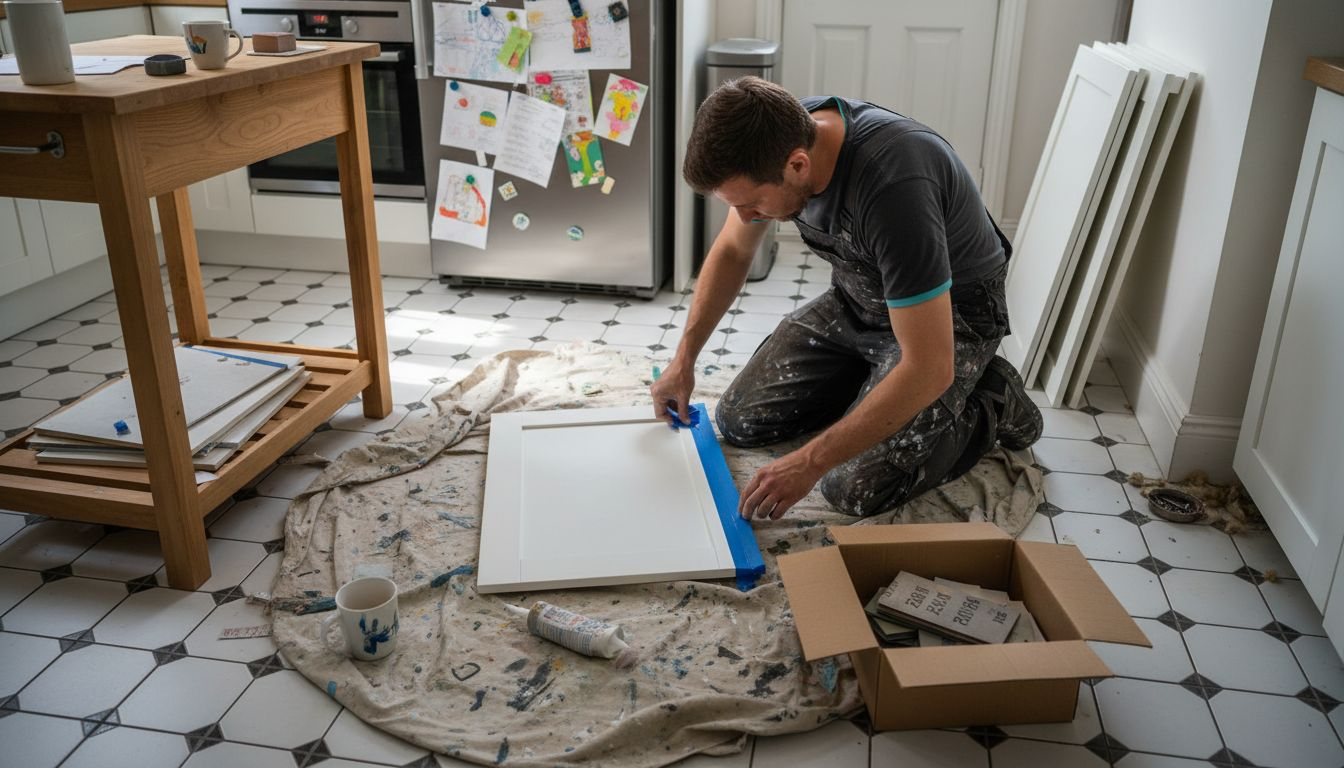
After thorough preparation, the actual respraying commences using professional-grade spray equipment that delivers an even, factory-like finish. Technicians apply multiple thin layers of specially formulated paint, allowing each coat to dry completely and creating a robust, seamless surface. This method ensures superior coverage, eliminates brush marks, and provides a more uniform appearance compared to traditional painting techniques. The entire process can typically be completed within 2-3 days, depending on the kitchen’s size and complexity.
Pro Tip: Surface Preparation Insight: Always ensure your kitchen is well-ventilated during the respraying process and remove delicate items from nearby areas to protect them from potential paint particles.
Choosing Paints and Finishes for Longevity
Selecting the right paint and finish is crucial for ensuring a durable and attractive kitchen respray that withstands daily wear and tear. Kitchen paint durability depends on understanding different finish types and their specific performance characteristics, with each option offering unique benefits for homeowners seeking long-lasting results.
Professional kitchen resprayers typically recommend satin and semi-gloss finishes for their exceptional durability and ease of cleaning. These finishes provide excellent resistance to moisture, grease, and frequent wiping, making them ideal for high-traffic kitchen environments. Satin finishes offer a subtle sheen that conceals minor surface imperfections, while semi-gloss options deliver a more reflective surface that stands up brilliantly to splashes, steam, and regular cleaning. Advanced paint technologies now incorporate ceramic and urethane reinforcements that significantly enhance paint performance, creating surfaces that resist chipping, scratching, and colour fading.

When selecting paint for kitchen cabinetry, homeowners should prioritise specialist kitchen-grade paints formulated specifically for challenging culinary environments. These paints differ from standard wall paints by offering superior adhesion, moisture resistance, and durability. Water-based acrylic paints with enhanced chemical compositions provide excellent coverage, faster drying times, and lower volatile organic compound (VOC) emissions. Professional-grade paint systems often include multi-layer applications featuring primer, base coat, and protective topcoat to ensure maximum longevity and a flawless finish that can endure years of daily use.
Pro Tip: Colour and Finish Selection: Always obtain paint samples and test them in your actual kitchen lighting conditions, observing how different times of day and angles affect the paint’s appearance before committing to a full respray.
To help with finish selection, here is a summary of popular kitchen cabinet paint finishes:
| Finish Type | Appearance | Resistance Level | Maintenance Ease |
|---|---|---|---|
| Satin | Soft sheen, subtle reflection | High, resists marks | Wipes clean easily |
| Semi-gloss | Noticeable shine, reflective | Very high, resists splashes | Easily maintained |
| Matte | Non-reflective, smooth look | Moderate, marks show easily | Requires more careful care |
| Gloss | Highly reflective, bold look | Highest, repels spills | Simplest to wipe clean |
Cost, Savings, and Value Compared to Replacement
Homeowners seeking kitchen transformation face a critical financial decision between complete replacement and strategic respraying. Professional respraying offers a dramatically more cost-effective solution, with prices starting around £800 for a small kitchen, compared to the substantial investment required for full cabinet replacement that can easily exceed £5,000 to £15,000.
The financial advantages of kitchen respraying extend beyond initial cost savings. By preserving existing cabinetry structures, homeowners avoid significant expenses associated with complete demolition, disposal, and new installation. Modern respraying techniques can transform tired, outdated cabinets into contemporary, high-end surfaces at a fraction of replacement costs. This approach not only delivers substantial monetary savings but also minimises waste, representing an environmentally conscious alternative to total kitchen renovation.
Beyond pure financial considerations, kitchen respraying provides exceptional value through minimal disruption and rapid transformation. Traditional kitchen replacements can take weeks, disrupting household routines and requiring extensive labour. Respraying, by contrast, typically completes a full kitchen makeover within 2-3 days, allowing families to return to normal activities quickly. The process also preserves existing kitchen layouts, avoiding potential structural modifications, plumbing adjustments, or electrical work that dramatically increase replacement expenses.
Here’s a concise comparison of kitchen respraying versus full cabinet replacement:
| Aspect | Kitchen Respraying | Cabinet Replacement |
|---|---|---|
| Average Cost | Approximately £800-£2,000 | £5,000-£15,000 or more |
| Completion Time | 2-3 days | Several weeks |
| Disruption Level | Minimal, kitchen stays in use | High, major construction needed |
| Environmental Impact | Retains existing units, reduces waste | Extensive waste generation |
| Customisation Potential | Broad colour and finish options | Full layout/design flexibility |
Pro Tip: Budget Maximisation Strategy: Always request detailed quotes from multiple respraying professionals, comparing not just total costs but also included preparation, paint quality, and warranty coverage to ensure maximum value for your investment.
Risks, Limitations, and What to Avoid
Respraying has specific limitations that homeowners must carefully consider before undertaking the process. Not every kitchen or cabinet is an ideal candidate for respraying, and understanding potential risks can prevent costly mistakes and disappointing outcomes. The primary constraints involve existing cabinet condition, material compatibility, and realistic expectations about the transformation process.
Structural integrity represents the most critical factor in determining whether kitchen respraying is feasible. Cabinets with extensive damage, significant wood rot, deep structural cracks, or severe warping cannot be effectively restored through respraying. Professional technicians typically recommend replacing cabinets that demonstrate substantial structural compromise, as paint cannot rectify fundamental structural weaknesses. Additionally, certain materials like heavily textured laminate, extremely glossy surfaces, or cabinets with multiple layers of previous paint can present challenging preparation requirements that may compromise the final finish quality.
Potential risks extend beyond initial surface conditions to include improper application techniques and unrealistic aesthetic expectations. Inadequate surface preparation, incorrect paint selection, or rushed application can result in multiple defects including paint peeling, uneven coverage, visible brush marks, and premature colour fading. Homeowners should be particularly cautious about DIY respraying attempts, as professional-grade equipment, specialist paint formulations, and precise application techniques are crucial for achieving a durable, factory-like finish. Complex kitchen configurations with intricate details, multiple material types, or challenging geometry may require more specialised approaches that generic painting methods cannot successfully address.
Pro Tip: Professional Assessment Strategy: Always request a comprehensive on-site survey from experienced respraying professionals who can provide an honest evaluation of your specific kitchen’s suitability and potential challenges before committing to the project.
Refresh Your Kitchen Cabinets Today with Professional In-Situ Respraying
Are your kitchen cabinets looking tired or outdated but you want to avoid the high cost and disruption of a full replacement The article highlights key challenges like finding a cost-effective, quick solution that delivers a durable and beautiful finish without structural changes. At SKR Specialists we specialise in professional in-situ kitchen respraying that tackles these pain points head-on. Our expert service ensures thorough preparation and uses premium paints to give your cabinets a fresh new look that lasts.

Discover how our skilled team transforms kitchens swiftly with minimal disruption so you can enjoy your renewed space faster. Don’t let concerns about paint durability or surface preparation hold you back. Visit our Uncategorized Archives to learn more about our methods and guarantees. Ready to transform your kitchen with a service designed for lasting beauty and value Explore all we offer on our main website and book your expert consultation today. Your kitchens deserves this fresh new start—act now to secure a quote and bring your dream kitchen closer.
Frequently Asked Questions
What is kitchen respraying?
Kitchen respraying is a home improvement technique that involves professionally painting existing kitchen cabinetry to refresh its appearance without the need for full cabinet replacement.
How long does the kitchen respraying process take?
The kitchen respraying process typically takes 2-3 days, allowing homeowners to enjoy a transformed kitchen with minimal disruption.
What types of surfaces can be resprayed?
Kitchen respraying is suitable for various surfaces, including wood, laminate, and MDF, making it a versatile solution for updating cabinetry.
What finishes are recommended for kitchen respraying?
Professionals often recommend satin and semi-gloss finishes for their durability and ease of cleaning, as they resist moisture and grease, making them ideal for kitchens.