
Kitchen Respray Terminology Explained: What Every UK Homeowner Should Know
Most British homeowners are surprised to learn that a professional kitchen respray can extend the life of their cabinets by several years, often at a fraction of the cost of full replacement. With so many technical terms and unique preparation steps involved, the process can feel daunting for anyone considering a kitchen update. This clear guide unpacks the essential language and concepts behind a successful respray, helping you confidently plan your next British kitchen transformation.
Table of Contents
- Key Kitchen Respray Terms Defined
- Common Respray Parts And Components
- Paint Types, Finishes And Preparation
- Process Steps And Terminology
- Risks, Limitations And Alternatives
Key Takeaways
| Point | Details |
|---|---|
| Understanding Key Terms | Familiarise yourself with essential terminology such as primer, substrate, and colour matching to effectively manage your kitchen respray project. |
| Importance of Surface Preparation | Ensure thorough surface assessment and preparation to achieve a high-quality finish that lasts, as it significantly affects the final outcome. |
| Material Compatibility | Always verify that your chosen paint is suited for the specific materials in your kitchen to prevent adhesion failures. |
| Assessing Alternatives | Consider the pros and cons of different renovation options, including full replacement versus respraying, to make an informed decision that fits your budget and aesthetic goals. |
Key Kitchen Respray Terms Defined
Kitchen respraying involves specialised terminology that can be confusing for homeowners. Understanding these key terms will help you navigate your kitchen transformation project with confidence. Kitchen spray coating represents a professional method of renovating kitchen surfaces without complete replacement.
Primer refers to the foundational layer applied before painting, ensuring paint adhesion and creating a smooth surface. Substrate describes the original material being resprayed, which could include wooden cupboard doors, laminate surfaces, or metal cabinets. Professional resprayers assess the substrate’s condition to determine the most appropriate preparation technique.
Other critical terms include colour matching, which involves precisely replicating or selecting new colours for kitchen surfaces, and spray technique, the professional method of applying paint using specialised equipment. Understanding the seven essential stages of kitchen respraying helps homeowners appreciate the complexity of this home improvement process.
Pro Tip: Surface Preparation Matters: Always ensure your chosen professional thoroughly inspects and prepares surfaces before respraying, as proper preparation determines the final finish quality and longevity of your kitchen renovation.
Common Respray Parts And Components
When considering a kitchen respray project, understanding the various components involved is crucial for homeowners. Kitchen respray troubleshooting begins with identifying the specific parts and materials that will be transformed during the renovation process.
The primary components typically include cabinet doors, drawer fronts, end panels, and kickboards. Each surface presents unique challenges and requires specific preparation techniques. Wooden surfaces might need more intensive sanding, while laminate and melamine materials demand specialised bonding primers to ensure paint adhesion. Metal cabinet frames and handles also require careful treatment to achieve a uniform, professional finish.

Additional components that professional resprayers assess include worktops, plinths, and any integrated appliance panels. Complete kitchen respray techniques involve methodically addressing each surface to create a cohesive, refreshed appearance. The selection of appropriate paint systems, primers, and application methods depends on the specific substrate materials present in your kitchen.
Here’s a comparison of common kitchen substrates and their respray requirements:
| Substrate Type | Preparation Complexity | Required Primer Type |
|---|---|---|
| Wooden doors | Intensive sanding needed | Standard bonding primer |
| Laminate surfaces | Minimal sanding | Specialised bonding primer |
| Metal components | Degreasing essential | Anti-corrosion primer |
| Melamine/vinyl | Gentle abrasion | High-adhesion primer |
Pro Tip: Material Assessment Matters: Before beginning a respray, always request a comprehensive survey of your kitchen components, ensuring each surface receives tailored preparation to guarantee a flawless, long-lasting finish.
Paint Types, Finishes And Preparation
Kitchen respray projects demand careful consideration of paint types and application techniques. Kitchen paint finish guide reveals the intricate details homeowners must understand before beginning their renovation journey.
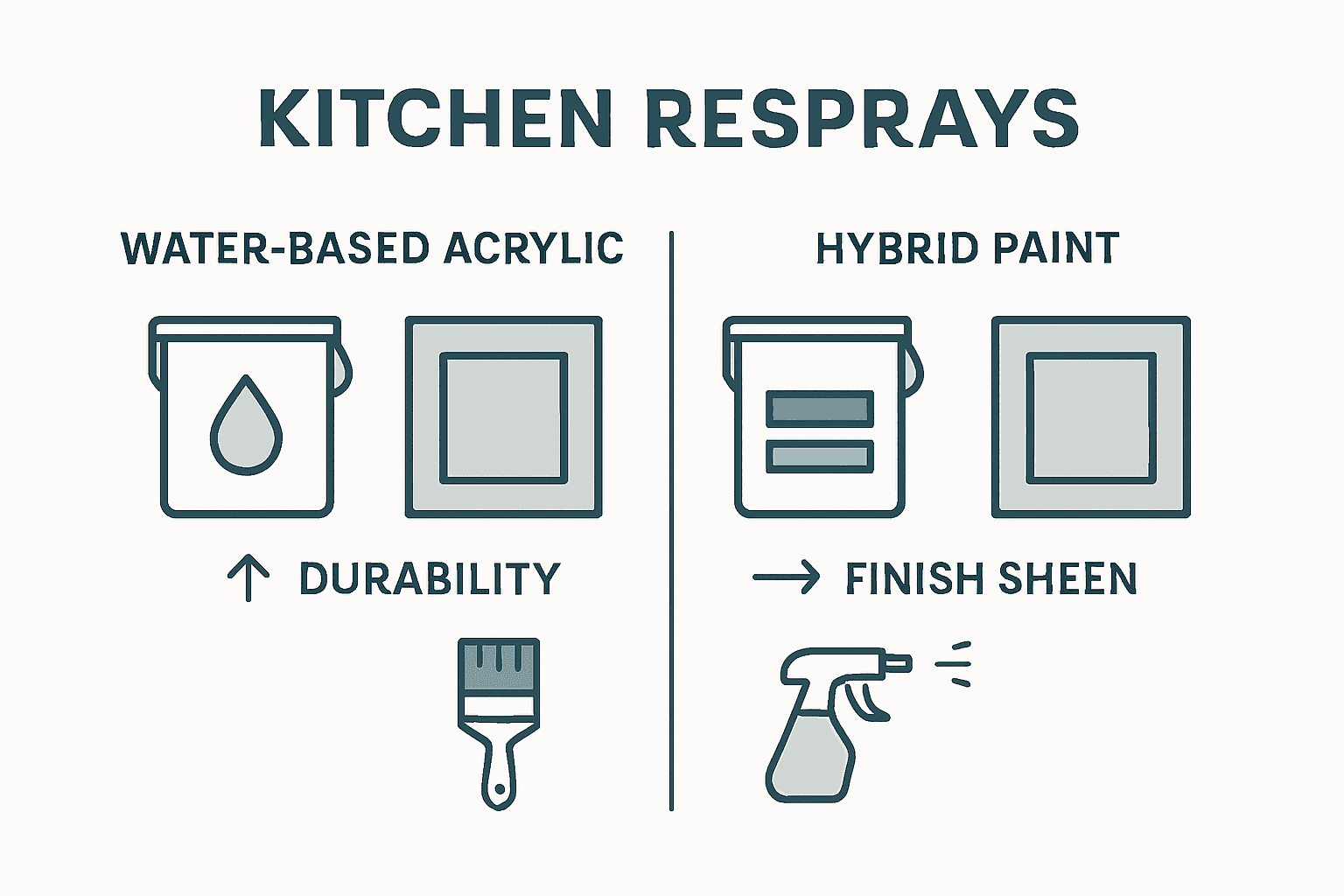
Professional resprayers typically recommend water-based acrylic and hybrid paints for kitchen surfaces. These paint types offer exceptional durability, quick drying times, and resistance to moisture and grease. Satin and semi-gloss finishes are particularly popular, providing a smooth appearance that’s easy to clean and maintains its aesthetic appeal over time. Types of kitchen paint vary significantly in performance, with each paint system requiring specific preparation techniques.
Preparation is crucial and involves multiple critical steps. Professional technicians begin by thoroughly cleaning surfaces, removing grease and grime, then carefully sanding to create an optimal bonding surface. Specialised primer applications ensure paint adhesion, addressing potential issues like surface porosity, previous paint layers, and material variations. Different substrate materials such as laminate, wood, and metal demand unique preparation approaches to guarantee a flawless, long-lasting finish.
Pro Tip: Surface Compatibility Check: Always confirm your chosen paint is compatible with your specific kitchen surface materials before commencing the respray, preventing potential adhesion failures and ensuring a professional-quality renovation.
Process Steps And Terminology
Kitchen respraying involves a systematic approach that requires professional expertise and precise technical understanding. Kitchen respray stages encompass multiple critical steps that transform kitchen surfaces with remarkable precision.
The primary stages include surface assessment, deep cleaning, degreasing, sanding, priming, and paint application. Surface assessment determines the substrate condition, identifying potential challenges like previous paint layers, material variations, or structural weaknesses. Professional resprayers meticulously evaluate each surface, selecting appropriate preparation techniques to ensure optimal paint adhesion and longevity. Kitchen respray finish types play a crucial role in determining the final aesthetic and performance of the renovation.
Technical terminology specific to kitchen respraying includes keying (creating a microscopic surface texture for paint adhesion), masking (protecting surrounding areas during spraying), and cross-hatching (a specialised painting technique ensuring uniform coverage). Each term represents a sophisticated technique that separates professional respraying from amateur DIY attempts. Skilled technicians understand that successful kitchen respraying goes beyond simple painting, requiring comprehensive knowledge of material science, paint chemistry, and precise application methods.
Pro Tip: Technical Precision Matters: Always inquire about a professional’s specific technical training and equipment, as the quality of preparation and application techniques directly determines the durability and appearance of your kitchen respray.
Risks, Limitations And Alternatives
Kitchen respraying, while an attractive renovation option, involves several potential risks and limitations that homeowners must carefully consider. Kitchen respray troubleshooting highlights the critical importance of understanding these potential challenges before committing to a renovation project.
Surface incompatibility represents a significant risk, where certain materials may reject paint application or experience premature degradation. Older kitchen surfaces with extensive wear, deep structural damage, or multiple previous paint layers might not be suitable for respraying. Some substrates like severely damaged melamine or extensively corroded metal surfaces could require complete replacement rather than respray. Complete kitchen respray techniques emphasise the importance of thorough initial assessment to prevent potential renovation failures.
Alternative options include full kitchen replacement, individual component replacement, and professional refurbishment. Each alternative carries different cost implications and aesthetic outcomes. Complete replacements offer maximum customisation but require substantially higher financial investment, while targeted component replacements can address specific areas of concern. Professional refurbishment techniques like veneer application or professional cleaning might provide intermediate solutions for kitchens with moderate aesthetic or functional challenges.
This table outlines alternative kitchen renovation approaches and their key advantages:
| Approach | Main Advantage | Typical Cost Impact |
|---|---|---|
| Full kitchen replacement | Maximum design freedom | Highest overall investment |
| Component replacement | Addresses target issues | Moderate-to-high cost |
| Professional respraying | Fast surface refresh | Affordable, cost-efficient |
| Refurbishment/veneering | Minor visual updates | Lower than replacement |
Pro Tip: Comprehensive Evaluation: Always obtain multiple professional assessments and quotes, comparing respray potential against replacement options to determine the most cost-effective and aesthetically pleasing renovation strategy for your specific kitchen condition.
Transform Your Kitchen with Expert Respraying Services
Understanding complex kitchen respray terminology like primer, substrate, and spray technique is essential to avoid costly mistakes and achieve the stunning finish you deserve. Respraying your kitchen requires precise surface preparation and high-quality paint application to overcome challenges such as surface incompatibility and material variations. If you want to turn your worn or dated kitchen surfaces into a bright, durable space without the upheaval of a full replacement then professional help is crucial.
Explore our comprehensive solutions in the Uncategorized Archives to see how we tackle these challenges expertly.

Don’t settle for less than perfect. Our team at SKR Specialists specialises in in-situ kitchen resprays that bring freshness and longevity to your kitchen surfaces using industry best practices. Get in touch today to benefit from a thorough surface assessment, expert primer application, and flawless finishes. Your kitchen transformation starts with informed decisions supported by trusted professionals who understand every technical term and requirement discussed here. Visit our main website to request a free consultation and experience the difference now.
Frequently Asked Questions
What is kitchen respraying?
Kitchen respraying is a professional method of renovating kitchen surfaces by applying a new layer of paint without the need for complete replacement, enhancing aesthetics and prolonging the life of existing components.
What are the key preparation steps in kitchen respraying?
Key preparation steps include surface assessment, deep cleaning, degreasing, sanding, applying primer, and finally painting. Each step is essential to ensure proper adhesion and a high-quality finish.
How do I choose the right paint type for my kitchen respray?
Professional resprayers typically recommend water-based acrylic and hybrid paints for kitchen surfaces due to their durability, quick drying times, and resistance to moisture and grease. It’s crucial to ensure compatibility with your specific kitchen materials.
What are the potential risks of kitchen respraying?
Potential risks include surface incompatibility, where certain materials may reject paint, and structural damage that may require replacement rather than respraying. It’s vital to conduct a thorough assessment before proceeding.
Recommended
- Kitchen Hygiene and Respray: Complete UK Guide – WordPress
- Kitchen Respray Regulations UK: Complete Guide 2025 – WordPress
- 7 Types of Kitchen Paint Every UK Homeowner Should Know – WordPress
- The Essential Guide to Kitchen Refurbishment – WordPress
- Jak zaplanować kuchnię – ergonomia i funkcjonalność w praktyce | Przestrzeń Od Nowa
- How to Choose Furniture for Stylish UK Homes Easily