
VOC in Paint – Why It Matters for Your Kitchen
Every homeowner planning a kitchen renovation faces the challenge of choosing paint that keeps the air fresh and safe. The strong smell after painting is more than a nuisance; it signals volatile organic compounds escaping into your home. British regulations tightly control VOC levels to protect both indoor air and the wider environment. Understanding VOC content puts you in charge of your family’s health, and knowing what to ask from your respray service ensures your kitchen stays welcoming long after the work is done.
Table of Contents
- What Are VOCs in Paint? Key Facts
- Types of Paint and VOC Contents
- How VOCs Affect Health and Home Air
- UK Legal Limits and Safety Standards
- Reducing VOC Risks in Kitchen Resprays
Key Takeaways
| Point | Details |
|---|---|
| VOCs are prevalent in paint | Volatile organic compounds (VOCs) evaporate from paint, affecting indoor air quality and overall health. |
| Choose low-VOC paint options | Opt for water-based paints with low or ultra-low VOC content to minimise health risks during kitchen resprays. |
| Ensure proper ventilation | Maintain continuous ventilation during and post-application to reduce VOC accumulation in enclosed spaces. |
| Understand legal limits | In the UK, paints must meet strict VOC regulations, but selecting products that exceed these limits can further enhance air quality. |
What Are VOCs in Paint? Key Facts
VOCs stand for volatile organic compounds, and they’re organic chemicals that evaporate at room temperature. When you open a tin of paint, that strong smell you notice? That’s largely VOCs escaping into the air. According to UK legislation, VOCs are organic compounds with a boiling point of 250°C or lower, which means they readily transform from liquid to gas during and after paint application. In your kitchen specifically, this matters because the space is typically warm, well-used, and where your family spends considerable time cooking and eating.
Paints contain VOCs in several components. The solvents in paint (which help the paint flow and dry properly) are a major source. Additives that improve paint performance, pigments that provide colour, and binders that help the paint stick to your cabinets all can release these compounds. This is why cheaper paints often smell much stronger than premium alternatives. The cheaper formulations typically rely on higher solvent content to achieve the right consistency and drying speed. When you’re having your kitchen respray work done, the painter is exposed to significantly higher concentrations of these fumes, which is why professional application with proper ventilation matters.
Why should you care about VOCs in your kitchen? Beyond the obvious smell, these chemicals contribute to both indoor air quality problems and environmental issues like smog formation. During and after your kitchen respray, VOCs will be released into your home. High exposure can cause headaches, dizziness, respiratory irritation, and trigger allergies or asthma symptoms. Your kitchen is one of the most frequently used rooms in your home, so choosing paints with lower VOC content makes a genuine difference to your household’s health over time. Lower VOC paints still perform well on kitchen cabinetry, providing durability and a quality finish without the health trade-offs.
The UK has regulations specifically governing VOC limits in paints, meaning you’ll find significantly different VOC content between products on the market. Some paints are formulated as “low VOC” or “ultra-low VOC,” which means they meet stricter emissions standards. When you’re discussing your kitchen respray project with professionals, asking about the VOC content of the paint they’ll use puts you in control of what’s being applied to your cabinetry and what will be released into your home during and after the work.
Pro tip: When booking your kitchen respray, specifically ask your painter about the VOC levels in their paint choice and whether they offer lower VOC options. This single question ensures you’re making an informed decision about the air quality in your home post-renovation.
Types of Paint and VOC Contents
Not all kitchen paints are created equal when it comes to VOC emissions. The two main categories you’ll encounter are water-based (water-borne) and solvent-based (solvent-borne) paints, and they differ dramatically in their VOC content. Water-based paints use water as their primary carrier instead of chemical solvents, which means they release significantly fewer volatile organic compounds into your home. Water-based paints significantly reduce VOC emissions compared to solvent-based alternatives, making them the preferred choice for most kitchen respray work in the UK. When a painter applies water-based paint to your kitchen cabinets, you’ll notice far less odour during and after application, and the fumes dissipate much more quickly.
Solvent-based paints, by contrast, rely on chemical solvents like white spirit or turpentine to thin the paint and help it flow smoothly. These solvents are the primary source of VOC emissions. Whilst solvent-based paints traditionally offered superior durability and a harder finish on cabinetry, modern water-based formulations have closed that gap considerably. The UK legally regulates VOC content in both types, but VOC limits vary significantly depending on paint type and application, with stricter limits for interior paints than exterior products. For kitchen work, interior paint regulations mean your painter should be using products with substantially controlled emissions. If someone suggests solvent-based paint for your kitchen respray without a compelling technical reason, it’s worth asking why, especially given that water-based alternatives now meet all performance requirements for kitchen cabinetry.

You’ll also encounter specialist paint types for kitchens. Acrylic latex paints are water-based and deliver low VOCs with excellent durability. Enamel paints come in both water-based and solvent-based versions, though water-based enamels have become standard for kitchen work. Some professionals recommend hybrid paints that combine water-based and solvent-based technologies, though these still typically contain more VOCs than pure water-based formulations. The thing to understand is this: a painter offering you water-based paint options with certified low or ultra-low VOC content is giving your kitchen respray project the best possible balance of performance, durability, and air quality. When comparing quotes from different kitchen respray companies, the paint specification matters as much as the application technique. A company using premium water-based, low-VOC paints will cost slightly more but protects your family’s health during and long after the work is completed.
Here’s a summary of how different kitchen paint types compare for VOC content and performance:
| Paint Type | Typical VOC Levels | Durability on Cabinets | Odour During Painting |
|---|---|---|---|
| Water-based | Low to very low | High, modern formulas | Mild and short-lived |
| Solvent-based | High | Very high | Strong and lingering |
| Hybrid (water-solvent) | Moderate | Good | Moderate |
| Acrylic latex (water) | Very low | Excellent | Minimal |
Pro tip: Ask your kitchen respray painter to specify the exact VOC content of their paint in grams per litre and request they use products certified as low-VOC or ultra-low-VOC. Most reputable painters keep this information readily available and will gladly share it during your consultation.
How VOCs Affect Health and Home Air
When VOCs are released during your kitchen respray, they don’t simply disappear. These chemicals enter your home’s air and can accumulate, particularly in enclosed spaces like kitchens where ventilation is often limited. Exposure to VOCs in paint can cause eye, nose, and throat irritation, alongside headaches and nausea, with severity depending on exposure levels and duration. The immediate effects are usually what people notice first. You might smell strong fumes for days after the work is completed, and family members report feeling slightly unwell, experiencing headaches, or noticing their eyes watering. These aren’t minor inconveniences. They’re your body signalling that you’re breathing in chemicals that don’t belong in your home. The risk is higher for vulnerable household members, including young children whose lungs are still developing, elderly relatives, and anyone with existing respiratory conditions like asthma.
What many homeowners don’t realise is that VOC exposure creates both immediate and long-term health risks, even after the fresh paint smell has faded. Once VOCs have been released into your kitchen, they don’t vanish overnight. They linger in the air, settle on surfaces, and continue off-gassing for weeks or even months depending on the paint type and ventilation conditions. This is particularly concerning in kitchens because the space operates at higher temperatures when you’re cooking, which actually accelerates VOC release from freshly painted surfaces. Certain VOCs are classified as carcinogenic, meaning prolonged or repeated exposure carries genuinely serious health implications. Additionally, accumulating VOCs in poorly ventilated kitchen spaces contribute to degraded indoor air quality, which research increasingly links to respiratory issues, allergies, and other chronic health problems. For families already managing asthma or allergies, a poorly executed kitchen respray with high-VOC paints can trigger symptoms for months.
The connection between your kitchen respray and your family’s health is direct and measurable. When you choose a painter who uses water-based, low-VOC paints and maintains proper ventilation throughout the project, you’re making a genuine health investment. Symptoms from VOC exposure include dizziness, respiratory issues, and headaches, all of which are avoidable through better paint choices. This isn’t about being overly cautious. Professional kitchen painters in the UK increasingly recognize that high-VOC paints create real problems for their clients’ households. A quality respray service will discuss ventilation strategies, recommend opening windows even in cold weather, and be transparent about how long your kitchen should remain unoccupied after painting. They should also explain why they’ve chosen their specific paint product and how its VOC rating protects your air quality. If a painter dismisses questions about VOCs or shows indifference to your health concerns, that’s a red flag about their overall professionalism and their commitment to your family’s wellbeing.
Pro tip: During your kitchen respray, open windows continuously for at least 48 hours after the painter finishes, even if it’s cold outside, and request that your painter uses low-VOC products and explains their ventilation plan at the initial consultation.
UK Legal Limits and Safety Standards
The UK doesn’t leave VOC regulations to chance. The government enforces strict legal limits on paint products through the Volatile Organic Compounds in Paints, Varnishes and Vehicle Refinishing Products Regulations 2012, which means any paint sold for interior use in England must meet specific VOC thresholds. These regulations aren’t optional guidelines or voluntary standards. They’re legal requirements with real enforcement mechanisms, and manufacturers who breach them face penalties. This is genuinely good news for you as a homeowner because it means that even the most budget conscious paint choice available in British shops has already been vetted against VOC limits. When you’re comparing quotes from kitchen respray companies, every paint product they might suggest has been tested and certified to meet or exceed these legal requirements.
However, legal compliance and optimal safety are not the same thing. UK law sets maximum VOC content limits for different paint types, with different thresholds depending on whether the paint is water-based or solvent-based, and whether it’s intended for interior or exterior use. For kitchen cabinetry, interior paint regulations apply, which means stricter limits than exterior products. A paint that meets the legal minimum for VOC content is still legal but might contain considerably more VOCs than a premium low-VOC alternative. Think of it this way: meeting the legal speed limit doesn’t mean you’re driving as safely as possible. Similarly, a paint at the legal VOC limit is compliant but not optimal. Premium kitchen respray services understand this distinction and deliberately choose paints that stay significantly below legal limits rather than just meeting them.
The regulations also mandate that manufacturers and distributors conduct rigorous testing and provide clear labelling on all paint products, so you can see the actual VOC content listed in grams per litre. When you’re evaluating kitchen respray quotes, asking to see the product data sheets and actual VOC numbers puts you in control of the decision. The 2012 Regulations implement European standards and require ongoing monitoring to ensure products remain compliant throughout their shelf life. This means a tin of paint sitting in a warehouse for months must still meet VOC limits when you purchase it. The regulations also require paint to be correctly labelled with VOC content, application instructions, and safety warnings, which is why professional painters keep product documentation readily available. If a painter cannot or will not show you the VOC specifications and safety data for the paint they’re planning to use, that’s a significant red flag about their professionalism and whether they’re taking your health seriously.
See how VOC regulations differ for common kitchen respray paints in the UK:
| Paint Category | Legal UK VOC Limit (g/L) | Labelling Requirement | Typical Use Case |
|---|---|---|---|
| Interior water-based | ≤ 30–60 | Must show VOC content | Kitchens, living rooms |
| Interior solvent-based | ≤ 250 | Must show VOC content | Specialised cabinetry, rare |
| Exterior paints | ≤ 130–400 | Must show VOC content | Outdoor, non-kitchen surfaces |
Understanding these regulations helps you make informed decisions about your kitchen respray. You’re protected by law, but you’re also empowered to choose painters who exceed legal minimums. A reputable kitchen respray service will not only use compliant paints but will discuss why they’ve selected their specific products and how those choices protect your home’s air quality during and after the project. They’ll explain the difference between meeting legal requirements and choosing genuinely low-VOC products. They’ll also help you understand ventilation requirements and off-gassing timelines based on the specific paint they’re using. This transparency and expertise is what separates professional kitchen respray companies from painters who simply meet bare legal minimums.
Pro tip: Before booking your kitchen respray, request that your painter provides written documentation showing the VOC content of the paint they’ll use, measured in grams per litre, and ask whether it’s below the legal limit or significantly lower.
Reducing VOC Risks in Kitchen Resprays
Reducing your exposure to VOCs during a kitchen respray starts with deliberate choices about paint selection and execution. The most effective strategy is choosing water-based paints with low VOC content, which emit significantly fewer harmful compounds than traditional solvent-based alternatives. When you’re collecting quotes from kitchen respray companies, specifically ask whether they offer water-based low-VOC options. A professional painter won’t hesitate to discuss paint formulations and will explain why they recommend particular products. They should be able to tell you the exact VOC content in grams per litre and confirm whether the paint meets low-VOC or ultra-low-VOC certifications. Beyond paint selection, reducing VOC exposure involves proper ventilation and safe application techniques, which separates amateur work from professional kitchen respray services. Your painter should have a detailed ventilation strategy before they start, including opening windows, using fans strategically, and potentially setting up temporary ducting if your kitchen layout makes natural ventilation difficult.
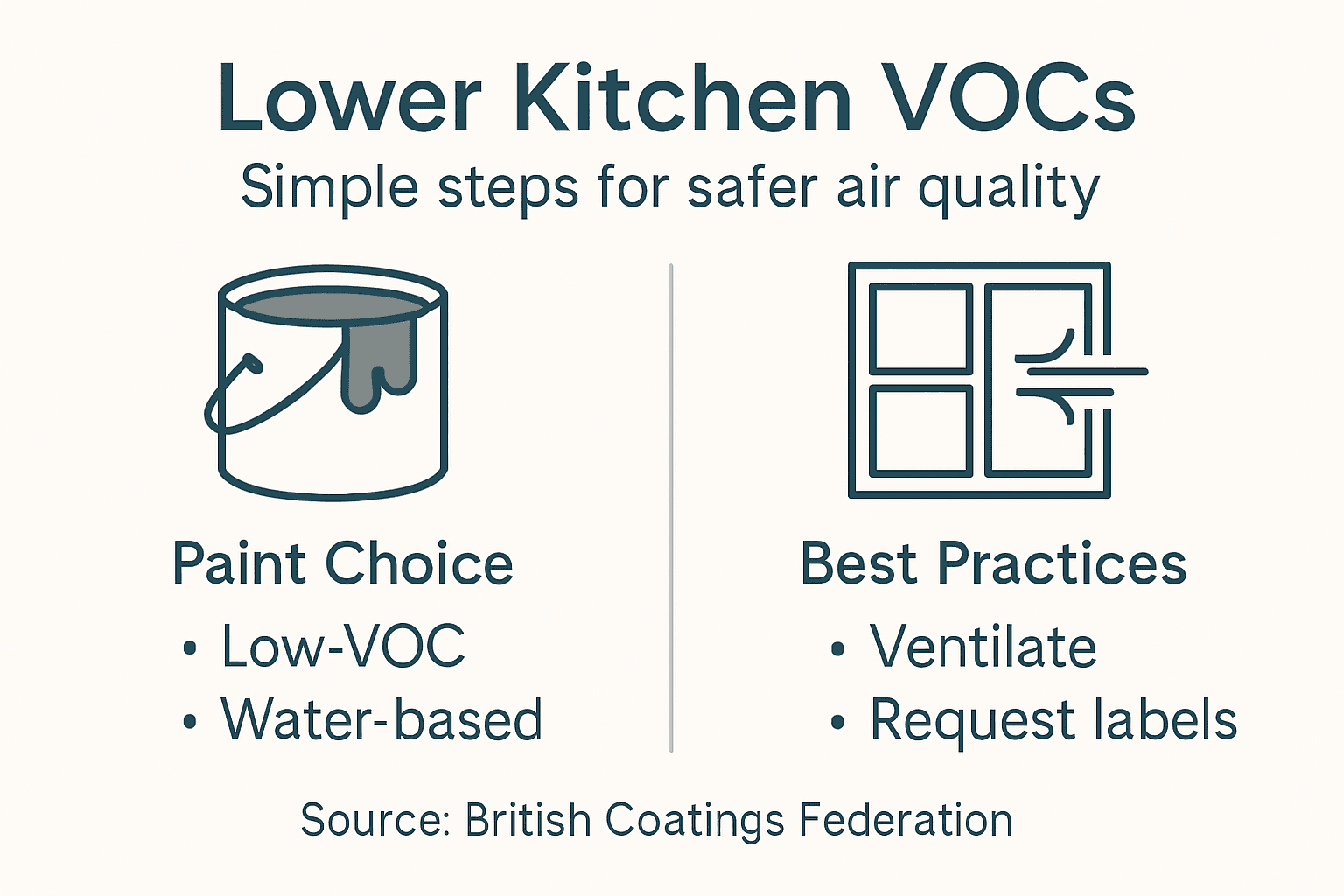
Ventilation is genuinely your strongest ally during a kitchen respray. Open all windows continuously throughout the work and for at least 48 to 72 hours after the painter finishes. This constant air exchange removes VOCs from your home rather than allowing them to accumulate and off-gas slowly over months. If you’re respotting in winter or during cold weather, this is genuinely inconvenient, but the health benefit outweighs the temporary discomfort. Ask your painter to explain their specific ventilation approach at your initial consultation. Professional services often use portable air purifiers with HEPA filters to capture particulates, though these won’t catch all VOCs since many compounds remain gaseous. Cross-ventilation (opening windows on opposite sides of your kitchen) works better than single-window ventilation because it creates air flow rather than just fresh air replacement. During the respray work itself, your painter should be wearing appropriate respiratory protection, not because you’re unsafe but because they’re in direct contact with paint fumes for extended periods. If your painter isn’t using respiratory protection, that’s another red flag about their professionalism and understanding of occupational health.
Product labelling is your transparency tool. The British Coatings Federation promotes the VOC Globe labelling scheme to help consumers identify low-VOC products, which means you can visually identify better choices when comparing options. Look for products with clear labelling showing VOC content and certification logos. When evaluating quotes, ask to see the actual product containers or data sheets so you can verify certifications yourself rather than relying solely on the painter’s word. Products from reputable manufacturers always include transparent VOC information because they’re proud of their formulations. If a painter can’t or won’t provide this documentation, reconsider whether they’re the right choice for your project. Beyond the respray itself, ask about disposal practices. Responsible painters minimise solvent use during cleaning and follow proper procedures for disposing of paint materials. This isn’t just about your home’s air quality. It’s about environmental responsibility and choosing a company that operates ethically throughout their entire process.
Timing your kitchen respray strategically also reduces risk exposure. Avoid cold months if possible because poor ventilation in winter compounds VOC accumulation. Plan the respray during warmer months when you can comfortably open windows for extended periods. If your kitchen respray must happen in winter, discuss temporary heating solutions with your painter so you can maintain ventilation without freezing your home. For families with young children, pregnant household members, or anyone with respiratory conditions, choose painters who demonstrate genuine understanding of these vulnerabilities and who proactively suggest low-VOC products rather than waiting for you to ask. This proactive approach signals that the painter prioritises your family’s health and will manage their work accordingly.
Pro tip: Schedule your kitchen respray during warmer months when you can open windows continuously, request your painter uses water-based low-VOC paint with documented VOC content below 50 grams per litre, and maintain 48 to 72 hours of ventilation after completion.
Protect Your Home’s Air Quality with Expert Kitchen Respray Solutions
Understanding the impact of VOCs on your kitchen’s air quality and your family’s health is essential. The harsh odours and harmful emissions from high-VOC paints can cause headaches, respiratory irritation and long-term health risks. At SKR Specialists we specialise in professional kitchen respray services that use low-VOC water-based paints proven to reduce these dangers while delivering an excellent finish. Choosing the right paint matters as much as expert application and proper ventilation for safeguarding your loved ones.

Take control of your indoor environment today by scheduling a kitchen respray with SKR Specialists. Learn more about our commitment to low-VOC, health-conscious products and techniques by visiting our professional kitchen respray service page. For detailed information about the benefits of low-VOC paints and how we keep your home safe during the respray process, explore our expert kitchen respray solutions. Don’t wait until paint fumes affect your wellbeing act now and secure a healthier kitchen atmosphere with SKR Specialists.
Frequently Asked Questions
What are VOCs in paint, and why are they a concern for my kitchen?
VOCs, or volatile organic compounds, are chemicals in paint that evaporate at room temperature, contributing to indoor air quality issues. In the kitchen, where air circulation can be limited, high levels of VOCs can lead to health problems like headaches, dizziness, and respiratory issues.
How do water-based and solvent-based paints differ in terms of VOC content?
Water-based paints contain significantly lower VOC levels compared to solvent-based paints, making them a safer choice for indoor applications, particularly in kitchens. They release fewer harmful compounds and typically have a milder odour during application.
What should I ask a painter about the VOC content of the paint they use?
It’s important to inquire about the exact VOC levels in grams per litre and whether the paint qualifies as low-VOC or ultra-low-VOC. This ensures that you’re making an informed decision that prioritises your home’s air quality.
How can I reduce my exposure to VOCs during a kitchen respray?
To minimise VOC exposure, choose water-based, low-VOC paints and ensure proper ventilation by keeping windows open during and after the respray for at least 48 to 72 hours. Ask your painter for their ventilation strategy to ensure safety throughout the process.