
Metal Garage Door Painting: The Professional Guide to a Factory Finish
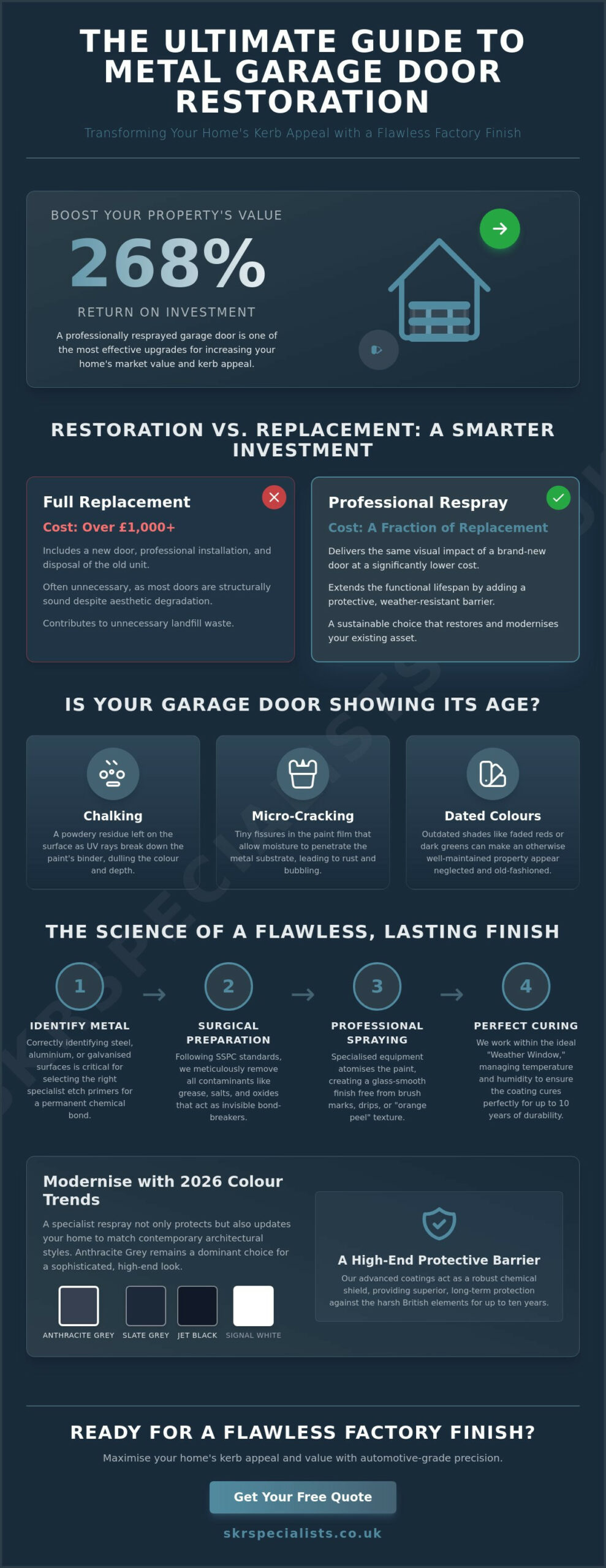
Did you know that updating a garage door offers a staggering 268% return on investment in 2026? It’s the most effective way to boost your property’s kerb appeal and market value. You’ve likely noticed your current door is starting to show its age through chalking, flaking paint, or a dated colour that doesn’t match your style. Mastering metal garage door painting is about more than just a quick refresh. It’s about using technical precision to restore the pride you feel when you pull into your driveway.
We understand the concern that a DIY attempt might leave visible brush marks or fail to bond to galvanised steel. This guide shares the professional secrets and technical processes required to transform your door with a flawless, “as-new” factory finish. You’ll discover the exact chemical requirements for long-term protection against the British weather and how to achieve a result that lasts for up to ten years. We’ll walk you through the essential preparation steps and the specialised equipment used by craftsmen to ensure your home stands out for all the right reasons.
Key Takeaways
- Learn why identifying your door’s metal type is the first step in selecting the correct etch primers for a chemical bond that won’t flake or peel.
- Discover why professional spray techniques are the only way to achieve a glass-smooth finish without the unsightly brush marks or “orange peel” texture of DIY attempts.
- Understand how to navigate the “Weather Window” and humidity levels to ensure your metal garage door painting project cures perfectly for long-term durability.
- Explore the 2026 colour trends, such as Anthracite Grey, and see how a specialist respray acts as a high-end protective barrier against the British elements.
- See how applying automotive-grade precision to your property restoration can maximise your home’s kerb appeal and significantly increase its resale value.
Why Metal Garage Door Painting is the Ultimate Property Refresh
Professional metal garage door painting isn’t a simple weekend DIY task; it’s a high-precision restoration process designed specifically for steel or aluminium surfaces. We view this service as an essential protective measure rather than just a cosmetic change. A professional respray creates a robust chemical barrier that shields the substrate from moisture and oxidation. This prevents the structural decay and rust that often lead to total failure. By opting for a specialised respray, you’re investing in the longevity of your home’s exterior whilst achieving a finish that looks like it just rolled off the assembly line.
The cost-efficiency of this approach is undeniable. Replacing a standard garage door in the UK often exceeds £1,000 once you factor in the price of the unit, professional installation, and the disposal of the old door. Respraying offers a savvy alternative that delivers the same visual impact for a much smaller investment. It immediately elevates your property’s kerb appeal, which is vital considering the garage door can occupy up to 40% of your home’s front elevation. In a competitive property market, a crisp, modern exterior can significantly influence a buyer’s first impression and the overall valuation of your home. For a detailed breakdown of the financial case, our guide to garage door colour change cost reveals exactly how respraying compares to full replacement in 2026.
Restoration vs Replacement: The Savvy Homeowner’s Choice
Most metal doors reach their aesthetic “end of life” long before they suffer any real structural damage. The original Powder Coating applied during the manufacturing process eventually degrades under constant UV exposure, leaving the surface looking dull and tired. We provide a sophisticated middle ground between neglect and expensive replacement. By restoring the finish to a factory-grade standard, you extend the door’s functional lifespan whilst modernising the look of your entire property. It’s a strategic upgrade that prioritises precision and craftsmanship over unnecessary waste.
Common Signs Your Garage Door Needs a Professional Respray
Identifying the early warning signs of paint degradation can save you from more intensive repairs later. Our specialist team looks for specific indicators that the existing coating is failing:
- Chalking: This occurs when UV rays break down the paint’s binder, leaving a powdery residue on the surface that ruins the colour’s depth.
- Micro-cracking: Tiny fissures in the paint film allow water to seep through to the metal, inviting oxidation and surface bubbling.
- Fading and Dated Colours: Shades like “British Racing Green” or faded reds from previous decades can make even a well-maintained property look neglected.
A fresh respray solves these issues instantly. We use advanced coatings that bond at a molecular level, providing a sleek, contemporary aesthetic that matches 2026 architectural trends whilst offering superior resistance to the British weather.
The Science of Adhesion: Preparing Metal Surfaces for a Permanent Bond
Achieving a factory finish during metal garage door painting requires a deep understanding of the substrate’s chemistry. Steel, a ferrous metal, behaves fundamentally differently to non-ferrous surfaces like aluminium or galvanised coatings. Whilst steel is prone to rapid oxidation, galvanised surfaces possess a “greasy” zinc layer that repels standard paints. Without a specific chemical key, the coating will inevitably peel within months. We focus on removing contaminants like mill scale, a brittle oxide layer formed during manufacturing, and flash rust, which can compromise the bond before the first coat even touches the surface.
Grease, road salts, and atmospheric pollutants act as invisible bond-breakers. Even a fingerprint can contain enough oil to prevent proper adhesion. Professional restoration relies on strictly following SSPC Surface Preparation Standards to ensure the metal is surgically clean before any primer is applied. This level of detail separates a high-end respray from a standard domestic paint job. This technical approach ensures the final film is smooth and durable, proving that successful metal garage door painting is as much about chemistry as it is about aesthetics.
Mechanical Preparation: More Than Just Sanding
Surface profile is everything. We use 180-240 grit abrasives to create a microscopic texture that allows the primer to “bite” into the metal. Many homeowners mistakenly believe wire brushing is enough, but it often just polishes the surface or embeds rust deeper into the pores. A truly permanent bond requires specialised degreasers that strip away every trace of residue, leaving a pristine surface ready for the chemical stage. For those seeking a professional result that bypasses these technical hurdles, our garage door respray service provides a seamless solution.
Chemical Bonding and the Role of Professional Primers
Generic “all-in-one” DIY paints are the primary cause of failure on galvanised steel. These products lack the acidic components found in professional etch primers, which are essential for biting into non-ferrous metals. We utilise high-build primers that serve two purposes: they create an impenetrable barrier against future oxidation and level out minor surface imperfections. These professional-grade coatings are engineered to prevent oxidation from developing underneath the film, ensuring the metal remains protected whilst the exterior looks flawless for years to come.
Spraying vs Brushing: Why Professional Methods Outperform DIY
Many homeowners assume that picking up a brush is the most straightforward path to a refreshed exterior. This is a common misconception that often leads to a finish that looks amateur and dated. metal garage door painting is a technical trade that demands specialised equipment to achieve a high-end result. A brushed door will always betray its DIY origins through visible strokes and uneven ridges. Metal is a non-porous surface; the paint doesn’t soak in, it sits on top. Brushes move the paint around rather than laying it down, whereas professional spraying atomises the coating into a fine mist that settles perfectly flat.
If you choose to use a roller, you’ll likely encounter the dreaded “orange peel” effect. This occurs when the paint’s surface tension causes it to pull into tiny, dimpled bumps as it dries. It’s particularly noticeable on large, flat metal panels where the light hits the surface directly. Professional sprayers avoid this by meticulously controlling the viscosity and application temperature. This ensures the coating flows out into a glass-smooth layer that a brush or roller simply cannot replicate. Speed is another critical factor. Whilst a DIY brush job can drag on for days, a professional respray is typically completed in hours, minimizing disruption to your routine.
Film thickness is where professional methods truly shine. Sprayers provide even coverage across the entire door, including recessed panels and intricate grooves where brushes often cause paint to pool or sag. This uniform layer isn’t just about looks; it’s about protection. An even film ensures there are no weak spots where moisture can penetrate and begin the oxidation process. By using advanced spraying techniques, we provide a durable shield that protects the substrate whilst delivering a flawless aesthetic.
The HVLP Advantage: High Volume, Low Pressure
SKR Specialists utilise High Volume Low Pressure (HVLP) technology to deliver a superior finish. This equipment allows for controlled atomisation, breaking the paint down into microscopic droplets before it reaches the door. This precision results in a much higher transfer efficiency, meaning more paint stays on the door and less is wasted in the air. It’s a sophisticated approach that ensures better coverage with a thinner, more resilient layer than traditional methods could ever achieve.
Durability and the “Factory Finish” Standard
A true factory finish is defined by its hardness and micron thickness. Professional coatings are engineered for UV-stability, ensuring the colour remains vibrant for years without yellowing or cracking. These specialised paints are far more resilient than standard retail gloss. To understand the full scope of this restoration process, you can explore our Professional Garage Door Painting Pillar for a deeper look at our technical standards.
A Professional Guide to Metal Garage Door Painting: Step-by-Step
Executing a flawless metal garage door painting project requires more than just a steady hand; it demands a strict adherence to technical protocols. We always begin by assessing the “Weather Window”. Humidity is the silent killer of professional finishes. If the air is too damp, the paint’s solvents cannot evaporate at the correct rate, leading to a compromised bond and a duller finish. We ensure the environmental conditions are perfect before the first coat is even mixed. This meticulous planning ensures the transition from a tired surface to a high-end finish is both seamless and permanent.
Our multi-coat system provides a depth of colour and level of protection that single-coat retail products cannot match. We apply a specialised primer followed by a high-pigment base and a protective topcoat. This layered approach creates a resilient shield against the British elements. Understanding the timeline is also vital. There is a significant difference between a surface being “touch dry” and becoming “fully hard”. Whilst the door may be operable within hours, the coating takes several days to reach its peak chemical hardness and maximum durability.
Phase 1: Deep Cleaning and Surface Decontamination
Years of road grime, salt spray, and atmospheric pollutants must be completely removed to ensure a successful bond. We use industrial-strength cleaners that strip away oils and silicone residues that would otherwise cause the paint to fail. Drying the substrate completely is non-negotiable. Flash rust is the immediate oxidation of bare metal when exposed to air. We manage this by ensuring the door is sealed with a primer as soon as the cleaning and mechanical preparation stages are complete.
Phase 2: Precision Masking and Surround Protection
A truly professional result is defined by its clean lines. We meticulously mask the brickwork, the floor, and all rubber seals to prevent any overspray from reaching your property. We pay special attention to the “reveal” and the “stiles”, the vertical edges of the door, which are sprayed whilst the door is open. We also remove hardware like handles and locks whenever possible to ensure every millimetre of the door is coated. For homeowners who want this level of precision without the hassle, our Garage Door Respray specialists provide a fast and efficient solution.
Phase 3: The Spray Application Process
The actual application is a fast-paced, energetic process. We set the spray pattern specifically to match the door’s profile, whether it’s vertical ribbing or horizontal panels. We follow the “50% overlap” rule, where each pass of the sprayer overlaps the previous one by half. This technique ensures uniform colour depth and eliminates the risk of thin spots or “tiger stripes”. We also carefully manage “wet edges” to ensure the finish remains consistent and free from visible joins as we move across the surface.
Beyond the Brush: Elevating Your Home with a Specialist Respray
The aesthetic landscape of 2026 favours bold, sophisticated tones that provide a striking contrast to traditional brickwork. Anthracite Grey continues to be a dominant force in UK exterior design, but we’re seeing an increasing demand for Deep Navy and earthy, charcoal hues. These colours don’t just refresh a surface; they redefine the entire character of a property. Choosing metal garage door painting is a strategic move for the homeowner who values both style and substance. We apply our high-precision automotive background to every project, ensuring the level of detail on your garage door matches the standard of a premium vehicle respray. If you’re weighing up your options, understanding the true garage door colour change cost versus full replacement will confirm why a specialist respray is the smarter investment for most homeowners.
Our team operates with a “disruptor” mindset, openly challenging the modern “replace it” culture that leads to unnecessary waste and expense. If your door is structurally sound, there’s no reason to invest thousands in a replacement when a professional restoration can achieve an identical “as-new” result. This philosophy extends across the home. Many of our clients who see the transformative power of a garage respray often look at Professional Kitchen Resprays to bring that same level of factory-grade renewal to their interiors. It’s a savvy way to achieve a full home facelift without the disruption of a construction site.
Choosing Your Finish: Matt, Satin, or Gloss?
Selecting the right sheen level is as important as the colour itself. High-gloss finishes are exceptionally durable and easy to wipe down, but they have a tendency to highlight every minor dent or ding in the metal. Conversely, a full matt finish offers a very modern, flat look but can be less resilient against scuffs. Satin is currently the most popular choice amongst UK homeowners. It provides a sophisticated, soft glow that masks minor surface imperfections whilst offering the robust protection needed to withstand the British weather. It’s the perfect middle ground for a contemporary factory finish.
The SKR Specialist Difference: Expertise and Efficiency
We pride ourselves on being more than just decorators; we are technical specialists who value your time and property. Our commitment to punctuality means we arrive when we say we will, and our meticulous work habits ensure we leave the site cleaner than we found it. We’ve embraced a digital-first approach to make your life easier. You don’t need to wait days for a site visit; simply send us a clear photo of your door, and we can provide a rapid, accurate quote. When you’re ready for a change, you can transform your garage door today with SKR Specialists and experience the relief of a high-end restoration delivered with absolute precision.
Secure Your Home’s New Factory Finish
Achieving a high-end exterior doesn’t require the expense and waste of a full replacement. The secret to a permanent bond lies in the technical science of etch primers and meticulous surface decontamination. By moving beyond the limitations of brushes and rollers, you can enjoy a glass-smooth finish that stands up to the British weather for years. Professional metal garage door painting is a sophisticated restoration that combines chemical precision with an eye for modern design trends.
SKR Specialists bring a background in high-precision technical trades to every project, delivering automotive-grade spray finishes that standard decorators simply cannot replicate. With our national UK service coverage, we’re ready to bring this level of craftsmanship to your doorstep. It’s time to stop settling for a tired, chalking facade and start seeing your home’s true potential. Get a professional quote for your garage door respray from SKR Specialists today. We look forward to showing you how a specialised respray can transform your property’s kerb appeal in just a few hours.
Frequently Asked Questions
Can you paint a metal garage door that is already peeling?
Yes, you can certainly restore a peeling door, but the preparation stage becomes even more critical. Every bit of loose or flaking material must be mechanically removed using specialised abrasives to create a stable edge. We focus on sanding back to the sound substrate to ensure the new coating isn’t compromised by the old, failing layers underneath. For a complete breakdown of how to tackle this issue correctly, our guide to garage door paint peeling fix covers the exact professional restoration steps required for a permanent result.
How long does a professional garage door respray last?
A professional respray typically maintains its integrity and aesthetic for 7 to 10 years. This lifespan is significantly longer than a standard DIY job, which often requires a refresh after just 3 to 5 years. The longevity of our finish is down to the automotive-grade coatings we use, which are engineered specifically for durability against the British climate.
Do I need to prime a metal garage door before painting?
Priming is an essential step that you shouldn’t skip if you want a permanent bond. Metal is non-porous and often has a protective zinc layer that repels standard paints. We use high-performance etch primers to create a chemical key on the surface. This ensures the topcoat adheres perfectly and prevents the paint from peeling or bubbling over time.
What is the best temperature for painting a garage door in the UK?
The ideal temperature for application is between 10°C and 25°C during a period of low humidity. We pay close attention to the dew point, as moisture on the metal surface is a silent bond-breaker. Painting in conditions that are too cold or damp prevents the solvents from escaping correctly, which can lead to a dull, patchy finish rather than a crisp gloss.
Can you paint a powder-coated metal garage door?
Yes, powder-coated doors are ideal candidates for a specialist respray. Since the original coating is very hard, we use mechanical abrasion to “de-gloss” the surface and create a microscopic profile. This allows our professional-grade paints to bite into the surface. It’s a highly effective way to update the colour of a structurally sound door that has simply faded over time.
How much does it cost to have a garage door professionally painted?
The total investment depends on factors like the door’s dimensions, its current level of degradation, and the complexity of the masking involved. Whilst a DIY approach might seem cheaper on paper, it often carries hidden costs in tools and frequent maintenance. We suggest providing a photo of your door through our digital platform to receive an accurate, no-obligation quote for your specific project.
Will the paint on my metal garage door fade in the sun?
While all surfaces face UV exposure, our metal garage door painting process utilises coatings with advanced UV inhibitors. These professional pigments are designed to resist the “chalking” and fading that plague standard retail paints. This ensures that deep, modern colours like Anthracite Grey or Navy remain vibrant and saturated even after years of direct sunlight exposure.
Is it better to spray or brush paint a metal garage door?
Professional spraying is the only way to achieve a true “factory” finish on a metal substrate. Brushes and rollers inevitably leave textures like visible strokes or “orange peel” dimples, which trap dirt and look amateur. Spraying allows us to lay down a perfectly uniform, glass-smooth film that covers every recessed panel and groove with absolute precision.