Kitchen paint safety standards: What UK homeowners must know
Every british homeowner deserves peace of mind when renovating the heart of their home. With over 80 percent of kitchen paint sold in the United Kingdom now made to strict safety regulations, understanding what keeps your surfaces safe matters more than ever. Knowing the latest kitchen paint safety standards helps you protect your family’s health and comply with national guidelines, while making smart choices that stand up to daily challenges.
Table of Contents
- What Are Kitchen Paint Safety Standards
- Food‑Safe And Hygienic Paint Requirements
- Lead Paint Risks In Older Homes
- Flammability And Storage Safety Rules
- Legal Safety Obligations And Compliance
Key Takeaways
| Point | Details |
|---|---|
| Kitchen Paint Safety Standards | Ensure that paints used in food preparation areas are tested for chemical composition, durability, and toxicity to protect homeowner health. |
| Food-Safe Paint Requirements | Select paints with explicit food-safe certifications, focusing on antimicrobial properties and resistance to moisture for optimal hygiene. |
| Lead Paint Risks | Older homes may contain lead paint, requiring professional testing and remediation to safeguard against serious health hazards. |
| Flammability Regulations | Choose modern low-VOC, flame-retardant paints that meet strict safety criteria to minimise fire risks in the kitchen environment. |
What Are Kitchen Paint Safety Standards
Kitchen paint safety standards are comprehensive regulations designed to protect homeowners from potential health risks associated with paint used in food preparation areas. These standards cover critical aspects such as chemical composition, toxicity levels, and environmental impact to ensure kitchen surfaces remain safe for food contact and human interaction.
The core of kitchen paint safety standards focuses on three primary dimensions: chemical composition, food safety compliance, and emission regulations. Under the Food Additives (England) Regulations 2009, specific guidelines mandate that kitchen paints must not release harmful substances that could contaminate food preparation surfaces or compromise indoor air quality. This means paints must be low in volatile organic compounds (VOCs), free from lead and other toxic heavy metals, and capable of withstanding regular cleaning without degrading.
Regulatory requirements for kitchen paint safety extend beyond mere chemical restrictions. They also encompass durability, moisture resistance, and antimicrobial properties. Professional-grade kitchen paints must demonstrate resistance to humidity, temperature fluctuations, and frequent cleaning, ensuring they maintain their protective qualities over extended periods. Manufacturers must submit comprehensive testing documentation proving their products meet stringent safety benchmarks before receiving approval for kitchen applications.
Pro Kitchen Safety Tip: Always verify the specific safety certification of your chosen kitchen paint, checking for explicit food-safe and low-VOC labels before application to guarantee maximum protection for your cooking environment.
Here is a summary of kitchen paint certification requirements and their primary purposes:
| Certification Requirement | What It Ensures | Why It Matters for Homeowners |
|---|---|---|
| Low-VOC Certification | Limits volatile organic emissions | Reduces indoor air pollution risk |
| Food-Safe/Contact Approval | Prevents chemical contamination | Protects food preparation surfaces |
| Antimicrobial Additive Mark | Inhibits bacterial and mould growth | Maintains hygiene in moist environments |
| Lead-Free Verification | Ensures absence of heavy metals | Prevents severe health complications |
| Flame-Retardant Labelling | Provides resistance to ignition | Minimises fire risks in the kitchen |
Food‑Safe And Hygienic Paint Requirements
Food-safe paint requirements represent a critical subset of kitchen paint safety standards, specifically addressing the unique challenges of maintaining hygienic surfaces in food preparation areas. These specialised standards go beyond traditional paint specifications to ensure that kitchen surfaces remain chemically inert, resistant to bacterial growth, and capable of withstanding intensive cleaning protocols.
At the core of food-safe paint requirements are stringent criteria concerning surface interactions with food, moisture, and cleaning agents. Manufacturers must demonstrate that their kitchen paint solutions can resist bacterial colonisation, prevent chemical leaching, and maintain structural integrity under repeated exposure to moisture, temperature variations, and aggressive cleaning chemicals. This involves comprehensive testing that evaluates paint durability, antimicrobial properties, and potential interactions with food substances.
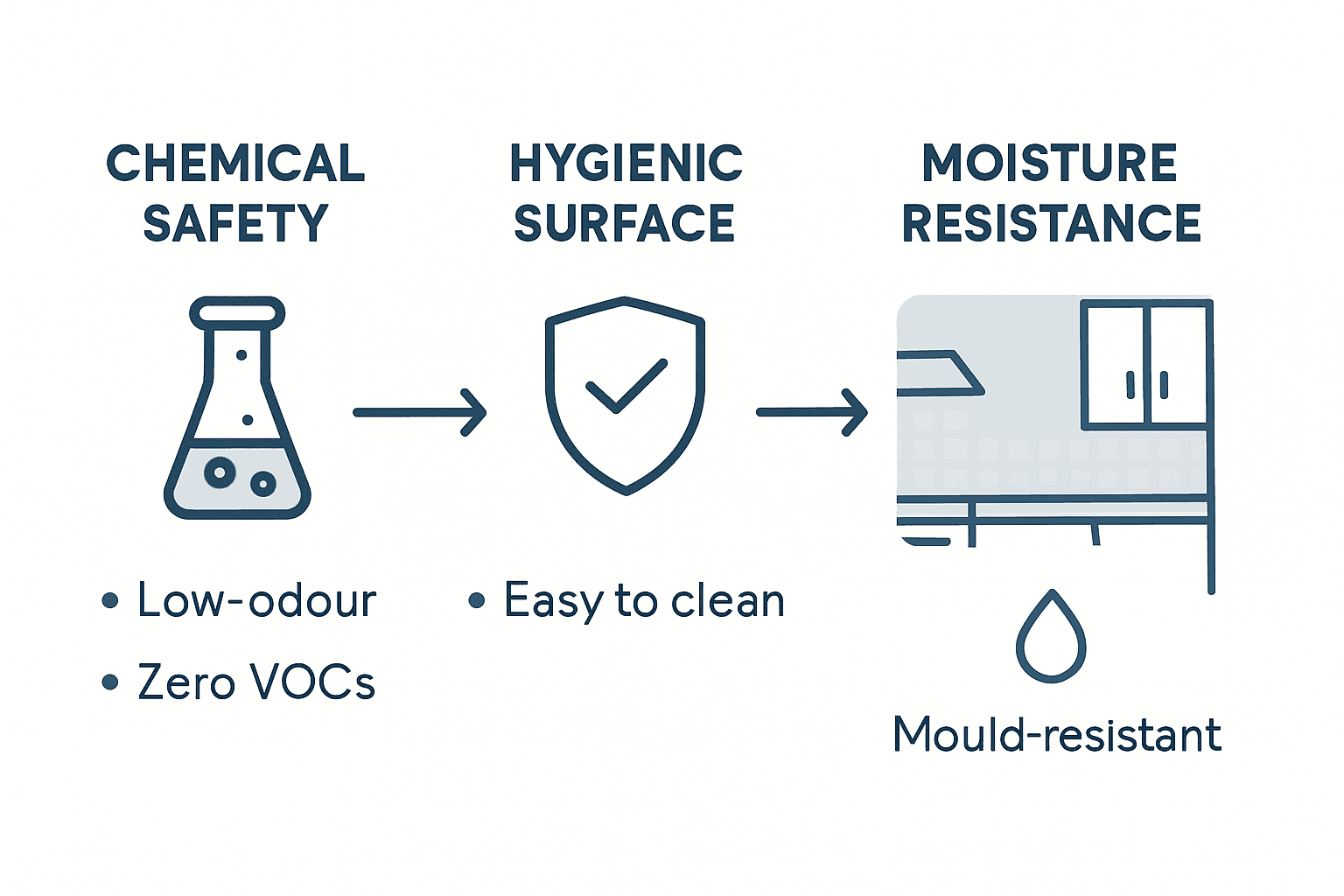
The evaluation process for food-safe paints includes multiple layers of scientific scrutiny. Researchers conduct extensive laboratory tests examining paint film stability, potential migration of chemical compounds, resistance to microbial growth, and long-term performance under simulated kitchen conditions. Paints must demonstrate they can withstand frequent washing, resist mould and mildew development, and maintain a smooth, non-porous surface that prevents bacterial accumulation. Colour stability, chemical resistance, and ability to maintain hygienic properties over extended periods are equally crucial assessment criteria.
Pro Hygienic Surface Tip: Select kitchen paints with explicit food-safe certifications, prioritising products with antimicrobial additives and smooth, non-porous finishes that actively prevent bacterial growth and facilitate thorough cleaning.
Lead Paint Risks In Older Homes
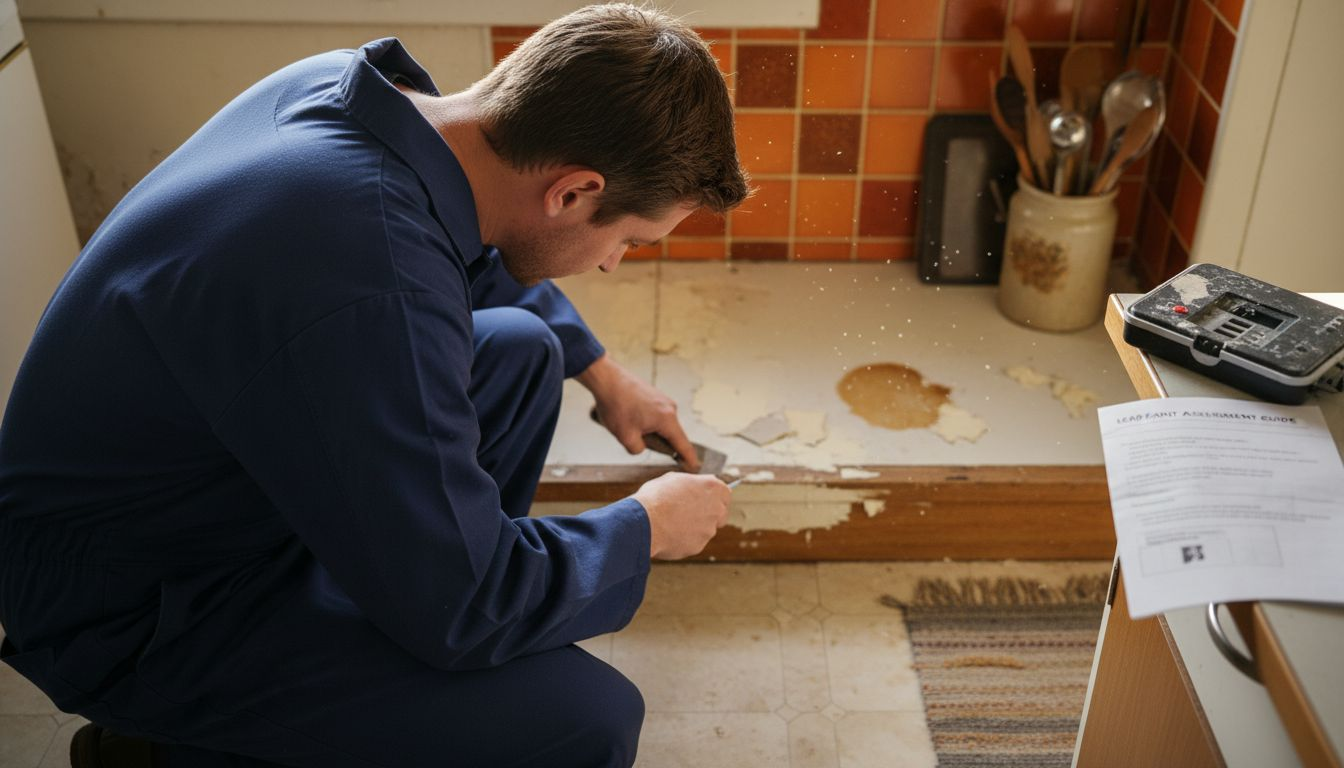
Lead paint represents a significant health hazard in older properties, particularly in kitchens and food preparation areas where potential contamination can have severe consequences. Prior to the 1960s, lead was a common component in household paints, creating long-lasting risks for homeowners of period properties who may be unaware of the potential dangers lurking beneath multiple layers of subsequent paintwork.
The primary concern with lead paint stems from its potential to release toxic particles that can be ingested or inhaled, causing serious health complications. Items that come into direct contact with food require particular caution, as lead contamination can migrate onto surfaces and compromise food safety. Children and pregnant women are especially vulnerable, with even minimal exposure potentially causing neurological damage, developmental delays, and long-term cognitive impairments.
Detecting lead paint requires professional assessment, as visual inspection alone cannot definitively confirm its presence. Specialised testing methods include X-ray fluorescence analysers and laboratory-based paint chip sampling, which can accurately determine the composition of existing paintwork. Homeowners of properties built before 1980 should consider comprehensive testing, particularly in kitchens and areas with high moisture or frequent surface contact. Professional remediation involves carefully controlled removal processes that prevent lead particle dispersion, including sealed containment areas, specialised protective equipment, and strict disposal protocols.
The table below compares key safety risks older kitchen paints pose, and best modern management techniques:
| Historical Risk | Modern Detection Method | Safe Remediation Approach |
|---|---|---|
| Lead contamination | X-ray fluorescence analyser | Professional containment and removal |
| Chemical leaching | Laboratory paint chip testing | Material isolation and certified disposal |
| Bacterial colonisation | Surface microbiological tests | Antimicrobial paint application and cleaning |
Pro Safety Assessment Tip: Always engage certified professionals for lead paint testing and removal, ensuring comprehensive protection against potential health risks associated with historical paintwork in older homes.
Flammability And Storage Safety Rules
Flammability regulations for kitchen paints are critical safety considerations that extend far beyond simple aesthetic choices. These standards protect homeowners from potential chemical hazards, ensuring that paint products used in food preparation areas meet stringent safety criteria designed to minimise fire risks and environmental exposure.
Modern kitchen paint formulations have evolved to address flammability concerns through advanced chemical engineering. Low-VOC paint solutions significantly reduce the risk of volatile organic compound emissions, which can contribute to both fire hazards and indoor air quality problems. Manufacturers now develop paints with sophisticated flame-retardant properties, incorporating chemical compounds that resist ignition and slow potential fire spread in kitchen environments.
Storage requirements for kitchen paints involve multiple critical safety protocols. Paint manufacturers specify precise temperature ranges and environmental conditions to maintain product integrity and safety. Temperature-stable paint formulations can typically withstand environmental variations between -10°C to 30°C, ensuring chemical stability during storage and transportation. Homeowners must store paint containers in cool, dry locations away from direct sunlight, heat sources, and potential ignition points, with secure lids to prevent accidental spillage or chemical degradation.
Pro Storage Safety Tip: Always store kitchen paint containers in a dedicated, locked storage area with stable temperatures, keeping them out of reach of children and away from potential heat sources or direct sunlight.
Legal Safety Obligations And Compliance
Legal safety obligations for kitchen paint represent a complex framework of regulatory requirements designed to protect homeowners from potential health risks and environmental hazards. These comprehensive standards establish strict guidelines governing the production, application, and performance of paint products used in food preparation and residential spaces.
The regulatory landscape for kitchen paint safety is underpinned by multiple legislative mechanisms, with specific regulations governing food contact surface treatments playing a crucial role in defining permissible chemical compositions and safety standards. Manufacturers must demonstrate comprehensive compliance through rigorous testing protocols that assess potential chemical migration, toxicity levels, and long-term performance characteristics. This involves extensive documentation proving that paint formulations do not release harmful substances, maintain structural integrity, and meet stringent environmental and health protection criteria.
Compliance obligations extend beyond initial product certification, requiring ongoing verification and documentation. Kitchen paint manufacturers must maintain detailed production records, conduct regular quality control assessments, and provide transparent information about chemical composition, potential environmental impacts, and safe usage guidelines. Homeowners are legally responsible for ensuring that any paint used in food preparation areas meets current safety standards, which means selecting products with clear certification, understanding application requirements, and maintaining proper installation and maintenance protocols.
Pro Compliance Insight: Always request and retain official certification documentation for kitchen paint products, ensuring you have verifiable proof of regulatory compliance for your home improvement projects.
Protect Your Kitchen with Expert Respray Services That Meet Safety Standards
When it comes to kitchen paint safety standards every UK homeowner must be confident that their kitchen surfaces are not only beautiful but safe and hygienic. From concerns about low-VOC formulations to the risks of lead paint in older properties ensuring compliance with food-safe and flammability regulations is essential. If you want to avoid health hazards and maintain a fresh kitchen environment choose professionals who understand these critical safety requirements.
At SKR Specialists, we provide expert kitchen respray services delivered in-situ with precision and care. Our team exclusively uses paints that meet all UK kitchen paint safety standards including antimicrobial and low-VOC certifications. Explore how we can transform your kitchen safely by visiting our Uncategorized Archives – WordPress section for advice and insights. Don’t compromise on your family’s health or your home’s compliance. Contact us today and take the first step towards a safer and stunning kitchen update with SKR Specialists.
Frequently Asked Questions
What are kitchen paint safety standards?
Kitchen paint safety standards are regulations that ensure paints used in food preparation areas are safe, covering chemical composition, toxicity, and environmental impact to protect both food and human health.
How can I identify food-safe kitchen paints?
Food-safe kitchen paints are certified based on their ability to prevent chemical contamination and bacterial growth. Look for explicit food-safe certifications, low-VOC labels, and antimicrobial properties on the product packaging.
What risks does lead paint pose in older homes?
Lead paint can release toxic particles that contaminate surfaces and food, posing severe health risks, particularly to children and pregnant women. Professional testing and remediation are essential for homes built before the 1980s.
What are the storage requirements for kitchen paints?
Kitchen paints should be stored in a cool, dry place, away from heat sources and direct sunlight, with secure lids. Maintaining stable temperatures between -10°C to 30°C helps ensure chemical stability and safety.
Recommended
- Kitchen Respray Regulations UK: Complete Guide 2025 – WordPress
- 7 Types of Kitchen Paint Every UK Homeowner Should Know – WordPress
- What Is Kitchen Enamel Paint? Complete Guide UK – WordPress
- What Is Kitchen Paint Durability? Complete Overview – WordPress
- Hazardous Waste Handling for UK Businesses: Complete 2025 Guide – Venture Waste
- 7 Essential Boiler Safety Tips Every Hampshire Homeowner Needs – Skan Plumbing & Heating