
Kitchen Wrapping: A Modern, Cost-Saving Solution for UK Homes
Replacing a dated kitchen often means weeks of dust, noise, and eye-watering bills across England. It is no wonder homeowners are seeking smart, minimal-interruption upgrades. Kitchen wrapping is a cost-effective solution that uses specialised adhesive vinyl films to cover existing cabinets, worktops, and appliances. With typical costs in the United Kingdom ranging from £2,000 to £4,500, this method offers flexible design choices and a contemporary look without extensive renovation or disruption.
Table of Contents
- Kitchen Wrapping Explained: Core Concept And Usage
- Types Of Kitchen Wraps And Finish Options
- How Kitchen Wrapping Works: Step-By-Step Process
- Typical Costs And Expected Lifespan In The UK
- Risks, Limitations, And Common Mistakes
- Kitchen Wrapping Vs. Respraying And Replacements
Key Takeaways
| Point | Details |
|---|---|
| Cost-Effective Renovation | Kitchen wrapping provides a budget-friendly alternative to traditional kitchen renovations, with costs typically ranging from £2,000 to £4,500. |
| Durability and Longevity | High-quality vinyl wraps can last between 10-12 years with proper maintenance, making kitchen wrapping a long-lasting solution. |
| Versatile Design Options | A wide range of finishes, including matte, gloss, and wood grain, allow for extensive design flexibility to suit various aesthetic preferences. |
| Professional Installation Essential | To avoid common application errors and ensure a seamless finish, it is recommended to hire professional installers with the necessary expertise. |
Kitchen wrapping explained: Core concept and usage
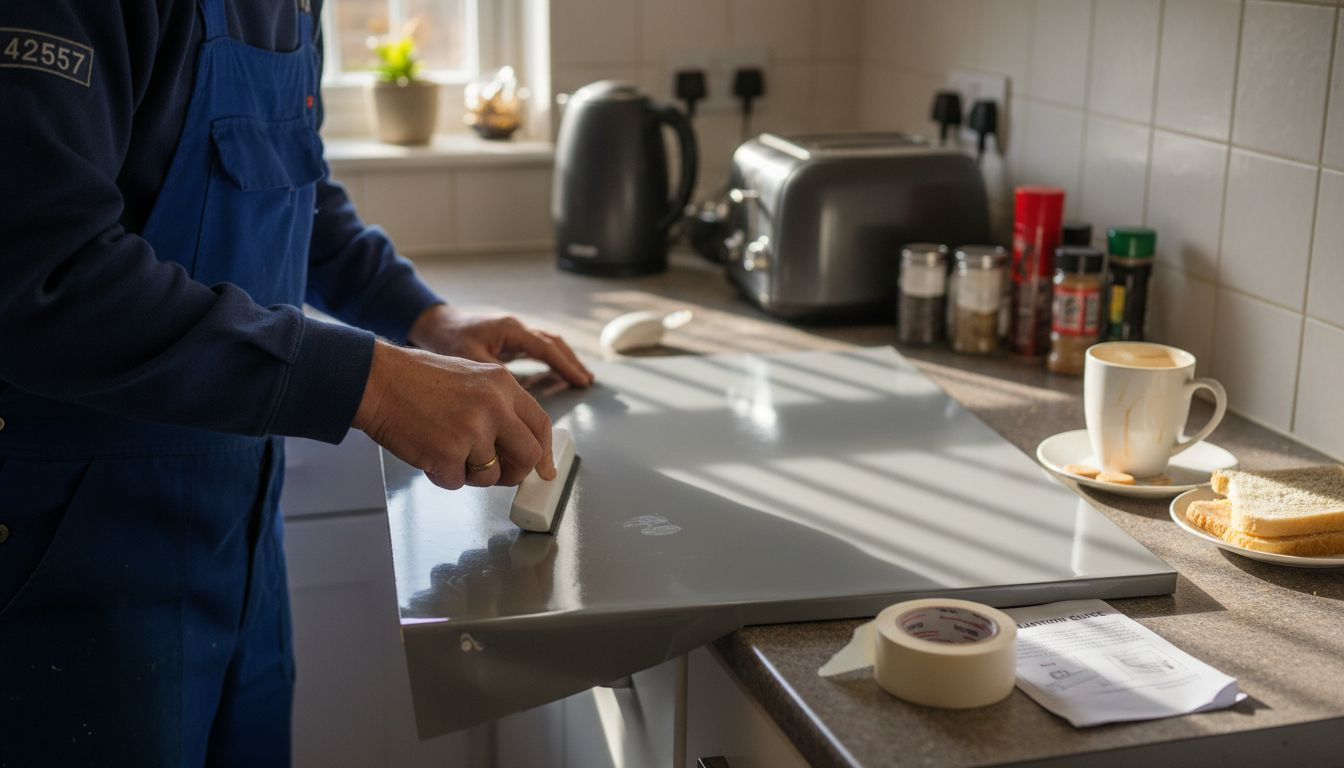
Kitchen wrapping represents an innovative home renovation technique that transforms existing kitchen surfaces without the substantial cost and disruption of complete replacement. This modern approach involves applying specialised adhesive films directly onto cabinets, worktops, and other kitchen elements, creating a fresh aesthetic with minimal intervention.
The core process involves carefully selecting high-quality vinyl wraps that can precisely cover kitchen surfaces, offering homeowners a chance to update kitchen aesthetics without extensive reconstruction. These wraps come in numerous finishes – from sleek modern metallics to classic wood grain textures – allowing remarkable design flexibility. Professional installers use specialised techniques to ensure seamless application, eliminating bubbles and ensuring precise edge alignment.
Typical kitchen wrapping applications include transforming cabinet fronts, refreshing worktops, updating splashbacks, and even renovating appliance exteriors. The process typically takes 1-3 days, compared to weeks required for traditional kitchen renovations. Benefits extend beyond aesthetics, with wraps providing additional surface protection, easier cleaning, and resistance to moisture and everyday wear.
Pro tip: Always select professional kitchen wrapping services that offer warranty coverage and use premium-grade vinyl materials to ensure long-lasting results and optimal appearance.
Types of kitchen wraps and finish options
Kitchen wraps offer an extensive range of finishes that cater to diverse aesthetic preferences and functional requirements for British homeowners. From sleek contemporary styles to classic traditional designs, these vinyl coverings provide remarkable versatility in transforming kitchen spaces without extensive renovation work.
The most popular kitchen wrap finishes include kitchen spray finishes that replicate various materials and textures. Homeowners can select from an impressive array of options such as:
- Matte finishes: Smooth, non-reflective surfaces perfect for modern minimalist kitchens
- Gloss finishes: High-shine surfaces that create a contemporary, sleek appearance
- Wood grain textures: Realistic wood-like finishes mimicking oak, walnut, and mahogany
- Metallic finishes: Contemporary options including brushed steel, copper, and chrome effects
- Stone-effect wraps: Designs replicating marble, granite, and concrete textures
Each wrap type offers unique advantages, allowing homeowners to customise their kitchen’s appearance while maintaining durability and ease of maintenance. Professional installers can apply these wraps seamlessly, ensuring a high-quality finish that looks indistinguishable from traditional painted or replacement surfaces.
Pro tip: Request samples of different wrap finishes and test them in your kitchen’s lighting to ensure the final appearance matches your design vision.
How kitchen wrapping works: Step-by-step process
Kitchen wrapping is a precise transformation technique that converts existing kitchen surfaces into fresh, modern spaces with minimal disruption. Kitchen respray step by step processes involve carefully planned stages that ensure a professional, high-quality finish for homeowners seeking aesthetic upgrades.
The comprehensive kitchen wrapping process typically involves several critical stages:
- Surface Preparation
- Thorough cleaning and degreasing of all surfaces
- Removing cabinet hardware and handles
- Inspecting surfaces for damages or imperfections
- Sanding or smoothing surfaces to ensure optimal vinyl adhesion
- Measurement and Template Creation
- Precise measurements of cabinet fronts, worktops, and panels
- Creating custom templates for each kitchen surface
- Calculating exact vinyl film requirements
- Vinyl Film Application
- Cutting specialised vinyl films to exact measurements
- Using heat guns to conform films to surface contours
- Carefully removing air bubbles during application
- Trimming edges for seamless, professional finish
- Final Detailing
- Reattaching hardware
- Checking alignment and smoothness
- Conducting quality control inspection
- Cleaning and polishing wrapped surfaces
Professional installers use specialist tools and techniques to ensure each wrap looks seamless and integrated, transforming kitchen aesthetics without extensive renovation work. The entire process typically takes 1-3 days, depending on kitchen size and complexity.
Pro tip: Ensure your chosen installer provides a comprehensive warranty and uses high-quality, durable vinyl materials for long-lasting kitchen transformation.
Typical costs and expected lifespan in the UK
Homeowners considering kitchen wrapping can expect a significantly more affordable renovation option compared to traditional replacement. Kitchen renovation costs breakdown reveal that kitchen wrapping presents an economical alternative for transforming kitchen aesthetics without breaking the bank.
In the United Kingdom, kitchen wrapping costs typically range from £2,000 to £4,500, depending on several critical factors:
- Kitchen Size: Larger kitchens require more material and labour
- Number of Units: More cabinet doors and panels increase overall cost
- Finish Quality: Premium vinyl wraps command higher prices
- Complexity of Design: Intricate patterns or challenging surface configurations
Individual cabinet doors can cost between £50 and £250, with professional labour charges ranging from £150 to £200 per day. These prices represent a substantial saving compared to full kitchen replacements, which can easily exceed £10,000.
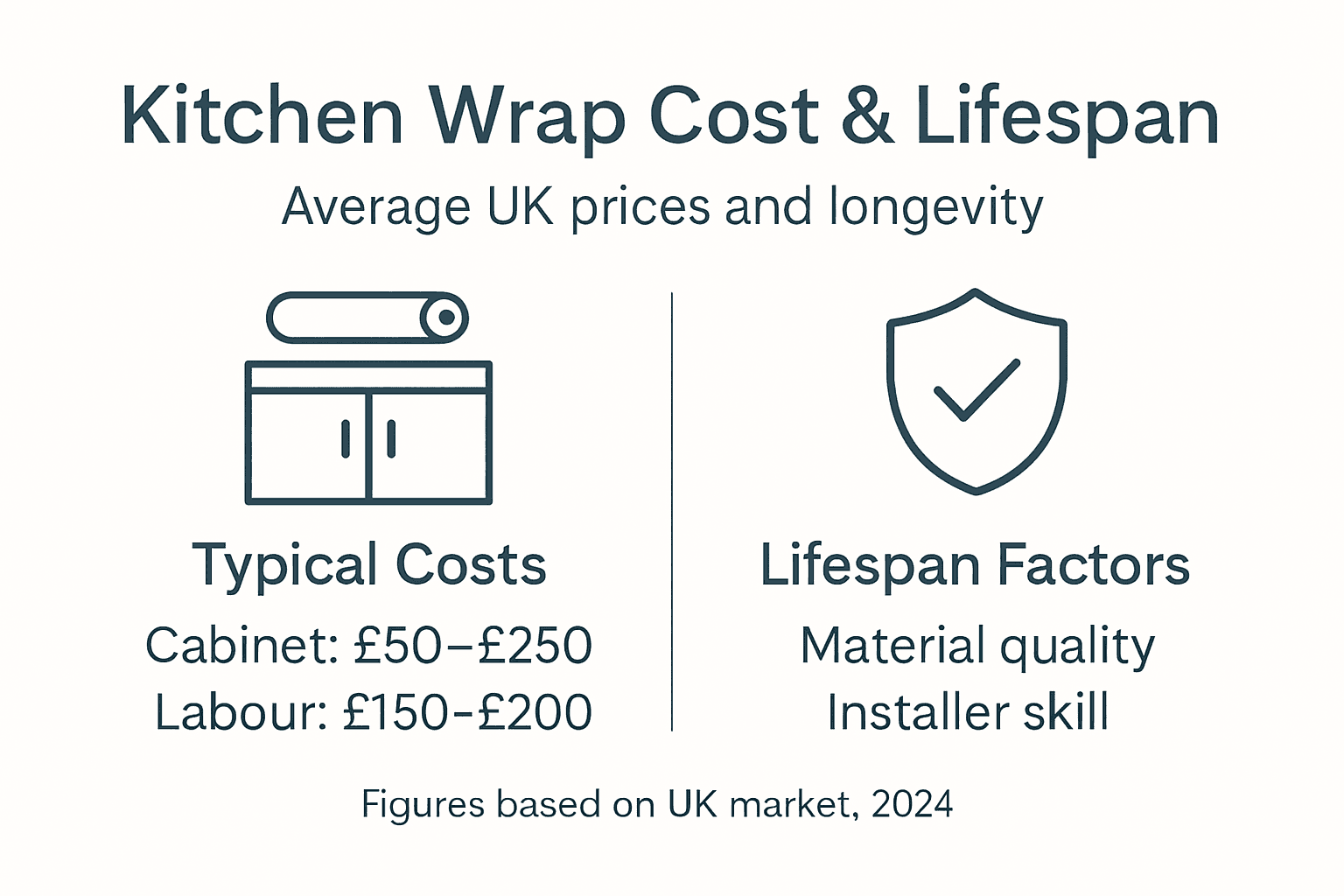
Regarding durability, premium vinyl wraps installed by professional technicians can last up to 10-12 years with proper maintenance. Factors influencing lifespan include initial installation quality, daily usage, cleaning practices, and exposure to direct sunlight or extreme temperatures. Regular gentle cleaning and avoiding harsh chemical cleaners can help preserve the wrap’s appearance and integrity.
The following table summarises key factors influencing kitchen wrapping costs and lifespan in the UK:
| Cost Factor | Typical Range | Impact on Lifespan |
|---|---|---|
| Kitchen size | £2,000–£4,500 | Larger kitchens may require careful maintenance |
| Cabinet complexity | More units, higher cost | More intricate surfaces need skilled application |
| Vinyl quality | Standard to premium | Premium vinyl lasts 10–12 years |
| Professional labour | £150–£200 per day | Expert installation ensures durability |
Pro tip: Request multiple quotes from professional installers and compare not just pricing, but also warranty coverage and material quality to ensure best long-term value.
Risks, limitations, and common mistakes
While kitchen wrapping offers an attractive renovation solution, homeowners must understand potential challenges and limitations. Wrap for kitchen cupboards requires professional expertise to avoid common pitfalls that can compromise the final result.
The most significant risks associated with kitchen wrapping include:
-
Surface Preparation Challenges
- Inadequate cleaning leading to poor vinyl adhesion
- Existing surface damages not properly repaired
- Moisture or water damage preventing successful wrapping
-
Application Errors
- Air bubbles creating uneven surface texture
- Visible creases or wrinkles in vinyl film
- Imprecise cutting around edges and fixtures
-
Material Limitations
- Vinyl wraps may not suit all surface materials
- Potential colour fading with prolonged sun exposure
- Limited durability compared to complete replacements
DIY attempts frequently result in substandard finishes, particularly on complex surfaces like curved cabinets or units with intricate designs. Professional installers possess specialised tools and techniques to ensure precise application, minimising the risk of bubbling, peeling, or misalignment.
Some kitchen configurations may not be suitable for wrapping, including severely damaged, warped, or extensively water-damaged cabinetry. Older units with structural issues might require complete replacement rather than wrapping.
Pro tip: Always request a comprehensive surface assessment from professional installers before committing to kitchen wrapping to understand potential limitations and suitability.
Kitchen wrapping vs. respraying and replacements
Homeowners seeking kitchen renovations face multiple options, each with distinct advantages and considerations. Kitchen renewal options provide different approaches to transforming kitchen aesthetics and functionality.
Comparing the three primary renovation methods reveals nuanced differences:
Kitchen Wrapping
- Cost Range: £500–£1,500
- Lifespan: 5–10 years
- Best For: Flat or lightly profiled doors
- Advantages: Quick, affordable, trendy finishes
- Ideal for: Budget-conscious updates
Kitchen Respraying
- Cost Range: £850–£2,500
- Lifespan: 7–10+ years
- Best For: Traditional or high-quality doors
- Advantages: Durable, professional finish
- Ideal for: More substantial aesthetic improvements
Full Kitchen Replacement
This table compares kitchen wrapping, respraying, and full replacement methods to assist decision-making:
| Method | Best Application | Average Cost | Typical Lifespan |
|---|---|---|---|
| Kitchen Wrapping | Flat cabinet doors, quick refresh | £500–£1,500 | 5–10 years |
| Kitchen Respraying | Quality doors, colour change | £850–£2,500 | 7–10+ years |
| Full Replacement | Damaged or outdated kitchens | £5,000–£25,000 | Permanent structural change |
- Cost Range: £5,000–£25,000
- Lifespan: Permanent structural change
- Best For: Comprehensive kitchen transformations
- Advantages: Complete style and structural overhaul
- Ideal for: Major renovations requiring significant changes
The optimal choice depends on individual circumstances, including budget constraints, existing kitchen condition, desired aesthetic, and long-term renovation goals. While wrapping offers a quick, cost-effective solution, respraying provides a more durable finish, and full replacement allows complete redesign.
Pro tip: Consult with professional kitchen renovation specialists to obtain a comprehensive assessment of your specific kitchen’s condition and most suitable transformation method.
Transform Your Kitchen with Expert Respraying Services
If you are captivated by the idea of kitchen wrapping as a modern and cost-saving renovation but worry about the common pitfalls like poor adhesion or application errors the best solution might be professional kitchen respraying. Our team understands the challenges of achieving a durable and flawless finish, offering expert in-situ kitchen respray services that revitalise your cabinets quickly and with minimal disruption. Discover how our comprehensive approach can overcome the limitations of DIY wrapping and deliver a long-lasting transformation tailored to your style.
Explore our range of affordable and high-quality kitchen renewal options in our Uncategorized Archives to see why so many UK homeowners trust us. Ready to upgrade your kitchen surface with a professional finish that lasts 7 to 10 years or more Visit our homepage to book a consultation today and turn your kitchen vision into reality with confidence. Learn more about how we complement innovative wrapping techniques with expert respraying by visiting our kitchen renewal options explained.
Frequently Asked Questions
What is kitchen wrapping?
Kitchen wrapping is an innovative technique that involves applying adhesive vinyl films to existing kitchen surfaces, such as cabinets and worktops, to refresh their appearance without the need for full replacement.
How long does the kitchen wrapping process take?
The entire kitchen wrapping process typically takes between 1 to 3 days, depending on the size and complexity of the kitchen.
What are the different finishes available for kitchen wraps?
Kitchen wraps come in a variety of finishes, including matte, gloss, wood grain textures, metallic finishes, and stone-effect wraps, allowing for significant design flexibility based on individual preferences.
How long can I expect a kitchen wrap to last?
Premium vinyl wraps installed by professional technicians can last up to 10-12 years with proper maintenance, depending on usage and exposure to elements.
Recommended
- 7 Kitchen Painting Alternatives Every Homeowner Should Know – WordPress
- 7 Proven Cost-Saving Ideas for Kitchens in England – WordPress
- 7 Effective Kitchen Makeover Tips for UK Homeowners – WordPress
- 7 Kitchen Upgrade Ideas 2025 for Smart English Homes – WordPress
- 7 Key Advantages of Home Solar Systems for UK Homeowners – Skyenergi