
Updating Wood Kitchen Cabinets with Paint: The 2026 Guide to a Professional Finish
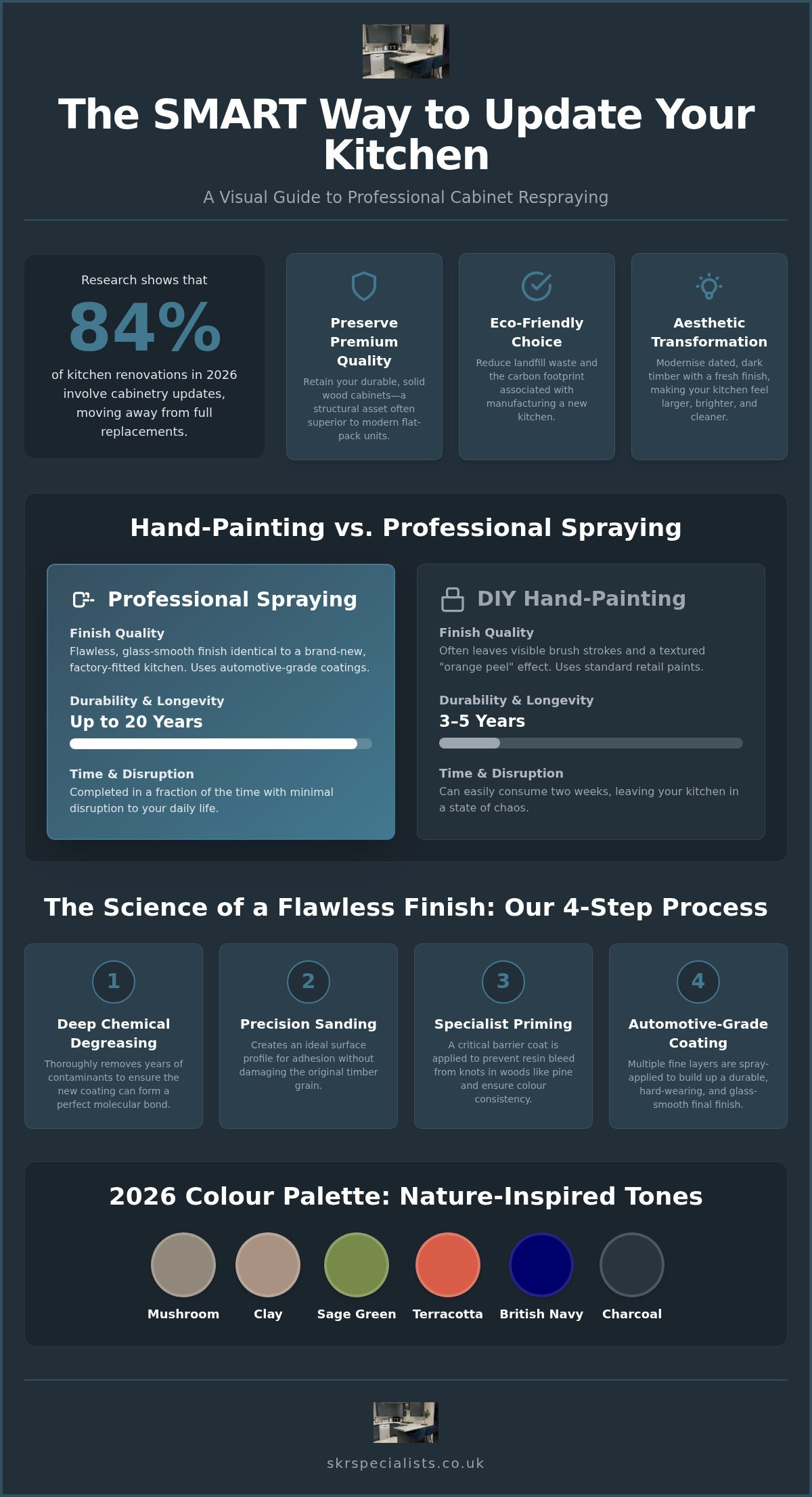
Why would you tear out perfectly good solid oak when the only thing truly “dated” is the orange-tinted varnish? If you’re tired of staring at dark pine but fear the mess of a full refit, you aren’t alone. Research shows that 84% of kitchen renovations in 2026 involve cabinetry updates, with many homeowners asking if they can paint their wood units to look like a brand-new factory-fitted kitchen. Updating wood kitchen cabinets with paint is the smartest way to renew your home’s heart, provided you move beyond basic DIY brushwork.
We understand the hesitation; your solid wood units are a premium asset, and the last thing you want is a streaky finish that chips. This guide reveals how specialist spray techniques, rooted in automotive-grade precision, transform your space into a modernised masterpiece. You’ll learn about the 2026 shift towards warmer neutrals like mushroom and clay, the critical science of surface preparation, and how to achieve a factory-standard aesthetic at a fraction of the cost of new cabinetry.
Key Takeaways
- Discover why your solid wood cabinets are a premium asset worth preserving and how refurbishing serves as a sustainable, eco-friendly alternative to a full kitchen replacement.
- Learn the technical differences between DIY hand-painting and professional spraying, including why automotive-grade coatings provide a superior, glass-smooth finish that outlasts traditional retail paints.
- Master the essential steps for updating wood kitchen cabinets with paint, from deep chemical degreasing to precision sanding that ensures a permanent bond without damaging the timber profile.
- Explore the 2026 palette of nature-inspired tones, including sage green and terracotta, alongside classic British navy and charcoal for a sophisticated, modernised look.
- Understand how SKR Specialists apply high-precision automotive finishing techniques to your home, delivering a factory-standard transformation with minimal disruption to your daily life.
The Case for Updating Your Solid Wood Kitchen Cabinets
Your solid wood kitchen is more than just storage; it’s a structural asset that would cost a fortune to replicate today. Whilst many modern kitchens rely on thin veneers or chipboard, older installations often feature robust frames and doors made of Oak, Pine, Maple, or Beech. These materials are incredibly durable and built to last generations. Tearing them out to make way for lightweight, flat-pack alternatives is often a step backwards in quality. Updating wood kitchen cabinets with paint allows you to retain that premium structural integrity whilst achieving a contemporary, high-end aesthetic.
Refurbishing is also the most responsible choice for the environment. Landfilling tonnes of solid timber is an ecological waste when the wood itself is in excellent condition. By choosing to respray rather than replace, you significantly reduce domestic waste and eliminate the carbon footprint associated with manufacturing and transporting an entirely new kitchen suite. It’s a sustainable approach to luxury home improvement.
This ethos of preservation extends to other areas of the home as well; if you’re looking to restore original features like stone walls or wooden beams alongside your cabinetry, you can check out Surfprep for their specialist cleaning and restoration services.
Professional paint systems interact uniquely with different timber grains, which is why a one-size-fits-all approach fails. Oak has a deep, open grain that can be either filled for a glass-smooth look or subtly highlighted for texture. Pine, whilst softer, requires specialist primers to prevent resin bleed from knots. Understanding The Science of Wood Finishing is essential here; it’s the difference between a coat of paint that sits precariously on the surface and a specialist finish that bonds deep into the wood fibres for long-term durability.
Recognising Potential in Your Current Layout
Before you commit to a total refit, evaluate the “bones” of your kitchen. If your carcasses are level and your doors haven’t warped, you have a high-quality foundation ready for renewal. Older cabinetry often features superior joinery and thicker panels compared to modern mass-produced units. A professional respray is frequently the smarter financial move. It delivers the same visual impact as a brand-new kitchen but focuses your investment on the visible finish rather than unnecessary structural replacements.
The Aesthetic Shift: From Dated Timber to Modern Matt
The primary driver for updating wood kitchen cabinets with paint is often the desire to escape the “orange” hues of aged varnish. Over time, clear coats on oak and pine darken, creating a heavy, dated atmosphere that absorbs light. Transitioning to a modernised matt or satin finish instantly lifts the room. It changes how light interacts with the space, making your kitchen feel larger, cleaner, and more sophisticated. This transformation turns a room you merely tolerate into a space where you genuinely want to spend time.
Hand-Painting vs Professional Spraying: Which is Best for Wood?
Choosing between a brush and a spray gun is the most critical decision you’ll make when updating wood kitchen cabinets with paint. Whilst a weekend DIY project seems cost-effective on the surface, the physical results rarely match the vision of a modernised home. Hand-painting often leaves behind a textured “orange peel” effect or visible brush strokes that distract from the wood’s natural beauty. In contrast, professional spraying delivers a glass-smooth finish that feels identical to a factory-fitted kitchen. We don’t just “paint” units; we apply a specialised coating designed for high-traffic environments.
Durability is where the gap between methods truly widens. Retail eggshell paints are primarily designed for walls or skirting, not the high-impact, high-moisture environment of a kitchen. They lack the hard-wearing resins found in automotive-grade coatings. Industry data suggests that site-painted cabinets often require touch-ups within 3 to 5 years. However, factory-standard sprayed finishes are built to last up to 20 years. This longevity makes professional work a far superior investment for long-term ROI, as it eliminates the need for frequent remedial work.
Time efficiency is another factor that often catches homeowners by surprise. A DIY attempt on a medium-sized kitchen can easily consume two weeks of your life, including the endless cycle of sanding, priming, and waiting for slow-drying oil paints to cure. A professional team completes the entire transformation in a fraction of that time. By opting for a professional kitchen unit respray, you avoid the chaos of a dismantled kitchen and secure a result that stands up to the rigours of daily family life.
The Pitfalls of DIY Hand-Painting on Wood
DIY attempts frequently suffer from “blocking,” where the paint doesn’t cure properly, causing doors to stick to the frames and peel away. It’s also notoriously difficult to maintain a uniform coating thickness across intricate wood profiles or deep grains. If you’re determined to handle the labour yourself, following a Step-by-Step Cabinet Painting Guide can help you navigate the basics. Just be aware that achieving a level finish without drips or streaks on vertical surfaces requires a level of patience most DIYers find exhausting.
Achieving a Factory Finish with Specialist Spraying
We use HVLP (High Volume Low Pressure) technology to achieve a flawless bond. This system atomises paint into microscopic particles, ensuring every crevice of your timber is coated evenly. This level of precision is why professional kitchen spraying is the gold standard for high-end renovations. It creates a durable, uniform layer that hand-painting simply cannot replicate. The result is a kitchen that looks brand new, rather than just “repainted.”
The Science of Surface Preparation: Ensuring Paint Bonds to Wood
A professional finish is earned in the preparation phase, long before the spray gun is even connected. When updating wood kitchen cabinets with paint, the goal isn’t just to change the colour; it’s to create a permanent, chemical bond between the timber and the coating. Without meticulous surface engineering, even the highest quality paint will eventually flake or peel. We treat every project as a technical restoration rather than a simple cosmetic cover-up.
Our process begins with deep chemical degreasing. Kitchens are unique environments where microscopic layers of cooking oils and fats accumulate over decades. Standard household cleaners won’t suffice; we use industrial-grade agents to strip these contaminants away entirely. Once the wood is chemically clean, we move to precision sanding. This isn’t about removing the wood’s character, but about creating a mechanical “key.” By lightly abrading the surface, we provide the primer with thousands of tiny anchor points to grip onto, ensuring the finish won’t shift over time.
We then address the internal chemistry of the wood. Many hardwoods contain tannins, whilst softwoods like pine have resinous knots. Without a specialist tannin-blocking primer, these natural oils will bleed through the finish, causing unsightly yellowing or brown spots. For homeowners seeking a perfectly smooth, contemporary look on open-grained timber like oak, we offer grain filling options. This technical step levels the surface, ensuring the final result looks like a solid, factory-made component rather than painted wood.
Dealing with Difficult Grains like Oak and Pine
Oak presents a specific challenge due to its deep, cavernous pores. We use high-build primers to bridge these gaps, creating a uniform foundation for the topcoat. Pine requires even more vigilance; we treat every knot with individual sealants to prevent resin discharge. This level of detail ensures your modernised kitchen stays bright and blemish-free for years, regardless of the underlying wood type.
Why Preparation is 80% of the Professional Result
A “cover-up” job might look good for a month, but a true technical restoration lasts a lifetime. We take the time to mask every surface, protecting your home whilst we work on-site to ensure a clean, dust-free environment. This disciplined approach is why is kitchen cabinet spraying durable is a question we can answer with absolute confidence. When updating wood kitchen cabinets with paint, the durability is entirely dependent on the invisible work done beneath the final coat.
2026 Colour Trends and Finishes for Timber Cabinetry
2026 marks a decisive shift in interior aesthetics, moving away from the clinical greys that dominated the previous decade. When you’re updating wood kitchen cabinets with paint this year, the focus is on creating a sanctuary of organic warmth and “Quiet Luxury.” We’re seeing a massive resurgence in nature-inspired tones. Sage green and Deep Forest are particularly effective at grounding a room, whilst Terracotta provides a bold, earthy anchor for kitchen islands. These colours harmonise beautifully with the natural textures of timber, even when the grain is subtly muted by our specialist coatings.
Classic British sophistication remains a staple, with Navy blues and Charcoal greys providing a timeless backdrop for high-end homes. However, the most significant disruptor for 2026 is the refined neutral palette. This includes sophisticated off-whites like “Cloud Dancer” and warm neutrals such as clay, mushroom, and linen. These hues offer a softer, more welcoming alternative to stark white, making the kitchen feel intentionally designed rather than merely functional. To achieve this look, we recommend a 10% Matt sheen. Whilst satin is a traditional choice, this ultra-matt finish is the 2026 favourite for wood as it absorbs light beautifully and hides the minor imperfections often found in older cabinetry.
Choosing the right shade is a technical decision as much as a stylistic one. Before you commit, we recommend a professional colour consultation to ensure your chosen palette works in your specific environment.
Matching Colours to Your Kitchen Lighting
Light is the most influential factor in how a colour behaves. North-facing kitchens receive a cooler, bluer light, which can make greys feel icy; these spaces benefit from warmer tones like oatmeal or sand. Conversely, south-facing rooms enjoy warm, golden light, allowing you to use cooler greens or blues without the space feeling cold. We also account for “metamerism,” where a colour that looks perfect in the morning sun might shift dramatically under evening LED spotlights. Testing samples against your existing worktops and flooring is essential to avoid costly mistakes.
Hardware and Accents: Completing the Transformation
New hardware is the finishing touch that elevates a respray from a simple refresh to a total makeover. For 2026, brushed brass and matte black are the leading choices for handles and hinges, providing a sharp contrast against matt-painted wood. To create a truly cohesive aesthetic throughout your property, consider coordinating your kitchen’s new look with UPVC door resprays. Matching the colour of your external doors to your internal cabinetry creates a seamless flow that characterises high-end architectural design.
Achieving the Ultimate Transformation with SKR Specialists
SKR Specialists brings a level of technical discipline to home improvement that standard domestic services simply cannot match. Our roots lie in high-precision automotive paint finishing. We’ve taken those rigorous standards, where a single dust mote can ruin a finish, and applied them to the domestic kitchen. This background is why our results consistently outperform traditional hand-painting. When updating wood kitchen cabinets with paint, we don’t just apply a new colour; we execute a factory-standard restoration on-site.
Replacing a solid wood kitchen can easily exceed £20,000 once you factor in new cabinetry, labour, and plumbing. It’s a massive, disruptive investment that often involves weeks of living in a construction zone. We offer a savvy, modern alternative. Our specialist respray service delivers the same aesthetic “wow factor” and durability as a total refit, but at a fraction of the cost. We specialise in rapid transformations that respect your time and your budget. Why landfill perfectly good timber when you can renew it to a factory standard?
Getting started is seamless. We’ve adopted a digital-first approach to pricing that mirrors the efficiency of our on-site work. By sharing a few clear photos of your current kitchen layout, you can receive an immediate, accurate quote. This transparency is part of our problem-solver ethos. We arrive on time, work meticulously, and leave your home transformed without the headaches of a full structural remodel.
The SKR Guarantee of Craftsmanship
We don’t believe in “good enough.” Our reputation is built on a no-nonsense commitment to punctuality and detail. We use only premium, hard-wearing coatings specifically engineered for the high-traffic demands of a busy kitchen. These aren’t retail paints; they’re industrial-grade finishes designed to resist heat, moisture, and daily wear. This dedication to quality is why property owners across the country view us as the UK’s trusted choice for specialist kitchen respraying.
Ready to Renew Your Kitchen?
Our national service essentially brings a high-tech paint factory to your doorstep. We’ve organised our process to ensure your daily life remains as normal as possible whilst we work. The transition from your dated timber units to a modernised masterpiece is fast and seamless. If you’re ready to see the transformative power of a professional finish, the first step is simple. Request your specialist respray quote today and discover how we can breathe new life into your solid wood kitchen.
Secure a Factory-Standard Finish for Your Solid Wood Kitchen
Your solid wood cabinetry is a premium asset that deserves better than a basic DIY cover-up. By prioritising technical surface preparation and specialist spray techniques, you ensure that the transition from dated timber to a modernised masterpiece is permanent. We’ve demonstrated that updating wood kitchen cabinets with paint is the most sustainable way to achieve a high-end look without the disruption of a full refit. It allows you to retain the structural quality of your original kitchen whilst embracing 2026’s most sophisticated colour palettes.
SKR Specialists applies automotive-grade precision to every project, delivering a flawless finish that retail paints simply cannot match. With our national UK coverage and local expertise, we provide a cost-effective alternative to expensive replacements. It’s time to stop tolerating an uninspiring space and start enjoying a kitchen that reflects your personal style. Transform your kitchen for a fraction of the cost; get your SKR Specialists quote today. Your dream kitchen is closer than you think.
Frequently Asked Questions
Can you paint over previously varnished or waxed wood cabinets?
Yes, you can successfully paint over these surfaces provided they undergo rigorous professional preparation. Wax and old varnish act as contaminants that prevent paint from bonding, so we use industrial-grade chemical degreasers to strip these layers entirely. Once the timber is chemically clean, we perform precision sanding to create a mechanical “key” for the primer. This ensures the new finish adheres permanently to the wood fibres rather than sitting precariously on top of old residue.
How long does a professional kitchen respray actually last?
A factory-standard respray typically lasts up to 20 years when maintained correctly. This longevity far exceeds traditional hand-painting, which often requires touch-ups within 3 to 5 years due to chipping or peeling. We utilise automotive-grade coatings that are specifically engineered for high-traffic environments. These specialist paints create a flexible, durable bond with the timber that resists the daily rigours of heat, moisture, and physical impact found in a busy home.
Will I still see the wood grain after the cabinets are sprayed?
The visibility of the grain is entirely dependent on your aesthetic preference and the wood type. For timber like oak with deep, open pores, the natural texture can be left visible to add character to the modern finish. Alternatively, if you desire a glass-smooth contemporary look, we offer technical grain filling options. This process levels the surface before spraying, ensuring the final result looks like a solid, factory-manufactured component rather than painted wood.
How much does it cost to paint kitchen cabinets compared to buying new?
Updating wood kitchen cabinets with paint is a fraction of the cost of a full kitchen replacement. A total refit involves the high expense of new cabinetry, structural remodelling, and extensive labour for plumbing and electrics. By choosing to respray, you avoid these substantial costs whilst achieving an identical visual result. It represents a savvy financial investment that focuses your budget on a high-end aesthetic transformation rather than unnecessary structural changes.
Is it possible to spray paint wood cabinets in a single day?
No, a professional transformation cannot be rushed into a single day if you want a factory-standard finish. The process involves multiple technical stages, including deep cleaning, precision sanding, tannin-blocking, and the application of several coats of specialist paint. Each layer requires specific curing times to ensure a durable, permanent bond. Whilst we work efficiently to minimise disruption, we never compromise on the meticulous preparation required for a long-lasting result.
What is the best type of paint for wood kitchen cabinets in 2026?
The gold standard for 2026 is automotive-grade, high-build coatings with an ultra-matt 10% sheen. These specialist finishes are far superior to retail eggshell or satin paints found in DIY stores. They offer enhanced scratch resistance and a sophisticated “Quiet Luxury” aesthetic that absorbs light beautifully. When updating wood kitchen cabinets with paint, these industrial-grade coatings ensure the finish is as durable as it is beautiful, hiding minor timber imperfections whilst providing a smooth feel.
How do I clean and maintain my resprayed wood cabinets?
Maintaining your new finish is straightforward and requires nothing more than a soft damp cloth and a mild, pH-neutral detergent. The factory-grade surface is naturally resistant to grease and staining, so there’s no need for harsh chemicals or abrasive scourers. We recommend wiping away spills promptly to protect the coating’s integrity. Because the paint is bonded deep into the wood fibres, it won’t peel or flake under normal cleaning conditions, keeping your kitchen looking pristine.
Do I need to empty all my cupboards before the specialists arrive?
No, you don’t need to empty the contents of your cupboards for a professional respray. We only ask that you clear your worktops and move any items away from the immediate edges of the units to allow our team access. We use meticulous masking techniques to protect your carcasses and belongings from any overspray. This disciplined approach ensures that your daily life can continue with minimal disruption whilst we focus on renewing the external surfaces of your kitchen.