
Professional Durable Kitchen Cabinet Finish: The 2026 Longevity Guide
Your kitchen cabinets don’t need a replacement; they need a better molecular bond. Many homeowners spend thousands on DIY kits or general decorators, only to watch the finish flake away near the kettle or bubble under the steam of the dishwasher within months. It’s a frustrating cycle that leaves you with visible brush marks and a nagging sense of wasted money. Achieving a professional durable kitchen cabinet finish isn’t about buying a better tin of paint; it’s about applying industrial-grade science to your existing surfaces.
We understand that you want a kitchen that looks brand new and stays that way without the eye-watering cost of a £20,000 replacement. This guide reveals the industrial secrets behind factory-grade coatings that protect your home from heat, moisture, and daily wear for over a decade. You’ll learn why automotive-grade precision is the secret to a surface that’s easy to wipe clean and tough enough for a busy household. We’ll also explore the latest 2026 trends, including the shift toward matte wood grains and earthy tones, whilst explaining why a specialist respray is the smartest investment for your home this year.
Key Takeaways
- Learn why typical household paints fail in the kitchen’s hostile environment of heat and steam, and how industrial coatings provide a permanent solution.
- Discover the science of 2K ‘two-pack’ systems that use molecular cross-linking to create a hard, plastic-like shield over your cabinetry.
- Identify the best sheen for your lifestyle, as a professional durable kitchen cabinet finish in a modern matt style can now match the resilience of traditional high gloss.
- Understand why meticulous degreasing and surface preparation account for 70% of a factory-quality result, ensuring a bond that won’t chip or flake.
- Realise how specialist respraying offers a smarter, cost-effective alternative to total replacement by using automotive-grade precision in your home.
What Defines a Professional Durable Kitchen Cabinet Finish?
A professional durable kitchen cabinet finish isn’t merely an aesthetic choice; it’s a structural necessity. Whilst many decorators focus on the final colour, a true factory-grade finish prioritises the integrity of the coating. In a kitchen, surfaces endure constant thermal expansion and chemical exposure. A standard retail paint sits on top of the wood like a thin film. In contrast, a professional finish integrates with the substrate. This technical distinction is a core part of the Wood finishing process, ensuring the surface remains resilient against the physical demands of a modern home.
You can identify a high-end finish by its absolute uniformity. There are zero brush marks, “orange peel” textures, or visible drips. It feels smooth to the touch, possessing a tactile quality similar to high-end furniture or modern electronics. Most importantly, it offers superior impact resistance. If you accidentally knock a heavy pan against the cupboard, a professional coating won’t shatter or flake like standard domestic paints. It’s designed to absorb the stresses of a busy household whilst maintaining its pristine appearance.
The Impact of Daily Life on Cabinet Surfaces
Kitchens are the most hostile environments in a UK home. Steam from kettles and dishwashers is a primary cause of finish failure. This moisture penetrates the edges of cabinet doors, causing standard retail paints to delaminate and peel away from the wood. Skin oils are another hidden enemy. The natural acids in our hands break down the resins in domestic emulsions, leading to sticky, discoloured patches around handles and knobs. Without a specialised coating, even the most careful DIY attempt starts to chip within weeks in these high-traffic zones.
Industrial Lacquers vs Domestic Paint
The gap between a tin of “cupboard paint” from a DIY store and an industrial coating is vast. We utilise multi-layered industrial systems, such as acid-catalyst lacquers, which offer far superior durability compared to water-based retail alternatives. These products are designed for high-performance environments where longevity is non-negotiable. Chemical bonding is the primary driver of kitchen finish longevity, creating a molecular link between the coating and the substrate. This bond transforms a simple respray into a permanent restoration that stands up to heat, grease, and cleaning chemicals for over a decade.
The Science of 2K Coatings: Why Industrial Finishes Outperform Retail
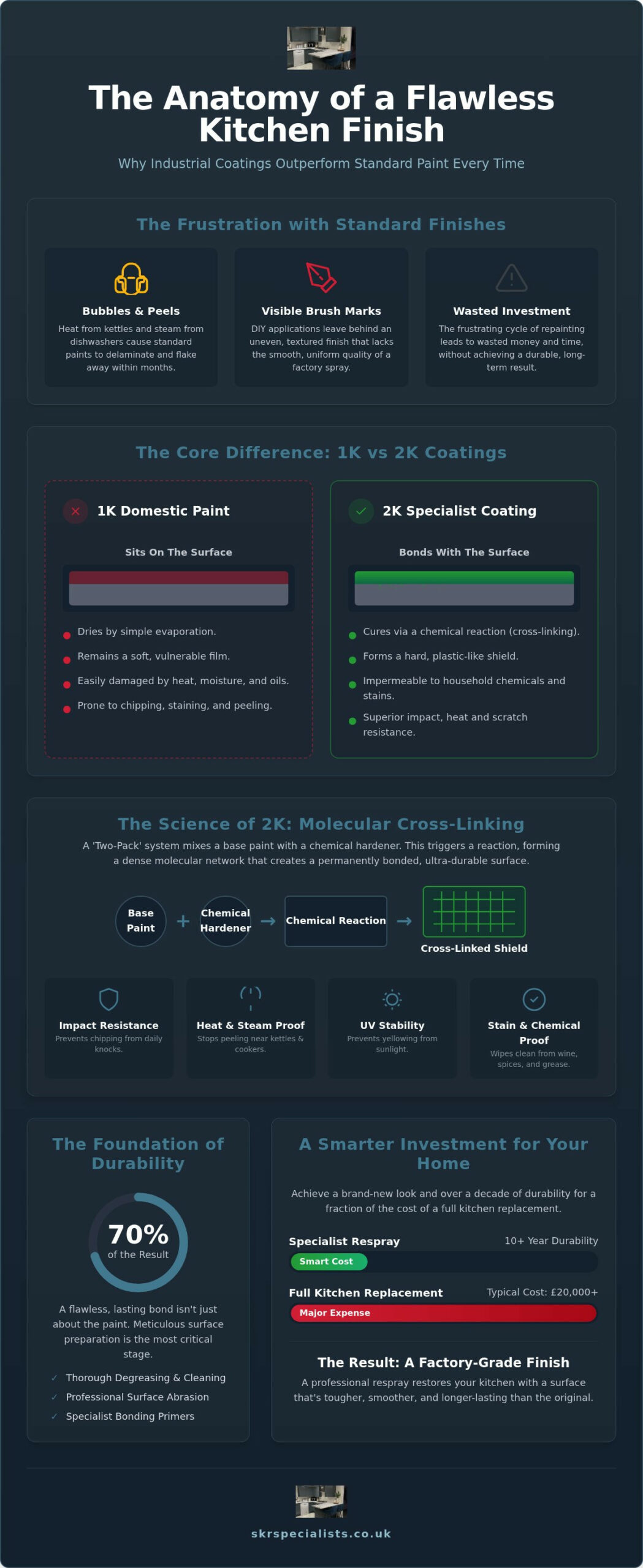
The secret to a professional durable kitchen cabinet finish lies in the chemistry of the coating. Most retail paints are 1K (single pack) systems. These dry through simple evaporation, leaving a resin film that remains relatively soft and vulnerable to heat. In contrast, professional sprayers utilise 2K coatings, often called “Two-Pack” systems. This process involves mixing a base paint with a chemical hardener or catalyst just before application. This isn’t just paint drying; it’s a chemical transformation that creates a surface far superior to anything found on a DIY store shelf.
When the hardener meets the base, a process called cross-linking occurs. At a molecular level, the polymer chains link together to form a dense, three-dimensional network. This reaction turns the liquid into a rigid, plastic-like shield that is permanently bonded to the cabinet. In the UK, these coatings are tested against FIRA standards, which is the gold benchmark for furniture durability and chemical resistance. These rigorous tests ensure the finish can withstand the mechanical and chemical stresses of a working kitchen, aligning with international professional finishing standards for high-performance woodwork.
Chemical Resistance and Impact Protection
A 2K finish acts as an impermeable barrier against the most stubborn household stains. Common culprits like beetroot, red wine, and turmeric, which would permanently dye a standard emulsion, simply sit on the surface of a 2K lacquer. They can be wiped away without leaving a trace. This density also provides incredible impact protection. Whilst 1K paints might peel away in strips when scratched, a cross-linked industrial coating is designed to resist chipping. We also incorporate advanced UV stabilisers into our coatings. These additives are essential for preventing “light-fastness” issues, ensuring your white or light-coloured cabinets don’t turn yellow when exposed to sunlight over time.
The Comparison: Professional Spray vs DIY Rolling
The physical application method is just as vital as the chemistry. Industrial coatings cure in minutes rather than days. This rapid drying time is crucial because it significantly reduces the window for dust contamination, resulting in a flawless, factory-quality surface. When homeowners attempt to roll or brush on thick layers of retail paint, they often create a surface that is “thick but soft.” A professional respray uses thin, high-solids layers of specialist lacquer that provide more protection than five coats of domestic paint. Whilst many homeowners ask is kitchen cabinet spraying durable, the evidence shows that a chemically cured 2K system is the only way to achieve true longevity. If you want to see how these industrial coatings can transform your space, you can request a tailored quote for your project today.
Choosing Your Sheen: Matt, Satin, or Gloss for Maximum Longevity?
Selecting the sheen for your cabinetry isn’t just a matter of personal style; it’s a strategic decision that dictates how your surfaces will age. A common misconception suggests that gloss is the only “wipe-clean” option, whilst matt is porous and prone to staining. This myth stems from low-quality domestic emulsions that absorb grease. When we apply a professional durable kitchen cabinet finish using industrial 2K lacquers, the sheen level is merely an optical property. Whether you choose a 10% matt or a 90% gloss, the underlying chemical shield remains equally impermeable to moisture and common kitchen spills.
- Matt (10% sheen): This is the sophisticated, modern benchmark for 2026. It excels at hiding substrate imperfections and diffuses light beautifully, creating a soft, contemporary atmosphere that aligns with current nature-inspired design trends.
- Satin (30% sheen): Often described as an ‘eggshell’ finish, satin offers a subtle lustre. It provides a classic look that balances gentle light reflection with an exceptionally smooth, tactile surface.
- High Gloss (90%+ sheen): Gloss creates a striking ‘mirror’ effect. It’s the ultimate statement finish, though it requires a flawless substrate, as the high reflectivity will highlight even the tiniest speck of dust or unevenness.
Aesthetic vs Practical Longevity
For families with small children or pets, the choice of sheen is a practical one. High gloss surfaces act as magnets for fingerprints and “nose prints” from pets, requiring constant buffing to maintain their clarity. Gloss also tends to show micro-scratches more readily, as light reflects off the edges of every tiny abrasion. In contrast, a matt or satin finish is far more forgiving. These lower sheen levels absorb light, making daily wear and tear almost invisible to the naked eye. If your kitchen is the busy centre of your home, these “soft” finishes often look brand new for much longer than their high-shine counterparts.
Colour Retention in High-Light Kitchens
The way your chosen colour interacts with natural sunlight and LED spots changes based on the sheen. Gloss can occasionally “wash out” a colour in direct light due to glare, whilst matt preserves the depth and richness of the pigment. We ensure that regardless of the sheen, the pigment quality remains stable. We use coatings with high UV resistance to ensure your chosen shade doesn’t fade or shift over years of exposure to bright kitchen windows. For a deeper look at how we achieve these transformative results, read our kitchen respray guide. Selecting the right finish is the final step in ensuring your kitchen remains a high-value asset for a decade or more.
The Professional Spraying Process: Achieving the Perfect Bond
The visual quality of a professional durable kitchen cabinet finish is undeniable, but its true value lies in the invisible bond beneath the surface. Experts in the field often state that 70% of a successful finish is decided before the spray gun is even triggered. Without meticulous preparation, even the most expensive industrial lacquers will eventually delaminate. The process begins with aggressive degreasing to remove decades of accumulated cooking fats and silicones. Skipping the de-greasing stage is the #1 cause of finish failure, as no chemical coating can successfully adhere to an oily substrate.
Once the surface is chemically clean, we move to mechanical abrasion. This involves sanding the cabinets to create a microscopic “key” that allows the primer to grab onto the material. We then utilise High Volume Low Pressure (HVLP) spraying technology. Unlike standard high-pressure systems used in general trade, HVLP allows for incredible precision and a soft delivery of the coating. This ensures a smooth, “orange-peel-free” surface that mirrors the quality of a factory-new installation.
Preparation: The Secret to No Peeling
Meticulous protection is what separates a specialist respray from a general decorating job. We use advanced masking techniques to ensure your walls, floors, and appliances remain completely paint-free. Before the first coat is applied, we use specialised “tack cloths” to remove every microscopic dust particle from the room. Even a single speck of dust can ruin the uniform sheen of a professional finish. This level of detail is why our results look like they were manufactured in a clean-room facility rather than sprayed in a domestic kitchen.
The Application Technique
A factory-grade result requires a multi-coat system, not a single heavy layer. We apply high-build primers followed by precision colour coats and final protective lacquers. Our on-site specialists manage the environment by controlling airflow and temperature, which is critical for the 2K curing process discussed earlier. This automotive-grade precision is the gold standard for kitchen unit respraying, ensuring the professional durable kitchen cabinet finish is as tough as it is beautiful. If you’re ready to see this level of craftsmanship in your own home, you can book your kitchen transformation with SKR Specialists today.
Transforming Your Kitchen with SKR Specialists’ Factory-Grade Finish
Why Choose a Professional Respray Over Replacement?
Choosing a respray is the smarter, more modern alternative to a total replacement. It’s a highly sustainable choice that gives your existing, structurally sound cabinets a second life, preventing tonnes of high-quality material from ending up in landfill. The speed of transformation is another major benefit that our clients value. Whilst a full kitchen refit can leave your home in chaos for weeks, our team typically completes most on-site projects in just 3-5 days. This value-driven approach delivers high-end, designer results for a fraction of the cost of buying and installing new cabinetry, making it the savvy choice for property owners across the UK who want a premium look without the designer showroom price tag.
Maintenance: Keeping Your Finish Flawless for 10+ Years
Once we’ve applied your professional durable kitchen cabinet finish, maintaining its brilliance is remarkably simple. The “Golden Rule” for long-term care is to stick to warm, soapy water and a soft cloth. You must avoid abrasive chemical cleaners, bleach, or scouring pads; these can eventually micro-scratch or dull the lustre of the 2K lacquer. Even though our industrial coatings are engineered to be highly resistant to staining, you should handle spills from aggressive pigments like turmeric or red wine as soon as they occur. A simple wipe with a microfibre cloth is usually all it takes to keep the surface looking immaculate and easy to clean for over a decade. Our process doesn’t just change the colour; it renews the surface entirely, providing a resilient shield that stands up to the rigours of a busy household.
Ready to renew your home? Get a professional kitchen cabinet respray quote today.
Your Path to a High-Performance Kitchen Transformation
Achieving a professional durable kitchen cabinet finish is a matter of industrial science rather than simple decoration. You now understand that the secret to a decade of durability lies in the molecular cross-linking of 2K coatings and the meticulous mechanical abrasion of the substrate. By choosing a specialised respray, you avoid the disruption and environmental waste of a full replacement whilst securing a surface that is both beautiful and exceptionally easy to maintain. A factory-grade result isn’t just about the colour; it’s about the permanent bond that protects your home from daily wear.
Our expert craftsmen use their automotive backgrounds to deliver factory-quality results with national UK coverage and rapid turnaround times. We take pride in being the smart choice for property owners who value precision, punctuality, and long-term value. Transform your kitchen with a professional durable finish from SKR Specialists and reclaim the heart of your home. It’s time to stop settling for chipping paint and start enjoying a kitchen that looks and feels brand new. We look forward to helping you achieve the high-end restoration your property deserves.
Frequently Asked Questions
Is a professional kitchen cabinet respray really durable?
Yes, a professional durable kitchen cabinet finish is exceptionally resilient because it utilises industrial-grade 2K coatings. Unlike standard household paints that dry by simple evaporation, these systems involve a chemical reaction that creates a hard, plastic-like shield. This bond is specifically engineered to withstand the unique stresses of a kitchen environment, including high humidity, grease, and frequent cleaning, making it a permanent restoration rather than a temporary cover-up.
How long does a professional kitchen finish last?
You can expect a factory-quality respray to last for over ten years with proper care. We use automotive-grade precision and high-performance lacquers that don’t suffer from the peeling or flaking common with DIY attempts. Whilst the aesthetic life depends on your colour choice, the structural integrity of the coating is designed for long-term endurance in high-traffic homes across the UK, providing a cost-effective alternative to total replacement.
Can you respray over existing vinyl-wrapped kitchen doors?
Yes, we can respray vinyl-wrapped doors, but the approach depends on the condition of the wrap. If the vinyl is secure and well-bonded, we apply specialised primers to ensure a perfect chemical link. However, if the wrap is already delaminating or bubbling, we meticulously remove the vinyl entirely. We then respray the underlying MDF or wood substrate, resulting in a finish that is often far more durable than the original factory wrap.
What is the best sheen for a durable kitchen finish?
In terms of chemical resistance, all our professional sheens are equally durable. However, from a practical perspective, matt (10% sheen) or satin (30% sheen) finishes are often superior for busy households. These lower sheen levels are much better at disguising fingerprints, micro-scratches, and daily wear compared to high gloss. A professional durable kitchen cabinet finish in a modern matt style offers a sophisticated look that remains flawless with significantly less maintenance.
Will the spray finish chip if I knock it with a pan?
Our industrial coatings are specifically designed for high impact resistance, meaning they won’t shatter or flake under normal kitchen use. Whilst no finish is entirely indestructible against extreme force, our 2K systems are significantly tougher than any retail paint or domestic emulsion. The mechanical abrasion and chemical bonding stages of our process ensure the coating stays firmly attached to the substrate, even when subjected to the occasional accidental knock from heavy cookware.
Does professional spraying leave a smell in the house?
There is a noticeable odour during the application process, but it dissipates remarkably quickly. Because our industrial lacquers are designed to cure in minutes rather than days, the window for off-gassing is very short. We use professional extraction equipment and manage airflow to ensure that any fumes are removed efficiently. Most homeowners find that the kitchen is completely odour-free and ready to use within hours of the project completion.
How do I clean my professionally resprayed kitchen cabinets?
Cleaning your resprayed cabinets is simple and requires nothing more than a soft microfibre cloth and warm, soapy water. It’s essential to avoid abrasive chemical cleaners, bleach, or scouring pads, as these can dull the finish over time. Our cross-linked coatings are non-porous, so grease and food spills sit on the surface rather than soaking in. This makes the cleaning process fast and prevents the staining often seen on cheaper, hand-painted surfaces.
Is it better to spray or hand-paint kitchen cupboards?
Spraying is the superior choice for both aesthetic quality and longevity. Hand-painting often leaves visible brush marks and results in a thicker, softer layer of paint that is prone to chipping. Professional spraying allows for the application of thin, high-solids industrial coatings that provide a smooth, factory-grade result. The speed of the spray process also reduces dust contamination, ensuring a flawless surface that hand-painting simply cannot replicate in a domestic setting.