
Heat Resistant Paint: Kitchen Safety and Style
High cooking temperatures in busy kitchens across England often leave painted surfaces faded and damaged far sooner than expected. For homeowners seeking a lasting solution, specialised heat resistant paint offers robust protection and a refreshed look, standing up to intense heat while maintaining style. These advanced coatings contain ceramic compounds and corrosion-resistant ingredients, ensuring your surfaces stay smooth and vibrant even near cookers or ovens. Discover how professional respray services can transform both the safety and appearance of your kitchen.
Table of Contents
- What Makes Paint Heat Resistant?
- Types of Heat Resistant Paint for Kitchens
- Key Benefits and Application Methods
- Where to Use Heat Resistant Paint Safely
- Common Mistakes When Choosing Paint
Key Takeaways
| Point | Details |
|---|---|
| Heat Resistant Paint Composition | Specialised coatings utilise advanced compounds such as ceramic particles and epoxy resins to withstand high temperatures and prevent degradation. |
| Types for Kitchen Use | Popular heat resistant paints include silicone-based, high-temperature epoxy, and ceramic-enhanced formulations, each suited for specific kitchen applications. |
| Application Importance | Proper application methods, including thorough surface preparation and following manufacturer guidelines, ensure optimal performance and longevity of the paint. |
| Common Pitfalls | Homeowners often overlook heat and moisture resistance requirements, making unsuitable paint choices that can lead to safety risks and aesthetic issues. |
What Makes Paint Heat Resistant?
Heat resistant paint represents a sophisticated solution engineered to maintain its structural integrity and protective qualities under extreme temperatures. Unlike standard paint formulations, these specialised coatings incorporate advanced chemical compounds and structural materials designed to withstand significant thermal stress. Refractory ceramic compounds play a critical role in creating paints capable of enduring high-temperature environments.
The primary mechanism enabling heat resistance involves carefully selected ingredients that maintain their chemical stability and protective properties even when exposed to intense thermal conditions. Manufacturers typically integrate metal oxides, ceramic particles, and specialised silicone or epoxy resins that can absorb and dissipate heat without degrading. Corrosion-resistant materials contribute additional protection, ensuring the paint’s surface remains intact and functional under challenging kitchen environments.
Key characteristics that distinguish heat resistant paint include its ability to prevent thermal breakdown, resist colour fading, and maintain a smooth protective layer. These paints typically feature:
- Thermal stability up to 200°C
- Resistance to thermal shock and sudden temperature changes
- Minimal chemical degradation under high heat
- Smooth, non-porous surface preventing heat absorption
Pro tip: When selecting heat resistant paint, always request professional technical specifications and confirm the exact temperature range the paint can withstand for your specific kitchen environment.
Types of Heat Resistant Paint for Kitchens
Kitchen environments demand specialised paint solutions capable of withstanding high temperatures and frequent thermal stress. Silicone-based heat resistant paints represent a sophisticated category specifically engineered to endure intense kitchen conditions. These advanced coatings offer superior protection against heat sources like cookers, ovens, and stovetops, ensuring long-lasting durability and aesthetic appeal.
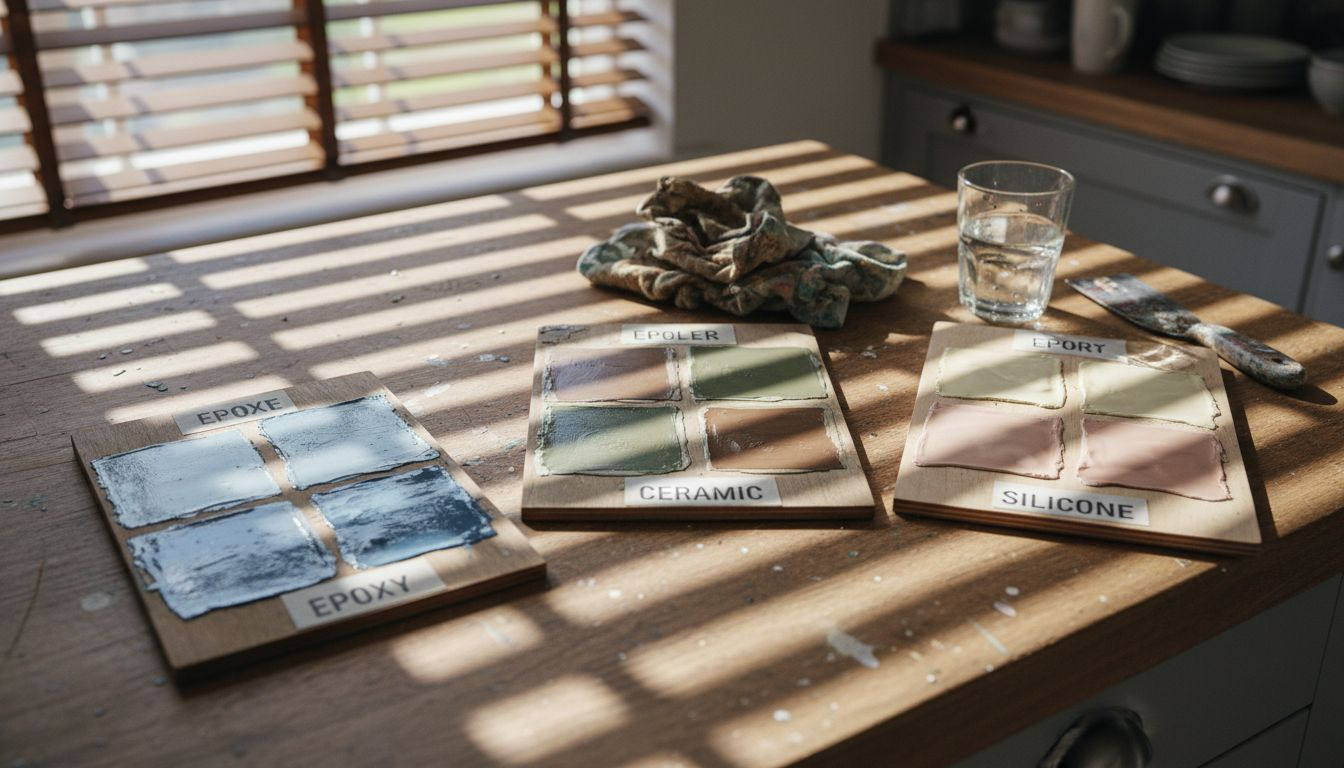
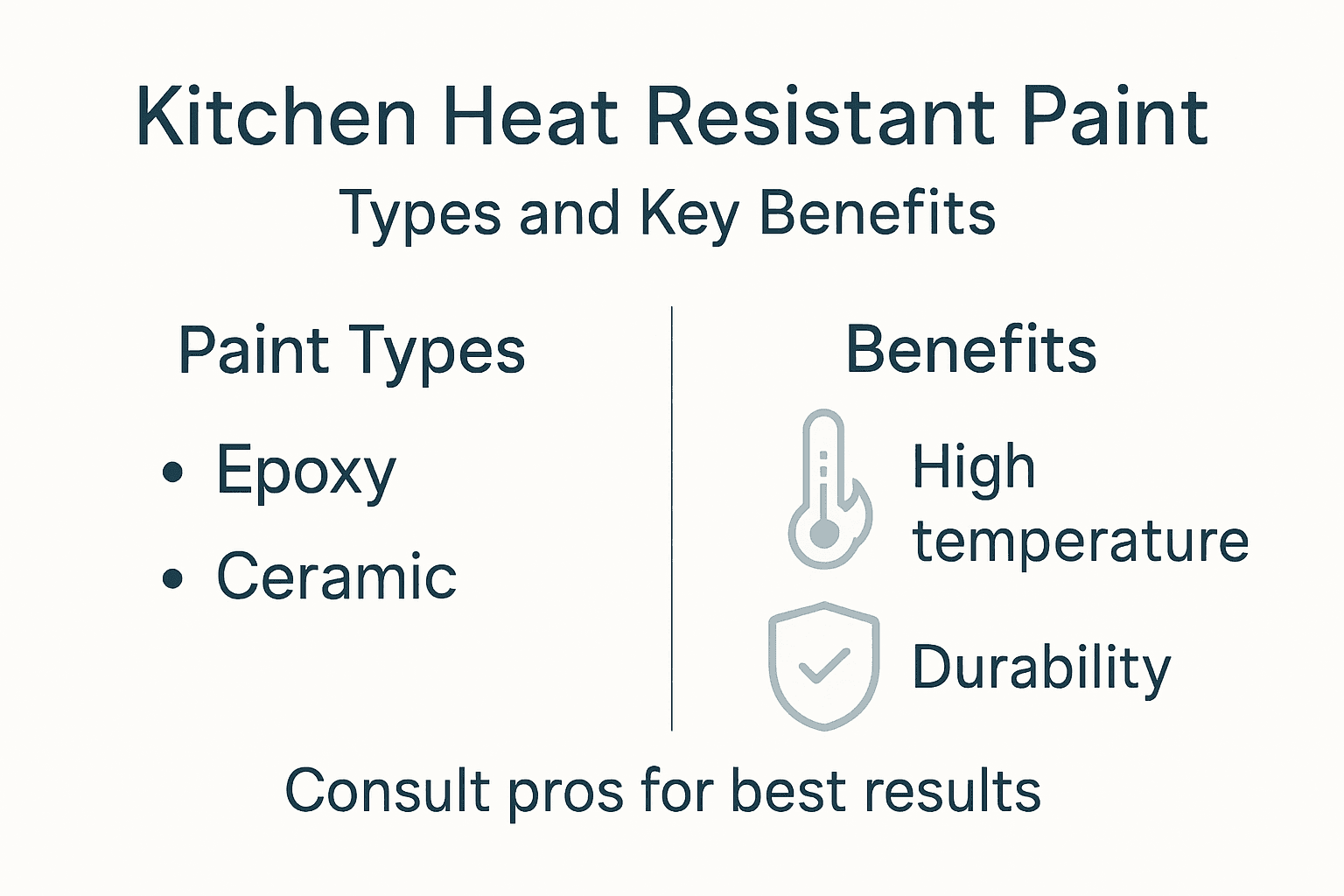
The primary categories of heat resistant paint for kitchens include high-temperature epoxy paints, ceramic-enhanced formulations, and specialised silicone coatings. High-temperature epoxy paints excel in areas surrounding cooking appliances, offering thermal stability up to 260°C. Ceramic-enhanced paints provide exceptional heat dispersion and colour retention, making them ideal for surfaces directly exposed to cooking zones. Intumescent paint technologies also offer remarkable heat resistance, though primarily designed for fire protection applications.
When selecting heat resistant kitchen paint, homeowners should consider several crucial characteristics:
Here is a comparison of common heat resistant paint types for kitchens:
| Paint Type | Maximum Temperature | Notable Advantage | Typical Application Area |
|---|---|---|---|
| Silicone-based | 200°C | Excellent thermal stability | Walls near cookers |
| High-temperature epoxy | 260°C | Superior adhesion | Surroundings of appliances |
| Ceramic-enhanced | 300°C | Outstanding colour retention | Zones exposed to direct heat |
| Intumescent | 120°C (expands at higher temps) | Fire safety enhancement | Fire doors, safety areas |
- Temperature tolerance range
- Moisture and stain resistance
- Colour durability under heat exposure
- Ease of cleaning and maintenance
- Compatibility with kitchen surface materials
Pro tip: Always consult professional painters who specialise in kitchen paint applications to ensure you select the most appropriate heat resistant coating for your specific cooking environment.
Key Benefits and Application Methods
Heat resistant paint offers numerous critical benefits for kitchen environments, providing both functional protection and aesthetic enhancement. Surface damage prevention stands as a primary advantage, protecting kitchen walls and surfaces from high-temperature exposure caused by cooking appliances and daily culinary activities.
Professional application of heat resistant paint requires meticulous preparation and precise techniques. Proper application methods involve several critical steps to ensure optimal performance:
- Thoroughly clean the surface to remove grease and debris
- Sand existing paint to create a smooth base
- Apply recommended primer suitable for heat-resistant paint
- Use high-quality brushes or rollers for even coverage
- Apply multiple thin coats rather than single thick layers
- Allow recommended drying time between coats
The comprehensive benefits of heat resistant kitchen paint extend beyond thermal protection:
- Enhanced surface durability
- Improved fire safety characteristics
- Resistance to discolouration and staining
- Easier maintenance and cleaning
- Extended lifespan of kitchen surfaces
Pro tip: Invest in professional consultation to ensure you select and apply the most appropriate heat resistant paint for your specific kitchen environment and cooking habits.
Where to Use Heat Resistant Paint Safely
Kitchen environments present numerous areas where heat resistant paint can provide critical protection and safety. Fire protection elements represent the most crucial zones where specialised heat resistant coatings are essential for preventing potential fire spread and maintaining structural integrity.
Specific kitchen areas requiring targeted heat resistant paint application include:
- Walls surrounding cooking appliances
- Backsplash regions near stovetops
- Areas adjacent to ovens and grills
- Radiator and heating system surfaces
- Surfaces near electrical outlets and switches
Professional painters recommend strategic application focusing on zones experiencing direct or indirect heat exposure. Heating system components benefit significantly from carefully selected heat resistant coatings that prevent corrosion and maintain thermal performance. Critical considerations include material compatibility, temperature range, and potential chemical interactions with existing surfaces.
Key safety guidelines for heat resistant paint application include:
The following table summarises expert tips for ensuring safe and effective heat resistant paint application in kitchens:
| Tip | Why It Matters | Resulting Benefit |
|---|---|---|
| Consult professional painters | Ensures optimal material selection | Maximises safety and longevity |
| Prepare surfaces thoroughly | Removes grease and debris | Paint bonds and protects properly |
| Check paint/surface compatibility | Prevents chemical reactions | Avoids premature paint failure |
| Follow manufacturer’s guidelines | Correct application process | Durable, resilient finish |
- Avoiding excessive paint layers
- Ensuring proper surface preparation
- Selecting paint compatible with specific surface materials
- Following manufacturer’s recommended application techniques
- Maintaining adequate ventilation during painting process
Pro tip: Always consult a professional painter to assess your specific kitchen environment and recommend the most appropriate heat resistant paint solution for your unique requirements.
Common Mistakes When Choosing Paint
Selecting the appropriate heat resistant paint for kitchen environments requires careful consideration and expert knowledge. Unsuitable paint selection can lead to significant long-term performance issues, potentially compromising both aesthetic appeal and protective functionality.
Homeowners frequently encounter several critical mistakes when choosing kitchen paint:
- Neglecting heat and moisture resistance requirements
- Overlooking manufacturer’s specific application instructions
- Selecting aesthetics over functional performance
- Ignoring surface preparation recommendations
- Choosing generic paints instead of specialised coatings
Professional painters consistently highlight the importance of understanding paint compatibility and performance characteristics. Incorrect paint application can result in uneven coverage, premature degradation, and potential safety risks. Critical factors to consider include thermal stability, moisture resistance, and chemical composition of both the existing surface and proposed paint coating.
Technical considerations that prevent common painting errors include:
- Conducting thorough surface assessment before painting
- Understanding temperature ranges of different paint formulations
- Checking material compatibility between undercoat and topcoat
- Verifying manufacturer’s recommended application techniques
- Consulting professional painters for complex kitchen environments
Pro tip: Invest time in professional consultation and comprehensive surface evaluation before selecting your kitchen heat resistant paint to avoid costly and potentially dangerous application mistakes.
Protect Your Kitchen with Expert Heat Resistant Paint Respray
Managing heat exposure in your kitchen is essential to ensure safety and maintain style. The challenges of selecting and applying the right heat resistant paint, including thermal stability and surface preparation, can be overwhelming. If you want to avoid common mistakes like poor adhesion or premature paint failure, professional help will make all the difference. Our specialist kitchen respray service focuses on using heat resistant coatings that meet your kitchen’s exact needs, preserving surfaces around cookers, ovens and backsplashes while enhancing durability.

Discover how SKR Specialists can transform your kitchen with advanced heat resistant paint applied in situ. Don’t wait until surfaces fade or degrade under heat stress. Visit our website at SKR Specialists and request a consultation today for a safe, stylish and long-lasting kitchen finish. Act now to protect your kitchen environment with expert knowledge and precision application.
Frequently Asked Questions
What ingredients make paint heat resistant?
Heat resistant paint typically includes metal oxides, ceramic particles, and specialised silicone or epoxy resins. These components are designed to maintain chemical stability and protective properties under high thermal conditions.
What are the key characteristics of heat resistant paint for kitchens?
Key characteristics of heat resistant paint include thermal stability up to 300°C, resistance to thermal shock, minimal chemical degradation under high heat, and a smooth, non-porous surface that prevents heat absorption.
How should I apply heat resistant paint in my kitchen?
To apply heat resistant paint, clean the surface thoroughly, sand existing paint for a smooth base, apply a suitable primer, and then use high-quality brushes or rollers for even coverage. It’s best to apply multiple thin coats rather than a single thick layer and to follow the manufacturer’s recommended drying time between coats.
Where in the kitchen should I use heat resistant paint?
Heat resistant paint should be applied to walls around cooking appliances, backsplash areas near stovetops, surfaces adjacent to ovens and grills, and any surfaces near electrical outlets and switches to prevent heat damage and fire risks.
Recommended
- Kitchen paint safety standards: What UK homeowners must know – WordPress
- What Is Kitchen Paint Durability? Complete Overview – WordPress
- What Is Kitchen Enamel Paint? Complete Guide UK – WordPress
- Kitchen Respray Safety – Minimising Health Risks at Home – WordPress
- How to Install and Maintain a Kitchen Slip Mat for Safety – Mats4U USA