
What Is Two Pack Paint And Why It Lasts Longer
Every UK homeowner knows how quickly a kitchen can lose its sparkle as the years go by. Daily wear, sun beams through windows, and regular cleaning all take their toll on standard paint finishes. If you’re searching for a way to keep your cabinetry looking fresh, two pack paint offers a chemically hardened, resilient surface that stands up against scratches, fading, and stains far better than traditional options. This guide reveals how two pack outperforms single-pack paint and tackles common myths, helping you make the smartest choice for a lasting kitchen transformation.
Table of Contents
- Two Pack Paint Explained And Common Myths
- How Two Pack Paint Differs From Standard Paint
- Durability And Benefits For Kitchen Respraying
- Two Pack Paint Application Process In Home Kitchens
- Comparing Two Pack Paint With Alternatives
Key Takeaways
| Point | Details |
|---|---|
| Durability of Two Pack Paint | Two pack paint offers superior durability and longevity, outperforming single-pack alternatives in challenging kitchen environments. |
| Professional Application Required | The complexity of two pack paint necessitates professional application to ensure optimal results and safe handling of chemicals. |
| Cost-Effectiveness Over Time | While two pack paint may have a higher upfront cost, it eliminates the frequent repainting cycle, providing better long-term value. |
| Surface Preparation is Critical | Proper surface preparation is essential for two pack paint to adhere effectively, making professional services crucial for achieving desired results. |
Two Pack Paint Explained And Common Myths
Two pack paint, often referred to as 2K, represents a significant departure from the single-component paints many UK homeowners grew up with. Rather than relying on traditional cellulose formulations, two pack paint uses acrylic and melamine resins combined with a hardener called poly-isocyanate resin. When you mix these two components together, something rather clever happens chemically. The resin and hardener undergo a reaction that bonds at a molecular level, creating a far more resilient surface than what evaporating solvents alone can achieve. This chemical transformation is why two pack finishes perform so dramatically better on kitchen cabinetry, particularly in environments where grease, moisture, and temperature fluctuations are constant challenges.
The durability advantage stems from this chemistry. A two pack finish withstands petrol, acid rain, and intense sunlight with remarkable resilience because the hardened film resists chemical degradation and UV damage far more effectively than cellulose alternatives. You’ll notice the difference within months, not years. Where standard paint might show dulling, chipping, or discolouration around your kitchen sink or cooker, two pack maintains its gloss and colour stability. The process also generates less wastage during application, meaning professional kitchen respray services achieve superior coverage and a smoother result.
Now, let’s address the myths. Many homeowners believe two pack paint is essentially the same as standard paint, just marketed differently. That’s simply not accurate. Another common misconception is that you can apply two pack paint yourself without specialist equipment. The reality is more nuanced. Two pack requires careful mixing ratios, specific application equipment including spray systems, proper ventilation, and handling precautions due to the hardening agents involved. This complexity is precisely why professional application matters. The chemical nature of the hardener means exposure risks exist if you’re not trained in its handling. Professional teams understand pot life (how long mixed paint remains workable), application temperatures, humidity requirements, and health protocols that DIY enthusiasts typically overlook.
One myth worth debunking directly: two pack paint isn’t simply “better” in every scenario. For small touch ups or when budget is limited, traditional paint serves adequately. However, for kitchen cabinetry where durability, aesthetics, and long-term value matter, two pack delivers measurable returns on investment. Your kitchen resists stains, maintains its finish longer, and avoids the repainting cycle that affects conventional painted surfaces.
Pro tip: When evaluating kitchen respray services, specifically ask whether they use two pack paint and confirm they have the correct spray equipment and ventilation systems in place, as this directly impacts both the quality of your finish and the safety of the application process.
How Two Pack Paint Differs From Standard Paint
Walk into any kitchen that’s been painted with standard single-pack paint five years ago, then compare it to one finished with two-pack. The difference becomes obvious almost immediately. Standard single-pack paint, commonly called 1K, cures through solvent evaporation. You apply it, the solvents dry off into the air, and what remains is your painted surface. Two-pack paint works fundamentally differently. Instead of waiting for solvents to disappear, two-pack uses a separate hardener mixed before application that triggers a chemical reaction. This reaction creates cross-linked molecular bonds that form an entirely different type of film, one that’s genuinely harder and more resilient.
The practical consequences of this chemical difference matter significantly for your kitchen. Single-pack paints are simpler and cheaper to apply, which is why they’ve remained popular for budget projects and touch-ups. However, they offer considerably less durability. Your painted kitchen cabinets with single-pack finish might show wear within three to four years, particularly around moisture-prone areas like the sink or near your cooker. Two-pack provides higher chemical resistance, superior scratch resistance, and exceptional weather durability, making it suited for the demanding environment a working kitchen creates daily. Single-pack paint might suffice if you’re repainting every few years, but two-pack delivers longevity that justifies the additional investment for homeowners seeking a lasting solution.
There’s also a significant difference in application complexity and health considerations. Single-pack paint requires minimal skill and no special safety precautions beyond standard ventilation. You can grab a brush or roller and apply it yourself without concern. Two-pack paint demands considerably more expertise. The mixing ratios must be exact, the pot life (how long the mixed paint remains usable) is limited, proper spray equipment is essential, and health protocols matter because the hardening agent can cause respiratory irritation if inhaled. This is precisely why professional application becomes important rather than optional. The person applying the paint needs to understand temperature conditions, humidity levels, and application speed to achieve optimal results. Professional kitchen respray specialists have invested in the equipment, training, and ventilation systems necessary to handle two-pack safely and effectively.
Cost comparison between the two typically shows single-pack as cheaper upfront but more expensive over time due to frequent reapplication. Two-pack costs more initially but eliminates the repainting cycle that plagues single-pack finishes, ultimately delivering better value over a decade or longer.
Pro tip: If you’re comparing kitchen respray quotes, ask explicitly whether the service uses single-pack or two-pack paint and what the expected lifespan is for each option, as this dramatically affects your long-term costs and satisfaction.
Durability And Benefits For Kitchen Respraying
When you choose two-pack paint for your kitchen respray, you’re investing in longevity that translates directly into years of reliable performance. Two-pack offers superior UV stability, scratch resistance, and overall durability compared to single-pack alternatives, which matters enormously in a kitchen where surfaces endure constant use, heat, moisture, and vigorous cleaning. Think about what your kitchen cabinetry actually experiences daily. Steam from boiling water, grease splashes from cooking, accidental knocks from pots and pans, abrasive cleaning products, and direct sunlight through windows all work against paint finishes. Single-pack paint deteriorates noticeably under these conditions within three to five years. Two-pack paint maintains its appearance and protective qualities substantially longer, often performing well for a decade or more with proper maintenance.
The scratch resistance alone deserves mention. Your kitchen cabinet doors get bumped, scraped, and handled constantly. Single-pack finishes scratch relatively easily, exposing bare wood underneath where moisture and bacteria can gain access. Two-pack paint provides scratch resistance that stands up to daily wear without revealing underlying surfaces. This protective barrier keeps your cabinetry sealed against damage and degradation. UV stability means your painted finish resists fading and discolouration from sunlight streaming through kitchen windows. Kitchens facing south or west often suffer significant colour fading with single-pack finishes within a few years. Two-pack maintains colour consistency and gloss far more effectively, keeping your kitchen looking freshly painted rather than prematurely aged.
However, achieving these benefits requires one critical foundation: proper surface preparation. Two-pack paint performs as expected only when applied to very stable, properly prepared surfaces. This is where professional kitchen respray services prove invaluable. Specialists understand that rushing surface preparation undermines the entire investment. They thoroughly sand, clean, and prime existing finishes to create a stable base that allows two-pack’s superior adhesion and durability to perform optimally. Poor preparation negates two-pack’s advantages entirely. This is why attempting DIY application often disappoints homeowners, regardless of paint quality.
The financial logic becomes clear when you calculate long-term value. Two-pack costs more upfront and requires professional application, but it eliminates the repainting cycle that plagues single-pack finishes. You might respray once with two-pack instead of twice with cheaper alternatives. Over ten years, the cost per year actually drops below traditional single-pack painting. Beyond finances, there’s genuine quality of life improvement. Your kitchen maintains that refreshed appearance for longer, avoiding the shabby, worn feeling that develops as painted surfaces deteriorate.
Pro tip: Request a written guarantee about the expected lifespan of your kitchen respray when discussing two-pack options with professionals; reputable specialists confidently stand behind their work because two-pack durability is genuinely reliable.
Two Pack Paint Application Process In Home Kitchens
The application process for two-pack paint in your kitchen involves several critical steps that differ substantially from standard single-pack painting. It begins with precise mixing of the resin base and hardener in exact ratios. This isn’t approximate. A 60:40 ratio when the specification calls for 70:30 will compromise the entire finish. Once mixed, you must allow an induction time where the chemical reaction stabilises before application begins. This waiting period, typically ranging from 10 to 20 minutes depending on the specific product, allows the newly formed molecular bonds to reach optimal consistency. Skip this step and you risk patchy finishes, reduced hardness, or complete coating failure. The mixed paint then has a limited working window, called “pot life”, often just two to four hours before it becomes unusable. This urgency is precisely why professional application matters. Specialists understand these timing requirements intimately and work systematically to apply the paint before the chemical reaction progresses too far.
Application itself demands different techniques than traditional painting. Two-pack paint cannot be effectively applied with brushes or rollers. Professional spray equipment distributes the paint in fine, even layers that cure uniformly across your kitchen cabinetry. Spray application ensures consistent film thickness, eliminates brush marks, and achieves the smooth, professional finish that defines quality kitchen resprays. The spray process requires careful attention to environmental conditions. Temperature, humidity, and air movement all affect curing speed and final finish quality. Specialists monitor these conditions and adjust application techniques accordingly. Your home kitchen may have insufficient ventilation for proper spray application, which is another reason professional respray services use dedicated equipment and controlled environments.
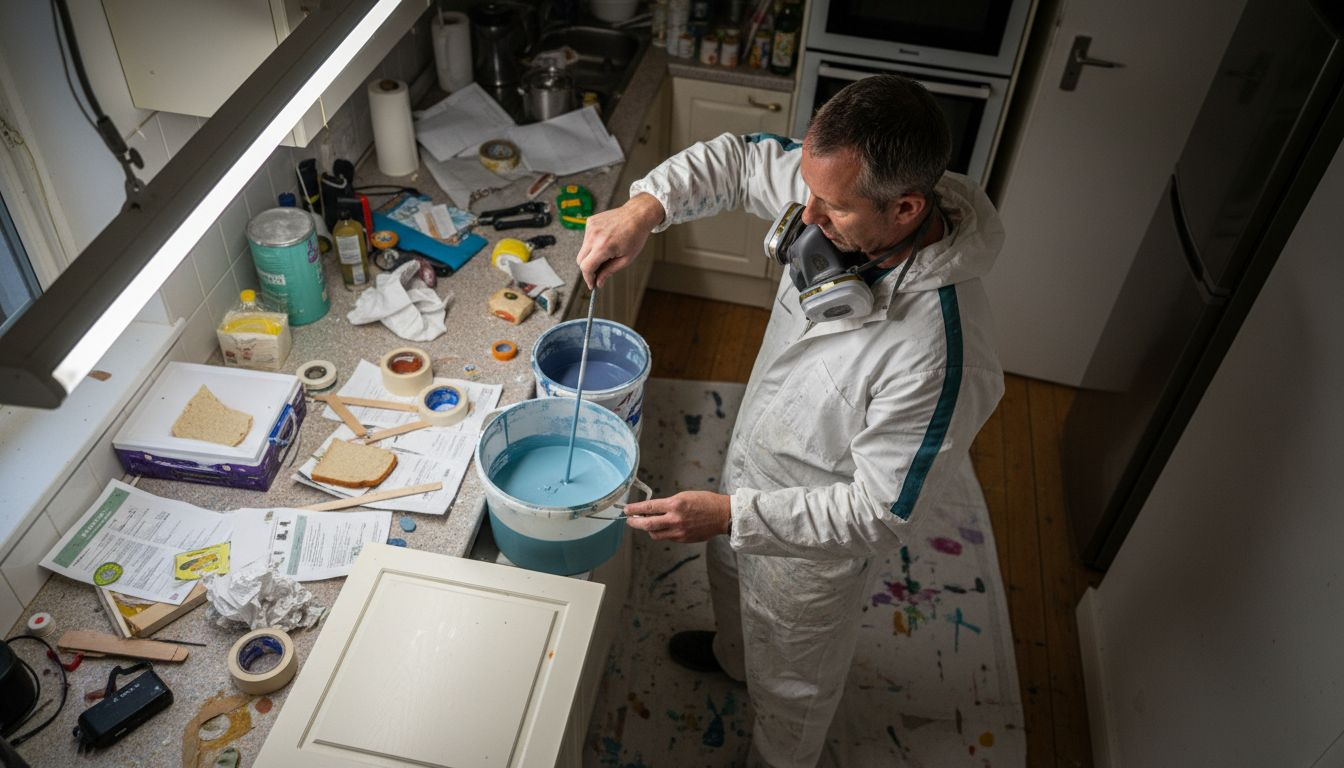
Safety considerations cannot be overlooked. Two-pack paints containing isocyanates require personal protective equipment including air-fed respiratory masks, not simple dust masks. Spray mist exposure creates genuine respiratory health risks if you’re not properly protected. Professional kitchen respray teams invest in extraction systems, air-fed masks, and proper training on handling these chemicals safely. They understand that inadequate safety measures lead to long-term health consequences. For homeowners considering DIY application, this safety reality alone should prompt consideration of professional services. The investment in respray services includes the cost of proper equipment, training, and safety protocols that protect both the application quality and your health. Attempting two-pack application without these safeguards creates unnecessary risks.
The curing process after application also requires patience and specific conditions. Two-pack paint cures faster than standard paint, typically achieving initial hardness within hours rather than days. However, full cure strength develops over several days. During this period, your kitchen cabinetry must remain undisturbed and free from moisture exposure. Professional services factor these curing requirements into their timescales and provide clear guidance on when you can resume normal kitchen use. Rushing to use your kitchen before proper curing completes compromises the finish and undermines all the benefits that two-pack paint provides.
Pro tip: When booking a kitchen respray, ask the specialist about their ventilation equipment, mixing procedures, and curing timeline; transparent answers demonstrate professionalism and confidence in their ability to deliver a superior finish.
Key factors to ask about before selecting a kitchen respray service:
| Consideration | Why It Matters | What to Look For |
|---|---|---|
| Ventilation equipment | Ensures safe application environment | Professional extraction system |
| Mixing procedure knowledge | Prevents application failures | Trained, qualified staff |
| Curing timeline guidance | Protects new finish | Clear usage instructions |
| Paint type confirmation | Impacts longevity and finish quality | Clearly stated product details |
Comparing Two Pack Paint With Alternatives
When evaluating paint options for your kitchen respray, you’re essentially choosing between two fundamentally different technologies. Two-pack paint represents one end of the spectrum, offering exceptional durability through chemical cross-linking. Single-pack paints occupy the other end, providing convenience and affordability through solvent evaporation. Between these extremes sit various alternatives, each with distinct trade-offs that affect your kitchen’s appearance and longevity.
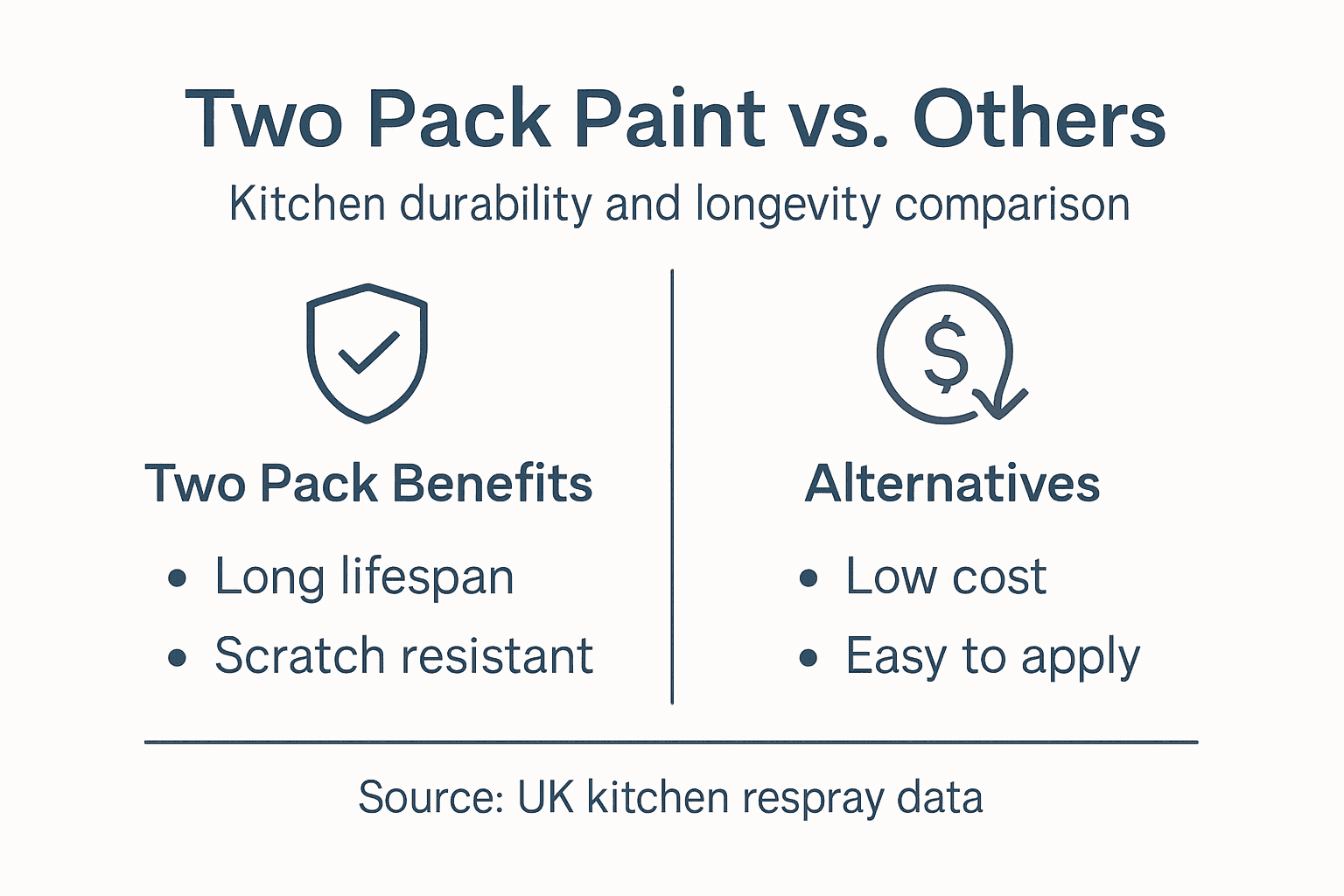
Single-pack paints remain popular because they’re straightforward and inexpensive. You open the tin, apply, and it dries. No mixing ratios to calculate, no induction times to observe, no special safety equipment required. For small repairs or temporary solutions, this simplicity matters. However, single-pack paints lack the UV resistance and toughness that two-pack systems provide. Your kitchen cabinetry exposed to window light and daily wear deteriorates visibly within three to five years. Traditional long-oil single-pack products exist for wooden surfaces where flexibility proves beneficial, preventing cracking as wood expands and contracts. Yet even these superior single-pack options underperform two-pack in sustained protection and lifespan when subjected to kitchen environments.
Water-based acrylic paints have gained popularity as an environmentally friendlier alternative. They’re low odour, quick drying, and easier to clean up than oil-based products. For some applications, they perform adequately. However, they generally lack the chemical resistance and durability of two-pack coatings. They’re softer, more prone to scratching, and more vulnerable to moisture. Kitchen environments with constant steam, grease, and humidity challenge water-based finishes significantly. You might achieve acceptable results for three to four years before repainting becomes necessary.
Polyurethane-based paints offer middle-ground performance between single-pack and two-pack systems. They provide better durability than basic single-pack options and superior flexibility compared to two-pack. However, they don’t match two-pack’s hardness or chemical resistance. For kitchens where you want meaningful durability improvement without two-pack’s complexity, polyurethane paints represent a compromise. They cost more than single-pack but less than two-pack, and they apply more easily than two-pack whilst still delivering several years of reliable performance.
The practical reality is that two-pack paint outperforms alternatives for kitchens where durability, aesthetics, and long-term value matter. Single-pack suits temporary solutions or budget-conscious homeowners accepting frequent repainting. Water-based paints work for kitchens with lower use intensity. Polyurethane provides middle-ground performance. But if you want your kitchen to maintain that refreshed, professional appearance for a decade without repainting, two-pack delivers measurably superior results that justify the additional investment and professional application.
Here’s a concise comparison of paint types suitable for kitchen cabinetry:
| Paint Type | Durability | Ease of Application | Typical Lifespan | Relative Cost |
|---|---|---|---|---|
| Two-pack (2K) | Very high | Requires professionals | Up to 10+ years | High |
| Single-pack (1K) | Moderate | Easy DIY | 3–5 years | Low |
| Water-based acrylic | Fair | Simple DIY | 3–4 years | Low–moderate |
| Polyurethane-based | Good | Moderate, some skill | 5–7 years | Moderate |
Pro tip: When comparing kitchen paint quotes, always ask specifically which paint type specialists recommend and why; their reasoning reveals whether they’re prioritising your kitchen’s longevity or simply offering the easiest solution.
Discover Lasting Kitchen Beauty With Professional Two Pack Resprays
Two pack paint offers exceptional durability and a premium finish that lasts well beyond traditional paints. If you have struggled with chipped, faded, or worn kitchen cabinetry, you understand how frustrating constant repainting can be. Our specialised professional kitchen respray service uses expert techniques and advanced spray equipment to apply two pack paint safely and flawlessly in-situ. We handle the complex mixing, ventilation, and curing needs that are essential for a flawless, long-lasting coating.
Don’t settle for short-lived results or the health risks of DIY two pack application. Choose the confidence of professionals who prioritise your kitchen’s longevity and aesthetic appeal. Visit SKR Specialists today for a consultation and take the first step to enjoy a remarkable kitchen transformation that truly lasts. Learn more about our expert services at SKR Specialists and experience the difference that professional two pack respraying can make.
Frequently Asked Questions
What is two pack paint?
Two pack paint, often known as 2K, is a type of paint that combines acrylic and melamine resins with a hardener, creating a durable and resilient surface through a chemical reaction during application.
How does two pack paint differ from single pack paint?
The primary difference is in the curing process; single pack paint cures through solvent evaporation, while two pack paint requires a chemical reaction between the resin and hardener, resulting in a much tougher and more chemically resistant finish.
Why does two pack paint last longer than other types of paint?
Two pack paint lasts longer due to its superior chemical resistance, scratch resistance, and UV stability, making it ideal for high-use areas like kitchens where surfaces are exposed to moisture, heat, and cleaning products.
Can I apply two pack paint myself?
While technically possible, applying two pack paint requires expertise in mixing ratios, specific application equipment, and safety precautions due to the hardener involved. Professional application is often recommended for best results.