
Masking in Painting – Achieving Professional Kitchen Resprays
Choosing to update your kitchen with a fresh respray can feel daunting when every detail counts and mistakes linger long after the paint dries. For British homeowners who love a hands-on approach, mastering professional masking techniques is key to preventing unwanted paint spread and achieving crisp, clean lines. This guide unpacks masking essentials, practical methods, and expert tips so you can transform your kitchen confidently and with precise results.
Table of Contents
- Masking In Painting: Essential Concepts
- Types Of Masking Materials And Methods
- Step-By-Step Masking Process For Kitchens
- How Masking Impacts Respray Quality
- Avoiding Common Masking Mistakes And Overspray
Key Takeaways
| Point | Details |
|---|---|
| Importance of Masking | Masking is essential for achieving precise paint application and protecting surfaces from unwanted paint spread. |
| Selection of Materials | Choose the appropriate masking material based on the type of surface and the project’s requirements for optimal results. |
| Application Techniques | Proper application techniques are crucial; ensure tape is applied firmly and at the correct angles to prevent paint bleeding. |
| Common Mistakes | Avoid frequent masking mistakes such as using low-quality tape and inadequate surface preparation to ensure a flawless finish. |
Masking in painting: essential concepts
Masking is a fundamental technique in painting that allows artists and DIY enthusiasts to achieve professional, precise results. By strategically covering specific areas before painting, you create clean lines and protect surfaces from unintended paint application. Masking techniques involve using specialised materials to temporarily shield parts of a surface during painting projects.
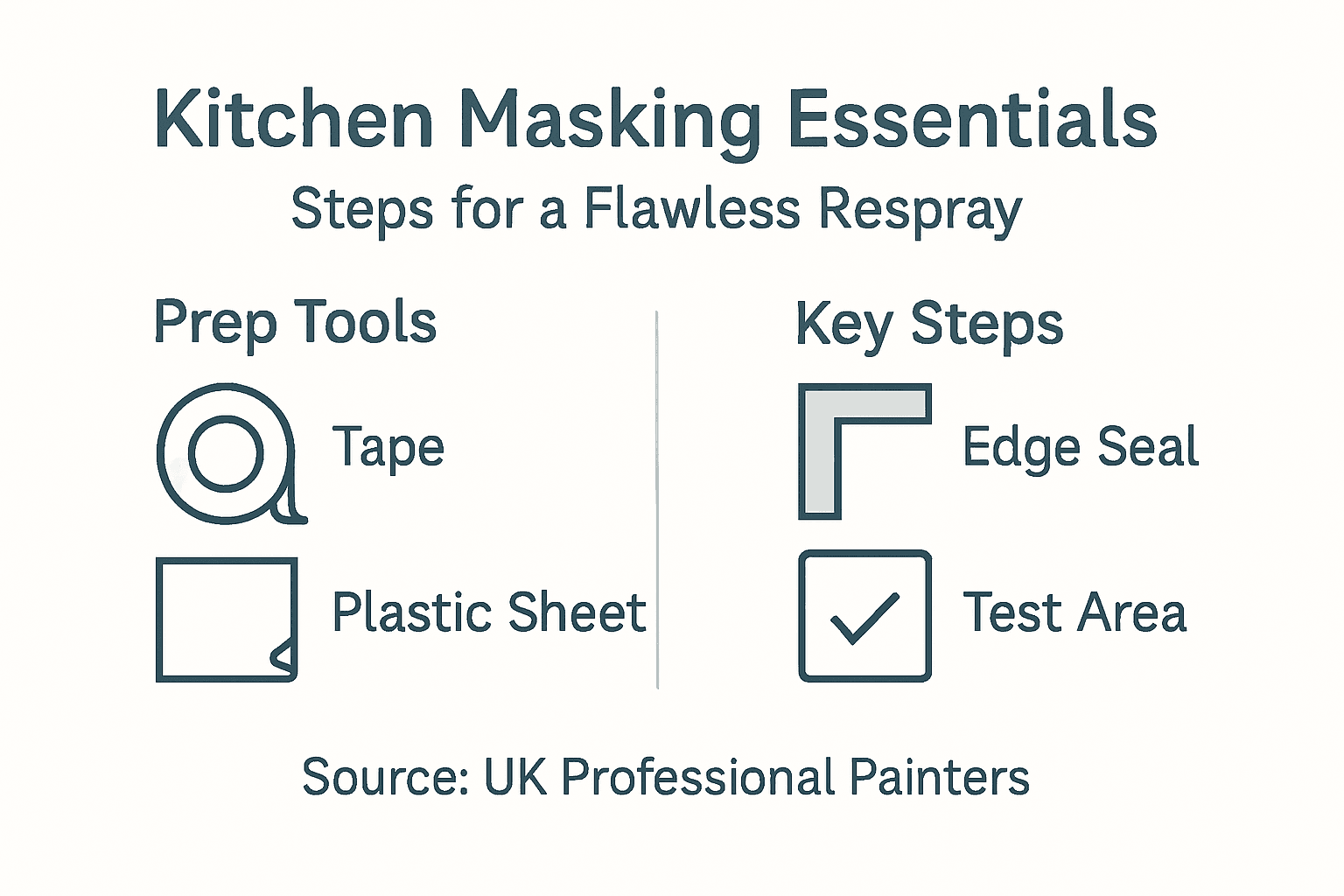
The primary purpose of masking revolves around creating sharp boundaries and preventing paint from spreading to unwanted areas. Most painters use masking tape, a pressure-sensitive adhesive tool made from crepe paper, which can be applied and removed without damaging underlying surfaces. Different types of masking materials serve various purposes:
- Masking tape with varying adhesive strengths
- Liquid masking fluid for artistic applications
- Plastic sheeting for larger surface coverage
- Specialised painter’s tape for delicate surfaces
Artistic masking techniques extend beyond simple surface protection. Professional artists use masking as a conceptual tool to build layers, create complex visual effects, and control paint application with remarkable precision. This approach allows for intricate designs and sophisticated painting strategies that go far beyond basic surface coverage.
Pro tip: Always test your masking tape on a small, inconspicuous area first to ensure it won’t damage the surface or leave residue when removed.
Types of masking materials and methods
Masking materials are diverse and specialised, designed to protect surfaces during painting and industrial processes. Masking tape technologies have evolved to provide painters and professionals with precise tools for creating clean, sharp edges and preventing unwanted paint spread.
The primary categories of masking materials include:
- Masking tape: Available in various adhesive strengths
- Painter’s tape: Specifically designed to prevent paint bleed
- High-temperature masking tape: Used in industrial applications
- Liquid masking fluid: Ideal for artistic and detailed work
- Plastic sheeting: For large surface area protection
Industrial masking solutions extend beyond traditional painting techniques. In specialised environments like hot-dip galvanizing, professionals use advanced masking materials such as anti-galvanizing solutions and protective greases to preserve specific components during surface treatments.
Choosing the right masking material depends on several critical factors, including surface type, paint composition, environmental conditions, and the specific requirements of your project. Temperature resistance, adhesive strength, and ease of removal are key considerations that can significantly impact the quality of your final finish.
Pro tip: Always purchase masking materials from reputable suppliers and store them in a cool, dry place to maintain their adhesive properties and prevent premature degradation.
To help select the best masking tape, here is a summary of key factors to consider:
| Factor | Why It Matters | Example Decision |
|---|---|---|
| Adhesive strength | Prevents surface damage or residue | Low-tack for wallpaper |
| Tape width | Affects protection coverage | Wide tape for worktops |
| Temperature rating | Ensures tape withstands conditions | Heat-rated in ovens |
| Surface compatibility | Avoids peeling or bleeding | Use for gloss paints |
| Removal time | Prevents adhesive transfer | Remove within 24 hours |
Here is a comparison of common masking materials and their ideal applications:
| Masking Material | Best For | Removal Difficulty |
|---|---|---|
| Standard masking tape | General household surfaces | Effortless, no residue |
| Painter’s tape | Delicate finishes and clean lines | Peels easily, residue-free |
| High-temperature tape | Industrial hot surfaces | Removable after heating |
| Liquid masking fluid | Fine art and detailed designs | Peels off in one piece |
| Plastic sheeting | Large area, dust protection | Single-use, easy removal |
Step-by-step masking process for kitchens
Achieving a professional kitchen respray requires meticulous masking preparation techniques. The process demands precision, patience, and systematic approach to protect surfaces and ensure a flawless finish.
The comprehensive masking process for kitchen respraying involves several critical stages:
- Surface Preparation
- Thoroughly clean all surfaces
- Remove hardware and fixtures
- Ensure surfaces are dry and dust-free
- Selecting Masking Materials
- Choose painter’s tape with appropriate adhesive strength
- Select plastic sheeting for larger areas
- Use liquid masking fluid for intricate details
- Masking Application Techniques
- Apply tape at 45-degree angles for clean edges
- Press tape edges firmly to prevent paint bleed
- Cover worktops, appliances, and adjacent walls completely
Industrial spraying guidelines emphasise the importance of comprehensive surface protection. In confined kitchen spaces, creating an effective masking barrier prevents overspray and ensures a professional, clean finish.
Professional painters recommend systematic masking, starting from the most delicate areas and progressively covering larger surfaces. Careful attention to detail during the masking stage can significantly reduce potential paint contamination and rework.
Pro tip: Use a plastic putty knife to firmly press masking tape edges, ensuring an airtight seal and preventing paint seepage.
How masking impacts respray quality
Effective masking techniques are fundamental to achieving a professional kitchen respray that looks seamless and polished. The quality of your masking directly influences the final aesthetic and durability of the paint application, making it a critical step in the entire respraying process.
The primary ways masking impacts respray quality include:
- Preventing unwanted paint spread
- Creating razor-sharp paint edges
- Protecting sensitive kitchen surfaces
- Ensuring uniform paint coverage
- Minimising potential surface contamination
Professional painters understand that masking is more than just covering surfaces. Industrial coating guidelines emphasise that proper masking prevents functional areas from being compromised and maintains the integrity of both the surface and the paint application.
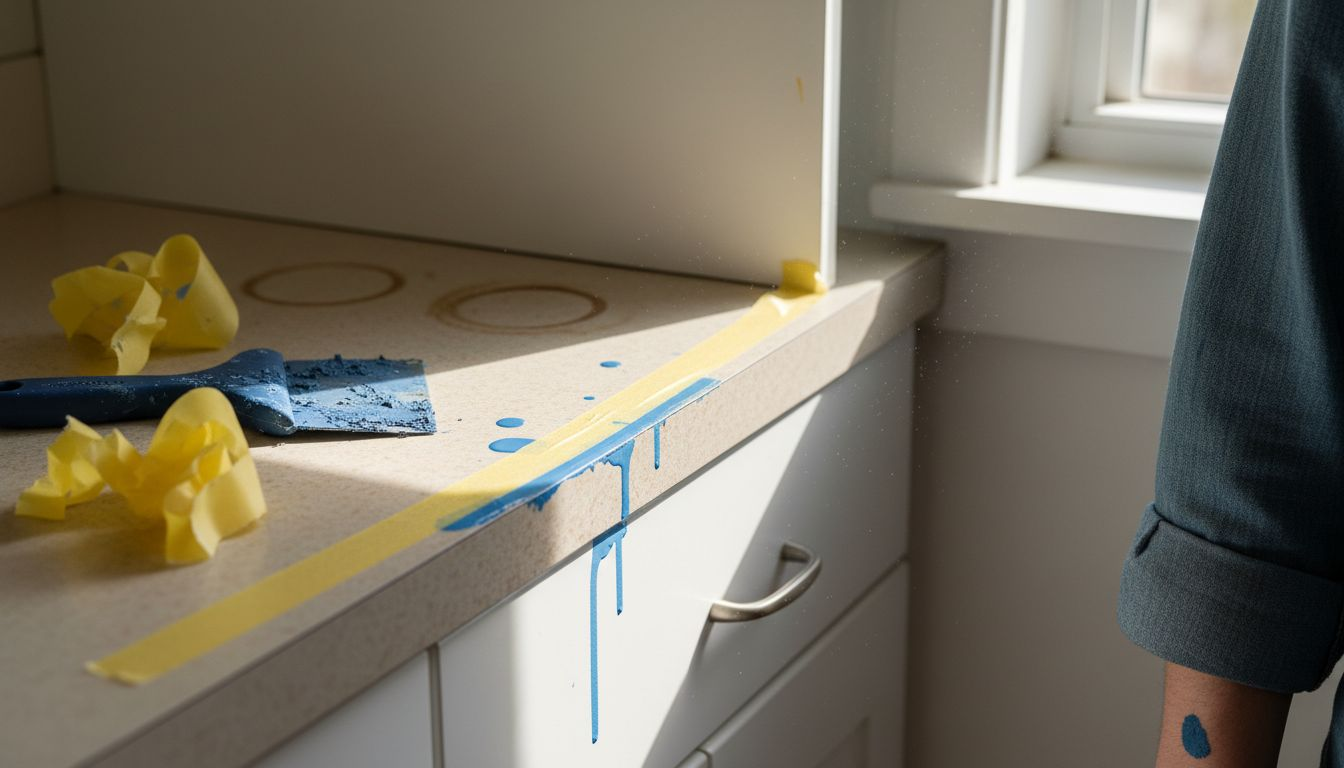
Uneven or poorly applied masking can lead to multiple quality issues, such as paint bleeding, unintended coverage, and rough paint boundaries. Precision in masking means using high-quality tape, applying it meticulously at correct angles, and ensuring complete surface coverage. This attention to detail transforms an average respray into a professional-grade finish.
Pro tip: Invest in professional-grade masking materials and take your time during application to guarantee a flawless kitchen respray result.
Avoiding common masking mistakes and overspray
Common masking errors can transform a professional kitchen respray into a disappointing DIY project. Understanding these potential pitfalls is crucial for achieving a flawless, professional-looking finish that meets high-quality standards.
The most frequent masking mistakes include:
- Using low-quality or inappropriate masking tape
- Failing to press tape edges firmly
- Leaving tape on surfaces for extended periods
- Inadequate surface preparation
- Incorrect spray technique
- Insufficient protective coverage
Overspray risks are particularly significant in confined kitchen spaces. Spraying safety guidelines emphasise the importance of proper ventilation and precise spray equipment settings to minimise airborne paint particles and potential surface contamination.
Professional painters recommend a systematic approach to preventing masking mistakes. This involves selecting high-quality masking materials appropriate for specific surfaces, applying tape with precision, and using techniques that create sharp, clean paint boundaries. Careful attention to detail during the masking process can dramatically reduce the likelihood of paint bleeding, uneven edges, and surface damage.
Pro tip: Always test your masking technique on a small, inconspicuous area first to ensure compatibility with your specific kitchen surface and paint type.
Achieve Flawless Kitchen Resprays with Expert Masking Techniques
Mastering masking is crucial for a professional kitchen respray to prevent paint bleed and surface damage. If you want to avoid common DIY pitfalls like uneven edges or overspray, precision and quality materials are essential. Our in-situ kitchen respray service at SKR Specialists guarantees expert application using high-grade masking methods tailored to your space and surfaces.
Benefit from meticulous preparation and flawless masking that protect your kitchen’s surfaces while delivering razor-sharp paint lines for a stunning finish. Ready to transform your kitchen without the stress of messy paintwork Choose professional kitchen respray services today and experience the difference expert masking can make. Visit SKR Specialists now to get started on your kitchen makeover.
Frequently Asked Questions
What is the main purpose of masking in painting?
Masking is crucial in painting as it allows for the creation of sharp boundaries and prevents paint from spreading to unintended areas, resulting in clean lines and professional finishes.
What are the different types of masking materials used in painting?
Common masking materials include masking tape, painter’s tape, high-temperature masking tape, liquid masking fluid, and plastic sheeting, each designed for specific applications and surface types.
How can I avoid common mistakes when masking for a kitchen respray?
To avoid common masking mistakes, ensure you use high-quality tape, press the edges firmly, adequately prepare the surfaces, and apply the tape at the correct angles. Testing on an inconspicuous area can also help ensure effectiveness.
How does masking affect the quality of a kitchen respray?
Proper masking significantly impacts the quality of a kitchen respray by preventing unwanted paint spread, creating clean edges, protecting sensitive surfaces, and ensuring uniform paint coverage, which collectively leads to a polished finish.
Recommended
- Kitchen Door Painting Workflow for Flawless Results – WordPress
- Kitchen Spray Paint Application Guide for Flawless Results – WordPress
- 7 Essential Stages of Kitchen Respraying Explained Simply – WordPress
- Kitchen Spray Painting Tutorial for a Fresh New Look – WordPress
- How to Install and Maintain a Kitchen Slip Mat for Safety – Mats4U USA