
How to Pick Kitchen Paint Colours for a Fresh Look
Over half of British homeowners believe that kitchen colour choices directly affect the overall feel of their living space. Whether you favour classic charm or a modern look, the right paint can refresh your kitchen and add genuine value to your home. By exploring proven steps for assessing features, sampling shades, and working with expert advice, you gain practical tools to transform your kitchen with confidence and style.
Table of Contents
- Step 1: Assess Existing Kitchen Features
- Step 2: Select Colour Schemes to Match Your Space
- Step 3: Sample Potential Paint Colours In-Situ
- Step 4: Evaluate Lighting and Room Mood
- Step 5: Confirm Final Choice with Professional Advice
Quick Summary
| Key Point | Explanation |
|---|---|
| 1. Assess Current Features | Evaluate existing cabinetry, worktops, and fixtures to inform your paint colour choices. Understanding your kitchen’s inherent elements is crucial for a harmonious design. |
| 2. Balanced Colour Schemes | Choose a dominant, secondary, and accent colour for a cohesive palette. This creates visual interest without overwhelming the kitchen space. |
| 3. Test Paint Colours In-Situ | Use sample sheets to see paint colours in different lighting conditions. This helps ensure the chosen colour looks perfect at all times of the day. |
| 4. Consider Lighting Effects | Different lighting affects colour perception; customise your choices based on your kitchen’s orientation and natural light exposure for the best outcome. |
| 5. Seek Professional Advice | Consult a kitchen design specialist to validate your colour choices and ensure optimal results tailored to your unique kitchen features. |
Step 1: Assess Existing Kitchen Features
Before selecting your perfect kitchen paint colours, you need a comprehensive understanding of your current kitchen environment. Understanding your kitchen’s existing design elements helps ensure your colour selection harmonises beautifully with the space’s inherent characteristics.
Begin by conducting a systematic evaluation of your kitchen’s current features. Walk around and critically examine your cabinetry, worktops, flooring, and permanent fixtures. Note down the existing colour palette, material textures, and overall aesthetic. Consider factors like natural light exposure, room size, and architectural details that might influence your colour choices. Pay special attention to fixed elements such as tiles, countertops, and appliances that cannot be easily changed.
Your colour assessment should involve understanding undertones and visual relationships between different surfaces. Observe how current colours interact with one another and identify whether you want to complement or contrast these existing tones. Some homeowners prefer a cohesive look that subtly enhances current design elements, while others might seek a bold transformation that completely reimagines the kitchen’s visual landscape.
Expert Recommendation: Photograph your kitchen from multiple angles and review these images in different lighting conditions to gain a more objective perspective on your current colour scheme and potential paint options.
Step 2: Select Colour Schemes to Match Your Space
Now that you have thoroughly assessed your kitchen’s existing features, it is time to strategically select a colour scheme that will transform your space. Understanding colour psychology and spatial dynamics is critical for creating a harmonious and visually appealing kitchen environment.
Start by considering your kitchen’s fundamental characteristics. Smaller kitchens benefit from lighter colour palettes that create an illusion of spaciousness, while larger kitchens can accommodate deeper, more dramatic tones. Consider natural light exposure a key factor in your colour selection process. Rooms with abundant sunlight can handle richer, more saturated colours, whereas spaces with limited natural light might require softer, reflective hues to brighten the area. Think about how different colours interact with your existing fixtures and how they will influence the overall mood of your kitchen.
When exploring colour options, consider creating a balanced palette that incorporates three primary elements: a dominant colour, a secondary colour, and an accent colour. This approach ensures visual interest without overwhelming the space. Your dominant colour should cover the largest surface area, typically your walls or cabinetry. The secondary colour provides complementary depth, while the accent colour adds personality and visual excitement. Remember that neutral tones like soft greys, warm whites, and muted beiges can serve as excellent foundational colours that provide flexibility for future design changes.
Here is a quick reference for the function of each colour role in a balanced scheme:
| Colour Role | Typical Usage Area | Effect on Space |
|---|---|---|
| Dominant Colour | Walls or cabinetry | Sets the overall mood |
| Secondary Colour | Worktops or splashbacks | Adds depth and harmony |
| Accent Colour | Accessories or decor | Introduces vibrancy |
Expert Recommendation: Create a small sample board with your proposed colour scheme and observe it in different lighting conditions throughout the day to ensure you are completely satisfied with your selection.
Step 3: Sample Potential Paint Colours In-Situ
To ensure your chosen kitchen paint colours will look perfect, you need a systematic approach to sampling and testing. Professional paint testing techniques can help you avoid costly mistakes and achieve the ideal colour transformation.
Begin by purchasing sample pots of your preferred colours and creating large test patches. Rather than painting directly on your kitchen walls, apply the paint to A4 or A3 sized white paper sheets. This method allows you to move the samples around your kitchen and observe how different lighting conditions affect the colour throughout the day. Position these sample sheets near your existing cabinetry, worktops, and major appliances to understand how the colours interact with your current kitchen elements. Natural daylight, artificial evening lighting, and morning sunlight can dramatically alter how a colour appears, so view your samples under various lighting scenarios.
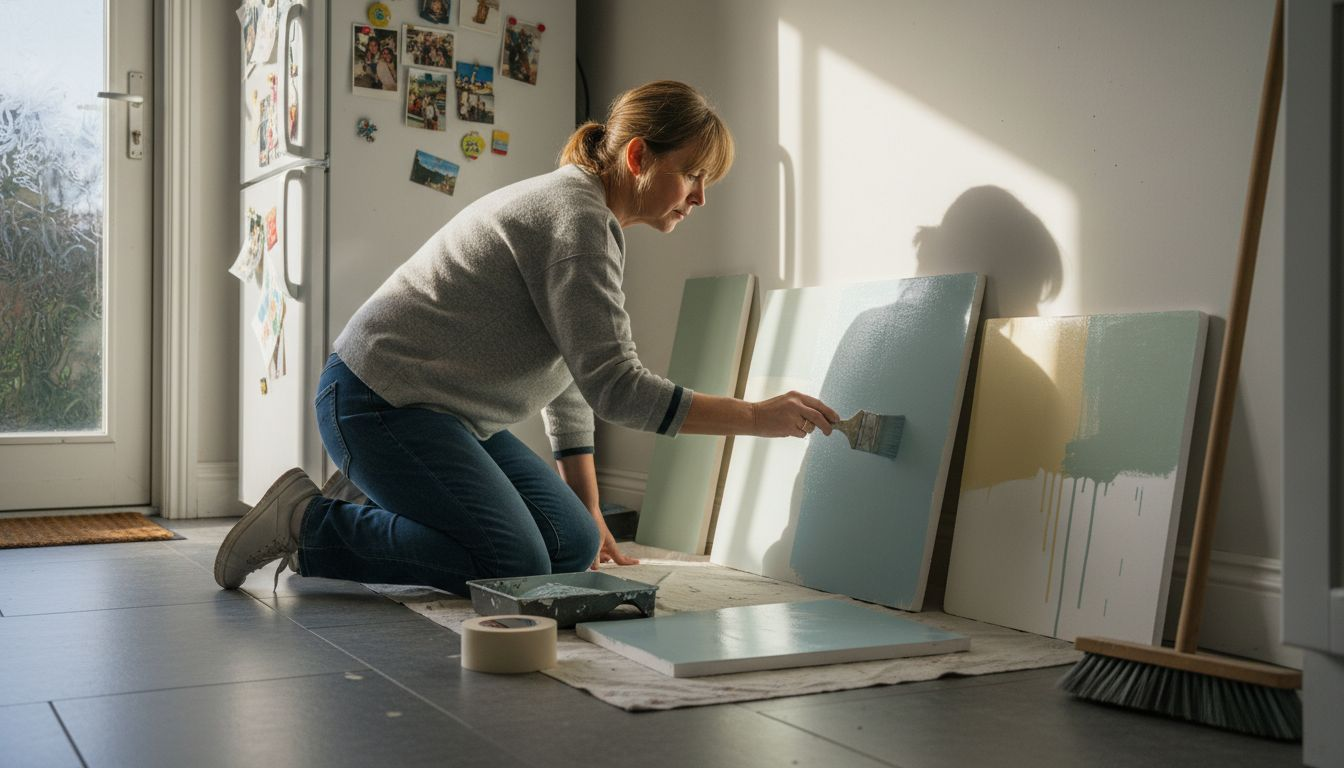
Pay close attention to how the paint colours change from morning to evening. Colours can look completely different depending on the time of day and the direction of your kitchen windows. North facing kitchens tend to have cooler light, which might make colours appear more muted, while south facing spaces receive warmer, more vibrant light. Consider painting multiple coats on your sample sheets to get a true representation of the colour depth and finish. Observe how the colours blend with your kitchen’s existing textures and materials, ensuring a harmonious and cohesive design.
Expert Recommendation: Create at least three large sample sheets for each potential colour and live with them in your kitchen for several days before making a final decision.
Step 4: Evaluate Lighting and Room Mood
Choosing the right kitchen paint involves more than just selecting a pleasing colour you can create a transformative atmosphere that impacts your entire living space. Understanding how colour psychology influences kitchen design allows you to craft an environment that reflects both your aesthetic preferences and emotional needs.
Your kitchen’s orientation and natural light play crucial roles in colour perception and mood generation. South facing kitchens receive abundant warm sunlight, enabling you to experiment with cooler colour palettes without risking a clinical atmosphere. Conversely, north facing spaces typically experience more muted, bluish light, which suggests incorporating warmer tones to counterbalance the cooler illumination. Consider how different colours emotionally resonate with your daily kitchen activities. Cool blues and greens can create a calm, contemplative environment perfect for peaceful meal preparation, while energetic yellows and oranges might stimulate social interaction and enthusiasm.
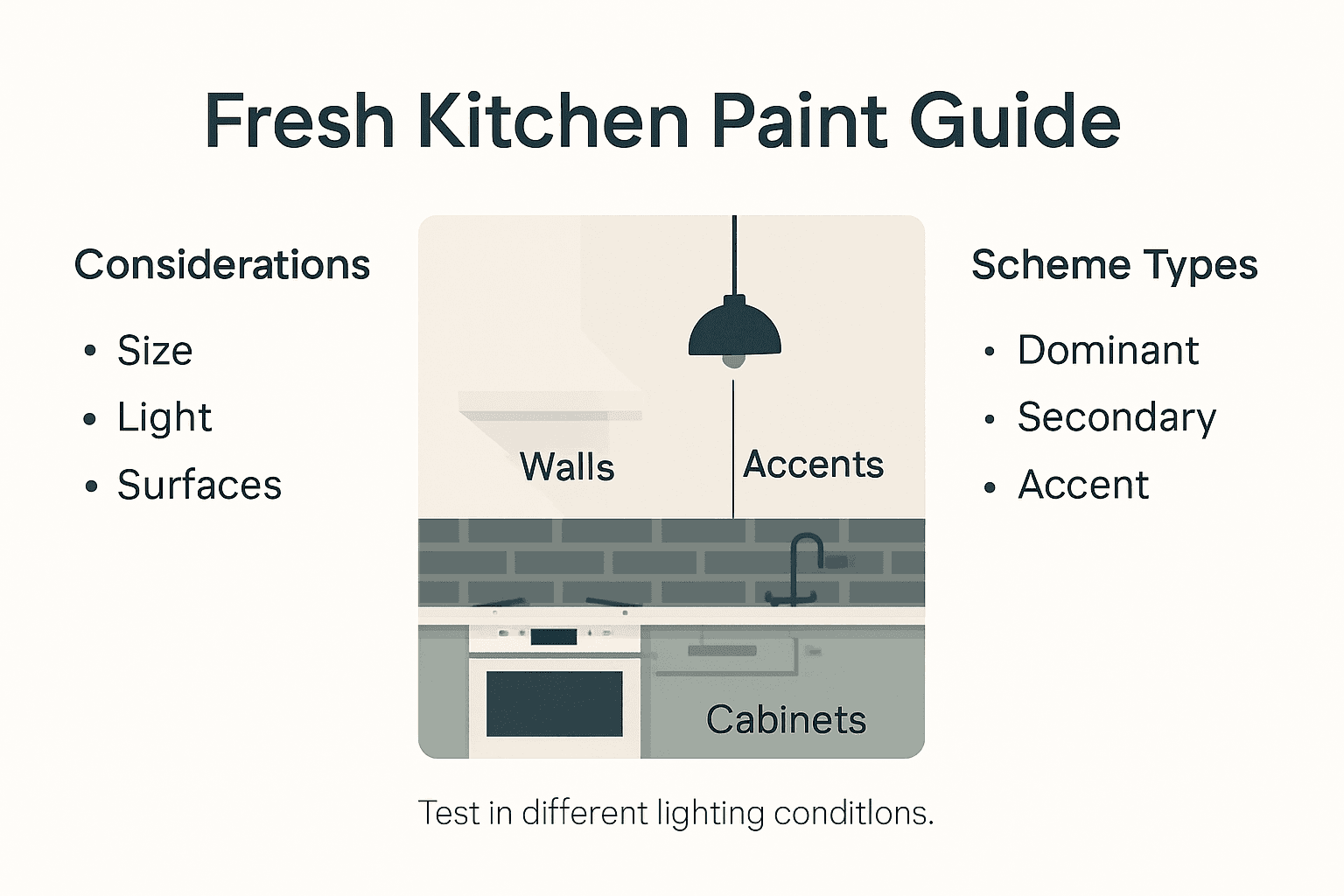
Light is not just about direction but also about quality and intensity. Observe how your chosen colours transform throughout the day under various lighting conditions artificial overhead lights, natural morning sunlight, and evening lamp glow can dramatically alter a colour’s perceived tone. Warm white lights tend to enhance yellowish and reddish undertones, while cool white lights can make blues and greens appear more pronounced. Your goal is to select a colour that maintains its intended mood and aesthetic appeal regardless of the time of day or lighting scenario.
The following table summarises how kitchen orientation can influence suitable paint colour choices:
| Kitchen Orientation | Typical Light | Suggested Colour Tones |
|---|---|---|
| North-facing | Cool, muted | Warm neutrals, soft yellows |
| South-facing | Warm, bright | Cool blues, pale greens |
| East-facing | Bright mornings | Warm beige, muted coral |
| West-facing | Warm evenings | Pale grey, soft lilac |
Expert Recommendation: Take photographs of your sample paint colours at different times of day to objectively compare how lighting transforms their appearance.
Step 5: Confirm Final Choice with Professional Advice
After meticulously sampling and evaluating your potential kitchen paint colours, the final stage involves seeking expert validation from professional kitchen design specialists to ensure your colour selection will truly transform your space.
Consulting with a professional designer or paint specialist provides an objective perspective on your chosen colours. These experts can assess how your selected palette interacts with your kitchen’s unique architectural features, lighting conditions, and existing design elements. They bring a trained eye to nuances that might escape an untrained observer such as subtle undertones, potential colour conflicts, or opportunities to enhance your kitchen’s spatial perception. A professional can also provide insights into current colour trends while ensuring your selection remains timeless and authentic to your personal style.
Many paint specialists offer consultation services where they can review your sample boards, provide colour matching recommendations, and suggest fine tuning strategies. They might recommend slight adjustments to your initial colour choices to optimise visual harmony or suggest complementary accent colours that elevate your overall design. These consultations can help you avoid potential costly mistakes and ensure your kitchen respray achieves the aesthetic and emotional impact you desire.
Expert Recommendation: Schedule a professional colour consultation to receive personalised advice tailored specifically to your kitchen’s unique characteristics and your design vision.
Transform Your Kitchen with Confidence Using Expert Respray Solutions
Choosing the perfect kitchen paint colours can be overwhelming with so many factors to consider like natural light, room size, and existing fixtures. The article highlights key challenges such as assessing undertones, testing samples in different lighting, and balancing mood with colour psychology. We understand how important it is to avoid costly mistakes and achieve a fresh, harmonious look that reflects your style.
Explore practical advice and inspiration in our Uncategorized Archives to complement your colour selection journey.

Ready to bring your ideal kitchen paint colours to life with professional precision? At SKR Specialists, we offer expert kitchen respray services completed in-situ to transform your kitchen without the hassle of full renovation. Act now to enhance your space with a vibrant, lasting finish that perfectly suits your taste. Visit our website and discover how simple it is to refresh your kitchen today.
Frequently Asked Questions
How do I assess my existing kitchen features before choosing paint colours?
To assess your existing kitchen features, thoroughly evaluate elements like cabinetry, worktops, flooring, and permanent fixtures. Take note of current colours and material textures to understand how they interact with potential paint selections.
What colour schemes should I consider for a cohesive kitchen design?
When selecting a colour scheme, aim to create a balanced palette that includes a dominant colour for walls, a secondary colour for worktops, and an accent colour for accessories. For example, choose a soft grey as the dominant colour, a muted beige as the secondary, and vibrant blue as an accent to add visual interest.
How can I test potential paint colours in my kitchen?
To test potential paint colours, purchase sample pots and apply them to large sheets of white paper rather than directly on the walls. Move these samples around your kitchen to observe how they change under different lighting conditions throughout the day.
What lighting factors should I consider when picking kitchen paint colours?
Consider how natural light orientation affects your chosen colours; south-facing kitchens can handle cooler tones, while north-facing kitchens benefit from warmer hues to balance muted light. Evaluate colour appearance in various lighting scenarios by taking photographs in the morning, afternoon, and evening.
Why should I consult a professional after selecting kitchen paint colours?
Consulting a professional offers an objective evaluation of your colour choices, ensuring they harmonise with your kitchen’s architecture and existing elements. Schedule a consultation to receive tailored advice that can help enhance your design and prevent costly mistakes.
How long should I live with paint samples before making a final decision?
Live with your paint samples for at least three to five days to see how they blend with the kitchen’s existing features and how they transform under varying light. This time frame allows you to observe the overall effect and make a confident selection.
Recommended
- How Colour Affects Kitchen Design: Complete Guide – WordPress
- 7 Trending Kitchen Respray Colour Ideas for UK Homes – WordPress
- 7 Smart Kitchen Decorating Ideas Every Homeowner Should Know – WordPress
- Kitchen Paint Finish Guide for a Flawless Update – WordPress
- How to Clean After Renovation in McKinney: 2025 Guide