
Kitchen Respray Terminology – What UK Homeowners Must Know
Most British homeowners underestimate the complexity behind a professional kitchen respray, mistaking it for a simple DIY paint job. This misconception can drive choices that affect both quality and durability. With well-executed resprays lasting up to 12 years, understanding the expert terminology and processes is essential. This guide demystifies kitchen respraying, providing homeowners in England with authoritative insights that support smarter renovation decisions and lasting results.
Table of Contents
- Kitchen Respray Basics And Misconceptions
- Types Of Finishes And Spray Methods
- Key Terms Used In The Respray Process
- Legal And Safety Standards In Britain
- Cost Comparisons And Common Mistakes
- Alternatives To Kitchen Respray Services
Key Takeaways
| Point | Details |
|---|---|
| Professional Kitchen Respray Offers Value | A kitchen respray is a cost-effective alternative to full renovations, significantly reducing both time and expense. |
| Surface Preparation is Essential | Comprehensive surface preparation is crucial to ensure lasting results and avoid premature deterioration of the finish. |
| Understand Finishes and Methods | Familiarise yourself with the types of finishes and spray methods to select the best option for your kitchen’s aesthetics and durability. |
| Regulatory Compliance is Crucial | Always verify that professionals comply with UK safety regulations to ensure both health and quality standards are met during the respray process. |
Kitchen respray basics and misconceptions
A kitchen respray represents a professional renovation technique that transforms existing kitchen surfaces without complete replacement, offering homeowners a strategic alternative to costly full kitchen renovations. Unlike traditional painting methods, professional kitchen respraying provides a comprehensive transformation that can dramatically change the appearance and feel of your kitchen with remarkable precision and efficiency.
The core misconception many UK homeowners harbour involves underestimating the sophistication of professional kitchen respraying techniques. Many assume that a respray is simply a basic paint job, when in reality, it involves meticulous surface preparation, specialised equipment, and professional-grade coating materials. Professional resprayers use industrial-grade spray systems that deliver an ultra-smooth, durable finish far superior to standard DIY painting techniques. These methods ensure even coverage, superior adhesion, and a finish that can withstand daily kitchen wear and tear.
Key aspects of a professional kitchen respray include comprehensive surface preparation, colour transformation, and minimal disruption to your home environment. The process typically involves carefully cleaning and treating existing surfaces, using specialist primers and coatings that create a robust, long-lasting finish. Modern respraying techniques can completely transform kitchen cupboards, cabinets, and related surfaces in just 2-3 days, compared to weeks required for full kitchen replacements.
Pro tip: Always request comprehensive surface preparation details and material specifications before committing to a kitchen respray service to ensure you receive a high-quality, durable transformation.
Types of finishes and spray methods
Kitchen respraying techniques offer a sophisticated range of finishes and application methods that can dramatically transform your kitchen’s aesthetic and durability. Professional spray coating technologies provide homeowners with multiple options to achieve their desired look, ranging from sleek contemporary styles to classic traditional appearances.
The primary finish types include matte, satin, semi-gloss, and high-gloss surfaces, each delivering unique visual and functional characteristics. Matte finishes offer a sophisticated, non-reflective appearance ideal for modern minimalist kitchens, while glossy finishes provide a bright, reflective surface that can make smaller spaces feel more expansive. Satin and semi-gloss options represent a balanced compromise, offering moderate sheen and excellent cleaning resilience.
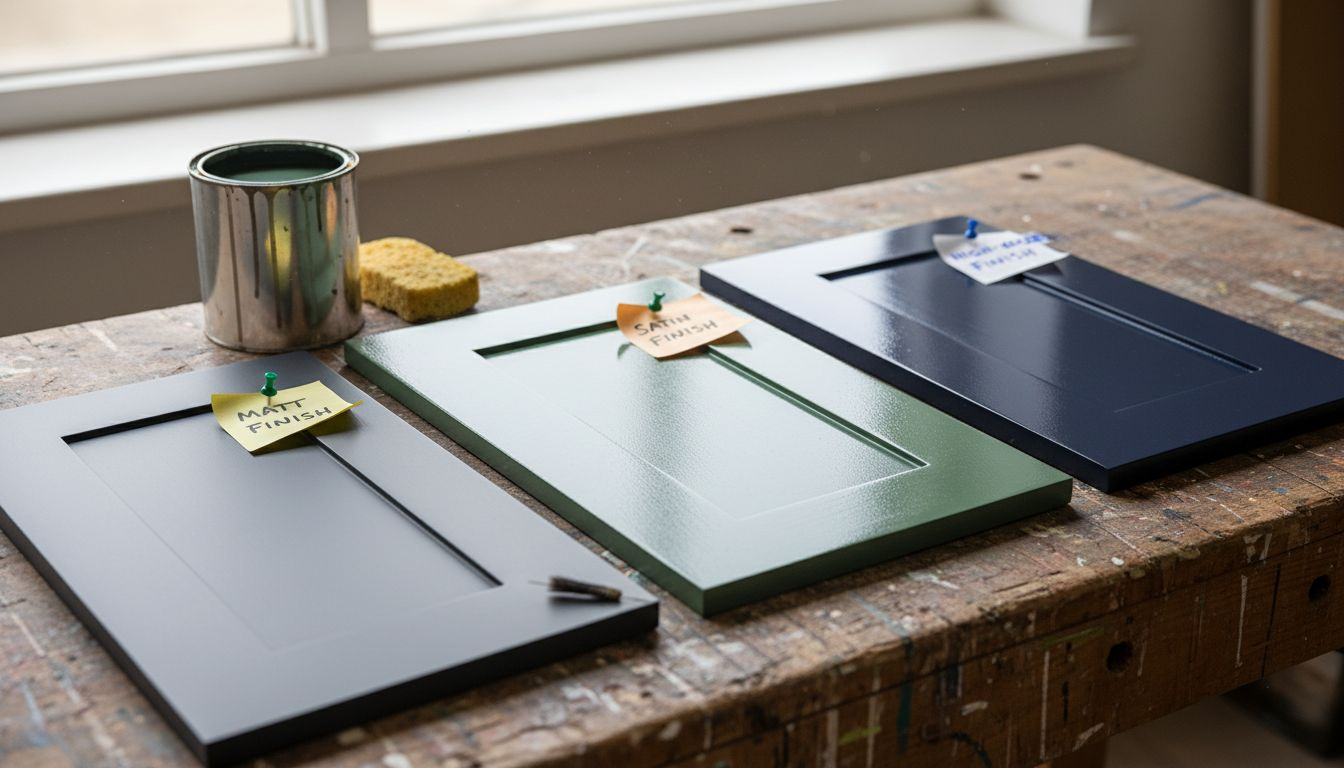
Below is a summary of common kitchen respray finishes and their ideal uses:
| Finish Type | Appearance | Cleaning Ease | Best Suited To |
|---|---|---|---|
| Matte | Smooth, non-reflective | Easy, hides marks | Contemporary, minimalist |
| Satin | Soft sheen, gentle reflection | Very easy | Busy family kitchens |
| Semi-gloss | Noticeable sheen, modern look | Very easy | Larger or high-traffic spaces |
| High-gloss | Shiny, highly reflective | Effortless wipe | Small kitchens, modern styles |
Spray application methods encompass two primary techniques: off-site workshop spraying and in-situ spraying. Workshop spraying involves removing kitchen cabinet doors and components for professional treatment in controlled environments, ensuring exceptional finish quality and precision. In-situ spraying occurs directly within the kitchen space, providing a cost-effective solution for fixed elements and generating minimal household disruption. Both methods utilise specialist equipment and professional-grade 2K polyurethane coatings that ensure superior adhesion and long-lasting durability.
Pro tip: Request sample finish swatches and discuss your specific kitchen environment with professionals to select the most appropriate spray method and finish for your unique space and lifestyle requirements.
Key terms used in the respray process
Understanding kitchen respray terminology is crucial for homeowners navigating this sophisticated renovation technique. Professional kitchen respray terminology encompasses a range of specialised technical terms that describe the intricate process of transforming kitchen surfaces without complete replacement.
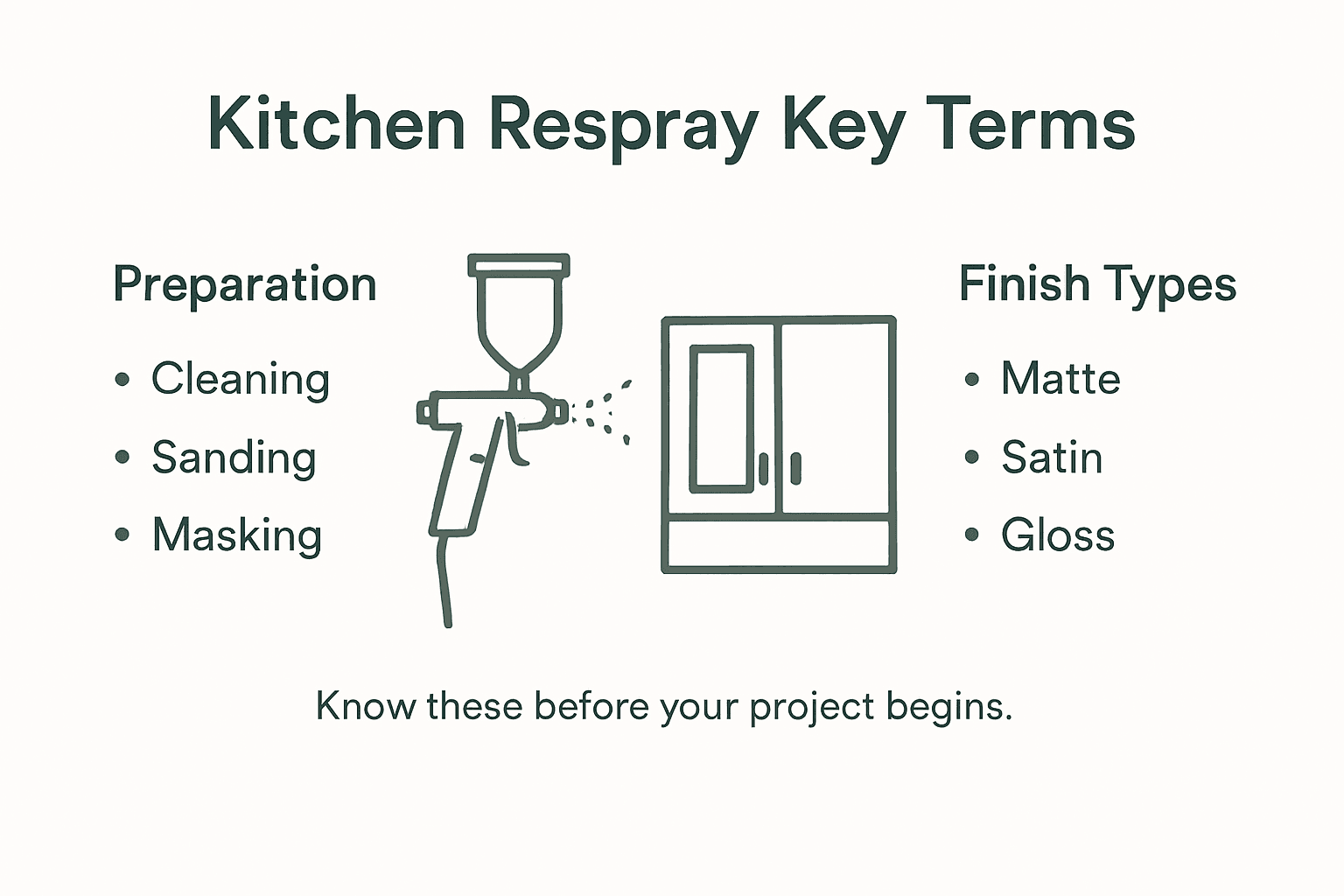
Key technical terms in the kitchen respray process include surface preparation, which involves comprehensive cleaning, degreasing, and sanding of existing kitchen surfaces to ensure optimal coating adhesion. Primer coating represents the foundational layer that enables professional-grade paint to bond effectively with the underlying surface. 2K polyurethane refers to a high-performance two-component paint system that provides exceptional durability, chemical resistance, and a premium finish compared to standard paint applications.
Additional critical terminology includes in-situ spraying, which describes on-site painting directly within the kitchen environment, and workshop spraying, where kitchen components are removed and treated in controlled professional environments. Mechanical adhesion describes the physical bonding process between the primer, paint, and surface, while substrate refers to the original material being painted – typically wooden cupboard doors, laminate surfaces, or metal kitchen fixtures. Understanding these terms empowers homeowners to communicate effectively with professional respraying technicians and make informed decisions about their kitchen renovation project.
Pro tip: Request a detailed glossary of technical terms from your chosen respray professional to ensure complete understanding of the proposed kitchen transformation process.
Legal and safety standards in Britain
Kitchen respraying in the United Kingdom is governed by a comprehensive framework of legal and safety regulations designed to protect both homeowners and professional contractors. Kitchen paint safety standards play a critical role in ensuring the health, environmental, and occupational safety of all parties involved in the renovation process.
The Control of Substances Hazardous to Health (COSHH) regulations form the cornerstone of legal compliance for kitchen respray professionals. These stringent guidelines mandate comprehensive risk assessments, proper protective equipment usage, and strict protocols for handling chemical substances. Ventilation requirements, chemical containment procedures, and personal protective equipment are mandatory elements that professionals must implement to ensure workplace and residential safety during kitchen respraying projects.
The Office for Product Safety and Standards provides additional regulatory oversight, ensuring that all paints, coatings, and spraying materials meet rigorous national safety standards. This includes detailed specifications about chemical composition, potential health risks, and mandatory labeling requirements. Homeowners should expect professionals to demonstrate compliance with these regulations, including providing safety data sheets, using approved materials, and following established environmental and health protection guidelines. Professional kitchen respray services must adhere to Health and Safety Executive (HSE) guidelines, which cover everything from chemical handling to workspace preparation and potential environmental impact.
Pro tip: Always request documented proof of safety compliance and material safety data sheets from your kitchen respray professional before commencing any renovation work.
Cost comparisons and common mistakes
Homeowners considering kitchen renovation face significant financial decisions, with kitchen respray costs offering a compelling alternative to traditional full replacement methods. The financial landscape reveals that a professional kitchen respray typically ranges between £500 and £2,500, representing a substantial saving compared to complete kitchen installations that can exceed £10,000.
Cost variations depend on multiple critical factors, including kitchen size, surface complexity, desired finish quality, and required preparation work. Professional respraying offers a nuanced pricing structure where costs directly correlate with specific project requirements. Surface preparation, material quality, and labour complexity represent the primary cost drivers. Larger kitchens with intricate cabinetry or multiple surfaces naturally demand higher investment, while smaller, more straightforward spaces require minimal financial commitment.
Common mistakes can significantly impact both project expenses and final results. Homeowners frequently underestimate the importance of comprehensive surface preparation, which can lead to premature finish deterioration and unexpected additional costs. Selecting inexperienced contractors or attempting DIY approaches without proper technical understanding often results in suboptimal outcomes, including uneven coating, poor adhesion, and potential material waste. Other critical errors include neglecting ventilation requirements, choosing inappropriate finishes for specific kitchen environments, and failing to obtain detailed, transparent quotations that comprehensively outline all potential expenses.
Pro tip: Request itemised quotes from at least three professional kitchen respray specialists, ensuring each breakdown includes detailed surface preparation, material specifications, and comprehensive labour costs to avoid unexpected financial surprises.
Alternatives to kitchen respray services
UK homeowners exploring kitchen renovation options have several alternatives to traditional respraying services, each offering unique advantages and considerations. Kitchen renewal strategies range from comprehensive replacements to more targeted transformation techniques designed to suit various budgets and aesthetic preferences.
One prominent alternative is kitchen cabinet wrapping, a quick and cost-effective method involving high-quality vinyl films that can mimic woodgrain, marble, or contemporary solid colours. This technique typically lasts 5-10 years and works best on flat or lightly profiled cabinets. While less durable than professional respraying, wrapping offers minimal onsite disruption and lower upfront costs, making it attractive for budget-conscious homeowners seeking rapid aesthetic updates. Another option includes partial cabinet door replacement, which allows targeted refreshment of specific kitchen elements without complete renovation.
Full kitchen replacement represents the most comprehensive but also the most expensive alternative, involving complete removal and installation of new cabinetry, worktops, and potentially structural modifications. This approach provides maximum design flexibility but comes with significant financial investment and potential weeks of household disruption. Kitchen refacing using laminate materials offers a middle-ground solution, enabling substantial visual transformation while retaining existing kitchen infrastructure. The selection between these alternatives depends on multiple factors including budget constraints, desired longevity, sustainability goals, and the current condition of existing kitchen components.
Pro tip: Carefully evaluate your specific kitchen conditions, budget limitations, and long-term aesthetic goals before selecting an alternative to respraying, considering not just immediate costs but potential future maintenance requirements.
Here is a comparison of popular kitchen renovation options and their key attributes:
| Option | Typical Lifespan | Disruption Level | Average Cost Range | Main Benefit |
|---|---|---|---|---|
| Professional Respray | 8–12 years | Low (2–3 days) | £500 – £2,500 | Durable finish, cost-effective |
| Cabinet Wrapping | 5–10 years | Minimal (1–2 days) | £250 – £1,200 | Quick update, budget-friendly |
| Partial Door Replacement | 10–15 years | Moderate (3–5 days) | £800 – £3,500 | Targeted refresh, flexibility |
| Full Kitchen Replacement | 15+ years | High (several weeks) | £10,000+ | Maximum customisation |
| Laminate Refacing | 10–15 years | Moderate (3–5 days) | £1,500 – £4,000 | Keeps cabinets, fresh look |
Master Kitchen Respray Terminology and Transform Your Space Today
Understanding complex kitchen respray terminology like surface preparation, 2K polyurethane, and in-situ spraying is essential to ensure your renovation delivers the durable, flawless finish you deserve. Many UK homeowners face confusion over these technical terms which can cause uncertainty and delay decision-making. Our expert team specialises in clear communication and professional services that take the mystery out of kitchen respraying while providing a cost-effective, high-quality transformation with minimal disruption.

Ready to move beyond terminology and experience the true benefits of professional kitchen respray? Visit our Uncategorized Archives to explore detailed insights and practical tips. Then, connect with us at SKR Specialists for trusted, in-situ respray services tailored to your unique kitchen environment. Don’t let technical jargon hold back your renovation dreams. Act now to secure a stunning kitchen makeover that lasts.
Frequently Asked Questions
What is kitchen respraying?
Kitchen respraying is a professional renovation technique that transforms existing kitchen surfaces without complete replacement, using specialized methods and equipment to achieve a durable, high-quality finish.
How important is surface preparation in the kitchen respray process?
Surface preparation is crucial, as it involves cleaning, degreasing, and sanding existing surfaces to ensure optimal adhesion for the new coatings, preventing premature deterioration of the finish.
What types of finishes are available for kitchen respraying?
Common finishes for kitchen respraying include matte, satin, semi-gloss, and high-gloss, each offering unique aesthetic and functional characteristics suited to different kitchen styles and maintenance needs.
What are the key terms I should know before starting a kitchen respray project?
Important terms include surface preparation, primer coating, mechanical adhesion, and in-situ spraying, as these terms describe various aspects of the respray process and help homeowners communicate effectively with professionals.