
Lacquer Finish – Elevating Kitchen Respray Durability
Kitchen renovations across England often come down to balancing lasting beauty with practical resilience. When traditional paint struggles to keep up with moisture and everyday wear, homeowners look for finishes that offer both elegance and strength. Choosing a lacquer finish means investing in advanced coatings that provide exceptional protection and style. This guide explains how professional respray services can create a sophisticated, food-safe surface while ensuring your kitchen stands up to years of daily use.
Table of Contents
- Lacquer Finish Explained For Kitchens
- Main Types Of Lacquer Used In Resprays
- How Lacquer Finish Is Applied In-Situ
- Benefits For Kitchen Aesthetics And Durability
- Costs, Maintenance, And Care Considerations
- Key Differences From Paint And Common Pitfalls
Key Takeaways
| Point | Details |
|---|---|
| Lacquer Finish Advantages | Lacquer finishes offer superior durability and aesthetic appeal, transforming kitchen cabinetry with a factory-smooth appearance. |
| Professional Application Importance | Effective lacquer application requires skilled professionals for optimal results, utilising advanced spray techniques and environmental controls. |
| Variety of Lacquer Types | Different lacquer types, such as water-based and polyurethane, cater to specific performance needs and aesthetic preferences in kitchens. |
| Maintenance & Longevity | Regular maintenance and professional care can significantly extend the durability and visual quality of lacquer finishes, making them a cost-effective investment. |
Lacquer finish explained for kitchens
Lacquer finish represents a sophisticated, high-performance coating solution specifically engineered for kitchen surfaces. Unlike traditional paint, lacquer offers exceptional durability and aesthetic appeal that transforms kitchen cabinetry and fixtures. Kitchen spray finishes in England demonstrate remarkable potential for homeowners seeking both protection and visual refinement.
The fundamental composition of kitchen lacquer involves multiple advanced polymer layers that create an incredibly resilient surface membrane. These sophisticated coatings typically incorporate:
- Superior resin compounds
- High-grade synthetic additives
- Crosslinking molecular structures
- Advanced UV-resistant technologies
When professionally applied, lacquer finishes provide extraordinary defence against daily kitchen challenges. The coating resists moisture, prevents chipping, and maintains its pristine appearance despite constant temperature fluctuations and mechanical stress. Each layer bonds seamlessly with the underlying surface, creating a unified protective shield that significantly extends the lifespan of kitchen elements.
Professional application distinguishes lacquer finish from standard DIY painting techniques. Specialist technicians utilise precision spraying methods that ensure uniform coverage, eliminating brush marks and achieving a factory-smooth finish. The meticulous preparation involves thorough surface cleaning, careful masking of surrounding areas, and controlled environmental conditions to guarantee optimal adhesion and durability.
Pro tip: Always select a lacquer finish from reputable manufacturers and invest in professional application to maximise your kitchen’s aesthetic and functional longevity.
Main types of lacquer used in resprays
Kitchen respray professionals utilise several distinct lacquer types, each designed to meet specific performance requirements and aesthetic preferences. Food-safe lacquer coatings represent a critical category, ensuring both durability and safety for kitchen environments.
The primary lacquer categories for kitchen resprays include:
- Water-based lacquers:
- Low volatile organic compound (VOC) emissions
- Quick drying times
- Excellent environmental credentials
- Solvent-based lacquers:
- Superior hardness
- Enhanced chemical resistance
- Deeper, more robust finish
- Polyurethane lacquers:
- Maximum durability
- Exceptional scratch resistance
- Ideal for high-traffic kitchen areas
Professional kitchen respray technicians carefully select lacquer types based on substrate material, environmental conditions, and client requirements. Water-based options provide excellent eco-friendly performance, while solvent-based lacquers offer unparalleled protection against mechanical stress and chemical exposure. Polyurethane variants represent the pinnacle of durability, creating a near-indestructible surface that withstands years of intensive kitchen use.
Advanced lacquer technologies now incorporate sophisticated molecular structures that enhance adhesion, resist UV degradation, and maintain colour stability. These innovations ensure that kitchen surfaces not only look pristine immediately after respray but continue to perform exceptionally throughout their lifecycle.
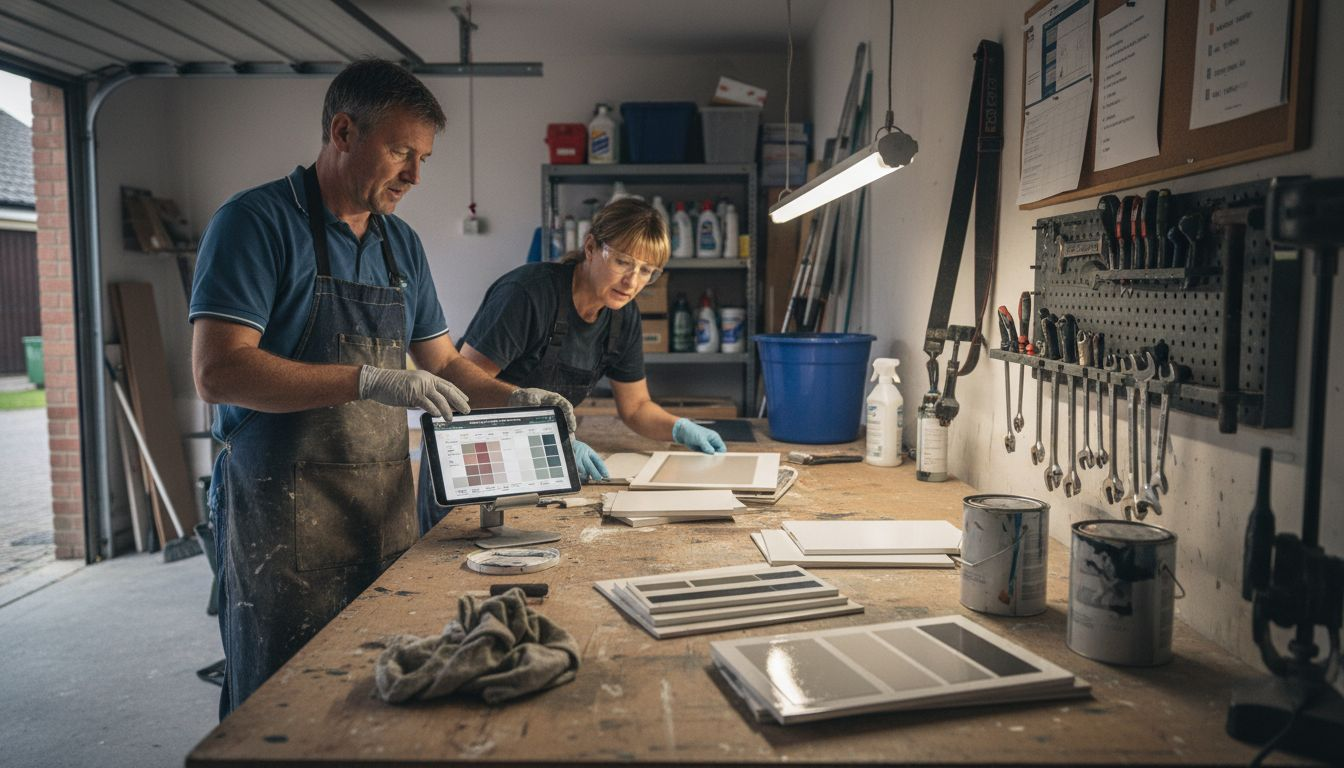
Here is a comparison of the main lacquer types used for kitchen resprays and their ideal usage environments:
| Lacquer Type | Best For | Key Advantages |
|---|---|---|
| Water-based | Eco-conscious homes | Low emissions, fast drying |
| Solvent-based | Heavy-use kitchens | Excellent hardness, deep finish |
| Polyurethane | High-traffic areas | Maximum durability, scratch resistance |
Pro tip: Consult professional respray technicians who can recommend the most appropriate lacquer type for your specific kitchen environment and usage patterns.
How lacquer finish is applied in-situ
Professional kitchen respray technicians employ a meticulous process for applying lacquer finish directly within the existing kitchen space. Spray guns for kitchen resprays represent the cornerstone of achieving a flawless, factory-like finish without removing kitchen units.
The in-situ lacquer application process involves several critical stages:
- Comprehensive surface preparation:
- Thorough cleaning of existing surfaces
- Removing grease and contaminants
- Sanding to create optimal adhesion
- Precision masking:
- Protecting surrounding areas
- Covering appliances and worktops
- Ensuring no overspray occurs
- Environmental control:
- Maintaining consistent temperature
- Controlling humidity levels
- Minimising dust and airborne particles
Technicians utilise advanced spray equipment that allows for ultra-fine lacquer application, creating a uniform coating with microscopic precision. The spray technique involves multiple thin layers rather than a single thick application, enabling superior penetration and creating a more durable finish. Each layer is carefully applied and allowed to partially cure, building up a resilient protective membrane that bonds seamlessly with the underlying surface.
Controlled environmental conditions play a crucial role in achieving optimal lacquer finish results. Professional teams carefully manage factors like temperature, humidity, and air circulation to ensure perfect application. This approach prevents common issues such as bubbling, uneven coverage, or premature curing that can compromise the finish’s quality and longevity.
Pro tip: Ensure your kitchen respray professionals use professional-grade equipment and maintain strict environmental controls during the lacquer application process.
Benefits for kitchen aesthetics and durability
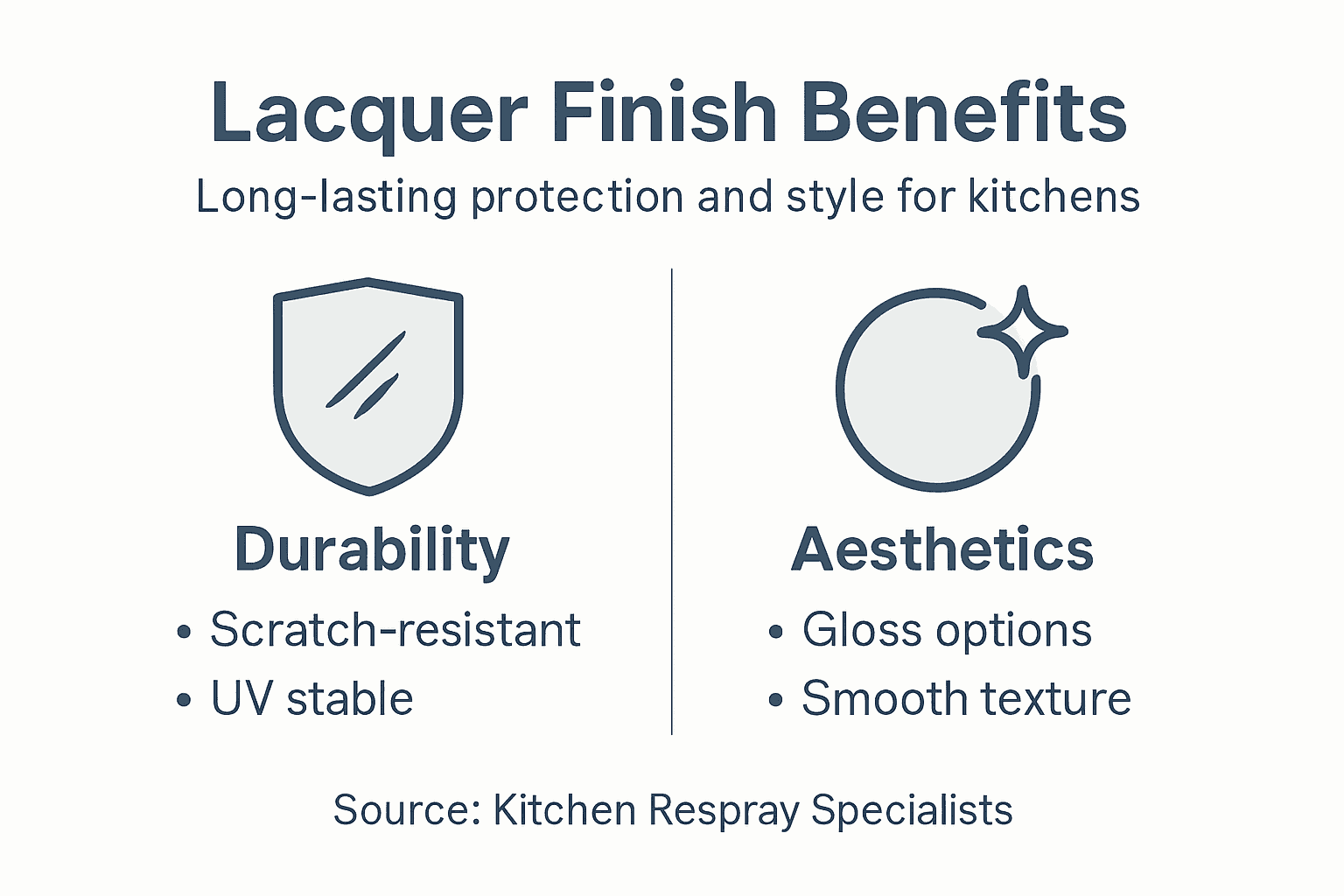
Lacquer finishes transform kitchen spaces by delivering an unparalleled combination of visual elegance and long-lasting protection. Kitchen respray benefits extend far beyond mere aesthetic improvements, providing homeowners with a cost-effective solution to kitchen renovation.
The aesthetic advantages of professional lacquer finishing include:
- Colour transformation:
- Instant visual refresh
- Ability to match contemporary design trends
- Seamless, factory-like appearance
- Surface enhancement:
- Smooth, uniform finish
- Elimination of surface imperfections
- Enhanced light reflection
- Customisation options:
- Wide range of colour selections
- Matte, satin, and gloss finishes
- Personalised kitchen aesthetic
Durability represents another critical benefit of professional lacquer application. The advanced coating provides exceptional resistance against daily kitchen challenges, including moisture, heat, and mechanical stress. Unlike traditional paint, lacquer creates a robust protective membrane that maintains its integrity for years, preventing chipping, peeling, and colour degradation.
Professional lacquer finishes significantly extend the lifespan of kitchen surfaces, offering a sustainable alternative to complete kitchen replacement. The microscopic molecular bonding of lacquer layers creates an incredibly resilient surface that withstands constant use, cleaning agents, and environmental fluctuations. This durability translates into substantial long-term value, reducing maintenance costs and preserving the kitchen’s aesthetic appeal.
Pro tip: Choose a professional respray service that offers multiple finish options and provides a comprehensive warranty to maximise your kitchen’s aesthetic and functional potential.
Costs, maintenance, and care considerations
Lacquer kitchen finishes represent a strategic investment that balances initial expenses with long-term value. Lacquered kitchen considerations demonstrate that while upfront costs are higher than traditional options, the durability and aesthetic benefits justify the investment.
Cost considerations for lacquer kitchen finishes include:
- Initial investment:
- Higher upfront expenses compared to laminate
- Professional application costs
- Quality of materials impact price
- Long-term value:
- Reduced replacement frequency
- Minimal repair requirements
- Enhanced kitchen appearance
- Maintenance expenses:
- Low ongoing maintenance costs
- Minimal cleaning product requirements
- Infrequent professional touch-ups
Maintenance for lacquered surfaces demands a nuanced approach to preserve their pristine appearance. Different finish types require specific care strategies. High-gloss finishes, while stunning, show fingerprints more readily and need more frequent gentle cleaning. Matt finishes offer more forgiving maintenance, concealing minor marks and requiring less intensive upkeep.
Professional technicians recommend specific care protocols to maintain lacquer finishes. Soft, non-abrasive microfibre cloths should be used for regular cleaning, avoiding harsh chemicals that might compromise the protective layer. Periodic professional inspection can identify and address minor imperfections before they become significant issues, ensuring the long-term performance and aesthetic appeal of the kitchen finish.
Below is a summary of typical maintenance needs and expected durability for kitchen lacquer finishes:
| Finish Type | Maintenance Frequency | Typical Lifespan |
|---|---|---|
| High-gloss | Frequent gentle cleaning | 10+ years with care |
| Matt | Occasional touch-up needed | 8-10 years standard use |
| Satin | Moderate, easy upkeep | 9-11 years |
Pro tip: Invest in high-quality, manufacturer-recommended cleaning materials and schedule annual professional maintenance to maximise your lacquer finish’s longevity and appearance.
Key differences from paint and common pitfalls
Lacquer represents a sophisticated finishing solution that fundamentally differs from traditional kitchen painting techniques. Lacquer paint characteristics reveal critical distinctions that homeowners must understand before selecting their kitchen finish.
Key differences between lacquer and standard paint include:
- Application process:
- Lacquer requires precision spraying
- Paint can be applied with brushes or rollers
- More technical skill needed for lacquer
- Finish quality:
- Lacquer produces harder, smoother surface
- Enhanced durability compared to standard paint
- More consistent, professional appearance
- Performance characteristics:
- Faster drying time
- Superior wear resistance
- Better protection against kitchen environmental stresses
Common pitfalls in lacquer application can dramatically compromise the final result. Improper surface preparation remains the most significant risk, with inadequate cleaning or insufficient sanding leading to poor adhesion and premature finish failure. Moisture, temperature fluctuations, and contaminants can create bubbling, peeling, or uneven coating if technicians do not maintain strict environmental controls during application.
Professional application distinguishes successful lacquer finishes from disappointing DIY attempts. Low-quality materials, incorrect spray techniques, and rushed preparation can result in yellowing, chipping, or rapid degradation of the kitchen surface. Experienced technicians understand the nuanced requirements of lacquer application, including precise spray gun settings, appropriate thinning ratios, and controlled curing conditions.
Pro tip: Always prioritise professional application and high-quality lacquer materials to avoid common finish degradation risks.
Elevate Your Kitchen with Expert Lacquer Respray Solutions
The challenge of maintaining a dazzling, durable kitchen finish is no small feat. The article highlights how professional lacquer finishes provide exceptional resistance against moisture, heat, and daily wear while delivering a smooth, factory-like appearance. If you are searching for a long-lasting transformation that protects your kitchen surfaces and revitalises their look, understanding the precise application and lacquer types is essential.
At SKR Specialists, we specialise in in-situ kitchen resprays, applying advanced lacquer coatings using professional spray equipment under strict environmental controls. Our expertise ensures your kitchen gains the full benefits of water-based, solvent-based or polyurethane lacquers tailored to your specific needs. Discover how quality craftsmanship combined with premium materials can extend your kitchen’s lifespan while enhancing its aesthetic appeal.
Experience the difference of a perfectly applied lacquer finish today. Visit SKR Specialists to explore our professional kitchen respray services and secure a durable, beautiful kitchen makeover that stands the test of time. Don’t wait to transform your kitchen — book a consultation now and protect your investment with expert lacquer finishing.
Frequently Asked Questions
What is a lacquer finish in kitchen resprays?
A lacquer finish is a high-performance coating specifically designed for kitchen surfaces, offering durability and aesthetic appeal. It consists of multiple polymer layers that create a resilient membrane, protecting surfaces from moisture, chipping, and temperature fluctuations.
How does a lacquer finish differ from traditional paint?
Lacquer finish differs from traditional paint in several ways: it requires precision spraying for application, produces a smoother and harder surface, has faster drying times, and offers superior wear resistance and protection against kitchen stresses.
What types of lacquer are commonly used in kitchen resprays?
Common types of lacquer used for kitchen resprays include water-based lacquers, known for their low VOC emissions and quick drying times; solvent-based lacquers, which offer superior hardness; and polyurethane lacquers, which deliver maximum durability and scratch resistance.
What are the maintenance requirements for lacquer finishes?
Lacquer finishes require a nuanced maintenance approach. High-gloss finishes may need frequent gentle cleaning to avoid showing fingerprints, while matt finishes require less upkeep. Soft, non-abrasive cloths should be used for cleaning, and periodic professional inspections are recommended to maintain the finish’s integrity.
Recommended
- Matte Finish Surfaces – Impact on UK Kitchens – WordPress
- Kitchen Spray Finishes: What Homeowners in England Need to Know – WordPress
- What Is Kitchen Paint Durability? Complete Overview – WordPress
- Gloss Finish – Transforming Kitchen Resprays in England – WordPress
- Stylish Slate Coasters for Every Home Decor – The Regimental Store Ltd