
Can You Spray Paint High Gloss Kitchen Doors? The 2026 Professional Guide
Why would you rip out a perfectly functional kitchen just because the gloss finish has lost its lustre? Many homeowners ask: can you spray paint high gloss kitchen doors to achieve a modern look without the eye-watering expense of a full renovation? It’s a fair question, especially when your current units are plagued by visible fingerprints and micro-scratches that no amount of polishing can fix.
We understand that you want a home that reflects your style, not a showroom from two decades ago. You shouldn’t have to settle for a DIY disaster that looks obviously painted. Our professional guide shows you how specialist, automotive-grade spray techniques can transform outdated surfaces into durable, factory-finish masterpieces. You’ll discover how to achieve a smooth, modern matt or satin finish that looks brand new for a fraction of the replacement cost.
We’ll walk you through the technical precision needed for high-gloss adhesion, the trending earthy colours for 2026, and the exact process our expert craftsmen use to ensure a flawless result. Expect minimal disruption and a kitchen that finally feels like yours again.
Key Takeaways
- Learn why the answer to can you spray paint high gloss kitchen doors is a definitive yes, provided you use specialised automotive-grade technical approaches.
- Understand why professional chemical de-greasing is the critical first step to ensuring your new finish adheres perfectly to factory-treated surfaces.
- Explore the 2026 shift towards sophisticated matt and satin finishes that naturally mask fingerprints and imperfections far better than original gloss.
- Discover how HVLP spray technology achieves a flawless, factory-grade finish that avoids the textured “orange peel” effect of brushes or rollers.
- See why professional respraying is a durable, heat-resistant alternative to replacement that protects your kitchen units from delamination.
Answering the Question: Is Spray Painting High Gloss Doors Possible?
Yes, you can. It is a common misconception that high-gloss surfaces are paint-proof. While a standard brush and a tin of retail paint will almost certainly peel within weeks, professional respraying offers a permanent solution. We specialise in taking these ultra-smooth, non-porous surfaces and applying a finish that is indistinguishable from a brand-new factory unit. Many homeowners find themselves staring at dated, shiny units and wondering, can you spray paint high gloss kitchen doors to achieve a contemporary look? The answer is a definitive yes, provided the approach is rooted in technical precision rather than general DIY methods.
This transformation isn’t just about aesthetics; it’s a savvy, sustainable choice. Instead of sending perfectly functional integrated cabinetry to a landfill, we breathe new life into the existing structure. It is the smart challenger’s way to renovate. By choosing to respray, you’re opting for an eco-friendly alternative that reduces waste significantly. It is a disciplined approach to home improvement that prioritises restoration over reckless replacement, modernising a 2010s-style kitchen in a matter of days.
Why High Gloss Requires a Different Approach
The primary challenge with gloss is its lack of tooth. Most kitchen doors were finished with hard, reflective coatings designed to repel water and grease. This makes mechanical keying difficult for standard DIY methods. Simply sanding the surface is rarely sufficient. We utilise high-precision spray painting techniques borrowed from the automotive industry to ensure a chemical bond. Our coatings are engineered to cross-link with the substrate, creating a unified layer that won’t flake under the daily pressures of a busy home.
The Benefits of Respraying Over Replacing
Choosing a kitchen unit respray over a total replacement provides total creative freedom. You aren’t limited to the few colours stocked by major retailers. Whether you desire a deep aubergine or a grounded clay tone, we create bespoke aesthetics tailored to your space. When people ask can you spray paint high gloss kitchen doors, they are often seeking a brand-new look without the structural mess or plumbing re-routing. You get a factory-new result whilst retaining your high-quality cabinetry, saving time and avoiding the upheaval of a full renovation.
The Science of Adhesion: How Professionals Ensure Paint Sticks to Gloss
Achieving a permanent bond on a mirror-smooth surface requires more than just a steady hand. We approach every project with an “Expert Craftsman” mindset, borrowing high-precision techniques from the automotive paint finishing industry. When homeowners ask can you spray paint high gloss kitchen doors, they are often concerned about the paint peeling or chipping. This fear is valid if you use standard domestic methods, but professional-grade adhesion is a matter of chemical science and meticulous preparation. We don’t just cover the surface; we engineer a bond that lasts for years.
De-greasing and Surface Preparation
High-gloss doors are magnets for invisible kitchen contaminants. Over time, cooking oils, steam, and cleaning waxes build up a microscopic film that acts as a natural repellent to new coatings. If this layer isn’t completely eradicated, even the most expensive paint will eventually fail. We utilise industrial-strength chemical de-greasers to strip the substrate back to its pure state. This ensures the surface is chemically “hungry” for the primer.
Once the door is chemically clean, we move to mechanical etching. Mechanical keying is the process of micro-scuffing a surface to increase surface area for paint adhesion. By using fine-grit abrasives, we create a microscopic profile on the door without damaging its structural integrity. This provides the physical “tooth” necessary for the next stage of the transformation. If you’re looking for a result that exceeds factory standards, our kitchen unit respray process prioritises these invisible details that general decorators often overlook.
Specialist Primers and Bonding Agents
The primer acts as the critical chemical bridge between the old gloss and the new colour. We use high-adhesion, high-build primers that do more than just provide a base. These coatings are designed to level out the surface, masking any minor imperfections or the original gloss texture to create a perfectly flat canvas. It is the most vital stage of the entire respray process.
Modern professional paints utilise cross-linking technology. This means that as the paint cures, the molecules form a dense, interconnected web that grips the primer with immense strength. This prevents delamination and ensures the finish remains flexible enough to withstand the temperature fluctuations of a working kitchen. By the time we apply the final coat, the new finish is no longer just “on” the door; it has become part of it. This level of technical discipline is what separates a professional restoration from a simple paint job.
Choosing Your New Aesthetic: Transitioning from Gloss to Modern Finishes
The decision to renovate often starts with a single question: can you spray paint high gloss kitchen doors to achieve a look that feels current? In 2026, the answer involves more than just a technical “yes”. It’s about moving away from the high-reflectivity finishes that dominated the previous decade. We’re seeing a significant shift towards sophisticated, low-sheen surfaces that prioritise texture and depth over glare. Whilst gloss was once the hallmark of a modern kitchen, it often highlights the very things homeowners want to hide: fingerprints, grease, and those inevitable micro-scratches.
Transitioning to a new finish isn’t just a stylistic choice; it’s a practical upgrade for your daily life. A flatter finish naturally diffuses light, which masks surface imperfections and makes the room feel more grounded. You might wonder, is kitchen cabinet spraying durable when moving from a hard gloss to a softer matt? Our professional coatings are engineered to maintain their integrity regardless of the sheen level, ensuring your new aesthetic remains flawless for years.
Matt vs. Satin: Which is Right for Your Kitchen?
The “Dead Matt” finish is the current favourite for those seeking an architectural, contemporary feel. It offers zero light reflection, creating a velvet-like appearance that feels incredibly premium. If you prefer a subtle glow, a satin finish provides a slight 15-20% sheen. This middle ground offers excellent scrub-resistance, making it ideal for high-traffic family homes. We rarely recommend respraying back to a high-gloss finish. Achieving a true mirror-flat gloss on-site is technically demanding and often fails to provide the modernised “challenger” look that most property owners desire.
Trending Colours for Kitchen Transformations
Your colour palette should harmonise with your existing worktops and flooring rather than fighting against them. In 2026, nature-inspired tones are leading the way. Think sage greens, warm oats, and earthy terracottas that bring a sense of calm to the home centre. For those seeking drama, deep charcoals and inky navies create a luxury, high-end atmosphere without the cost of a bespoke showroom installation.
Don’t feel pressured to stick to safe neutrals like grey or white. As expert craftsmen, we encourage you to be bold. A deep, moody hue can completely redefine the proportions of your room. By choosing a sophisticated matt or satin in a grounded, earthy tone, you transform your outdated units into a designer masterpiece that feels tailored specifically to your lifestyle.
Professional Spraying vs. DIY: Why High Gloss Requires Specialist Equipment
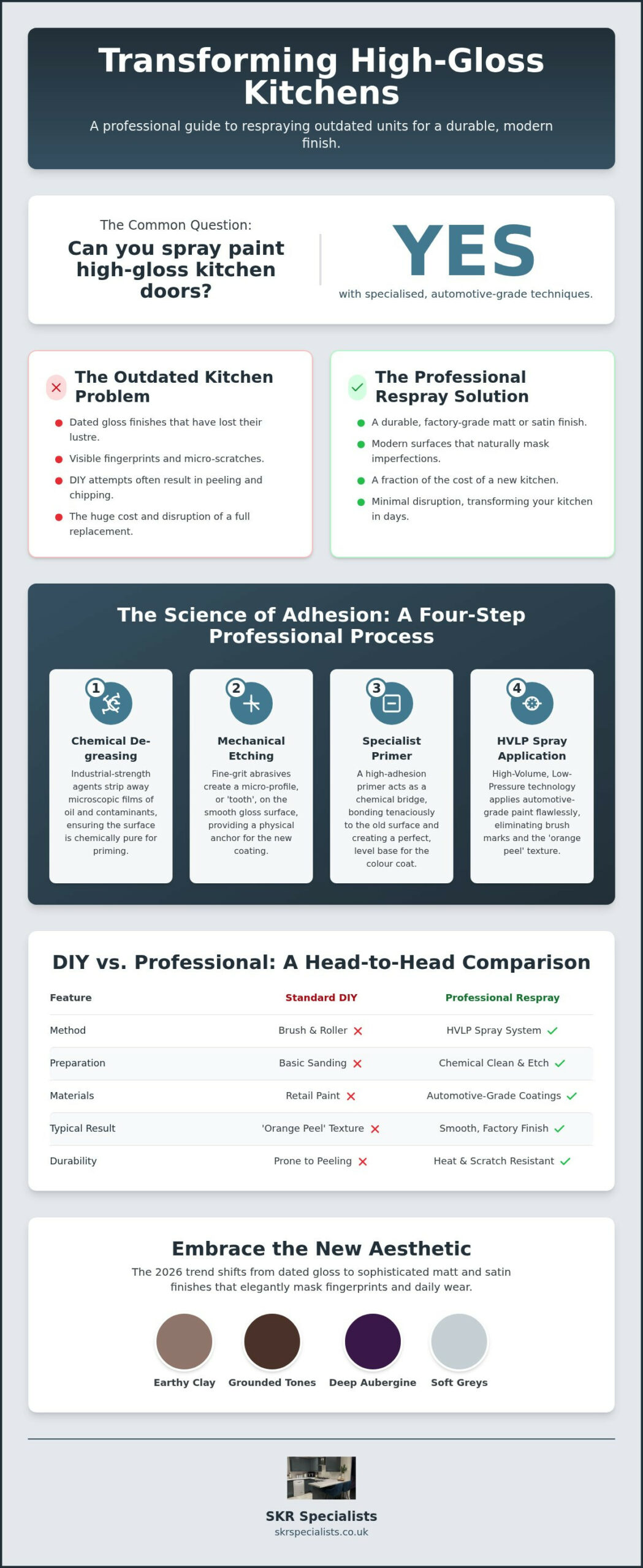
When you ask can you spray paint high gloss kitchen doors, you aren’t just asking about the colour. You’re asking about the final texture. Many homeowners attempt a weekend project only to realise that high-gloss surfaces are completely unforgiving. DIY methods often result in the “orange peel” effect, where the paint dries with a bumpy, pitted texture similar to the skin of a citrus fruit. This happens because rollers and brushes cannot apply a thin enough layer to level out on a non-porous gloss substrate. We avoid this by using High Volume Low Pressure (HVLP) technology.
HVLP equipment allows our expert craftsmen to atomise the coating into a fine mist. This ensures a perfectly flat, factory-grade finish that is impossible to achieve with retail tools. By controlled application, we create a uniform surface that mirrors the quality of a brand-new showroom installation. This precision is the signature of our technical background, where we apply high-end finishing standards to domestic settings. For a broader look at how we manage these projects, you can explore our guide to a professional kitchen respray.
The Limitations of Hand-Painting Gloss
Hand-painting a former gloss door is a recipe for frustration. Brush marks are exacerbated by the flat, reflective nature of the original surface, creating visible ridges that catch the light at every angle. There is also the significant risk of “blocking”, which occurs when doors stick to their frames because the paint hasn’t reached full hardness. Professional spray coatings cure in minutes, whilst retail paints can take weeks to reach full hardness. This rapid curing time is essential for a functional kitchen, allowing you to use your cupboards almost immediately without the fear of the finish peeling away.
On-Site Spraying: The Professional Process
Our approach is disciplined and efficient. We don’t just walk in and start spraying; we isolate the kitchen entirely to prevent overspray from affecting the rest of your home. Using professional extracted ventilation, we manage air quality and ensure that the fine mist of the spray gun only lands where it’s intended. This level of care ensures a clean environment and a flawless result. The efficiency of the spray gun allows us to achieve a depth of colour and a level of durability that hand-application simply cannot match.
We pride ourselves on punctuality and precision, qualities honed through years in high-precision technical trades. We don’t just paint; we restore. If you’re ready to move past the DIY struggle, you can request a tailored pricing guide to see how we can transform your existing gloss units into a modern masterpiece with zero stress.
Ensuring Durability: Life After Your High Gloss Kitchen Transformation
A professional respray is a permanent structural upgrade, not a superficial layer. When homeowners ask can you spray paint high gloss kitchen doors, they often fear the result won’t survive the daily steam of a kettle or the heat of an oven. Our automotive-grade coatings are specifically engineered for these high-stress environments. Unlike thin vinyl skins, our liquid coatings form a unified bond with the substrate that won’t bubble, shrink, or delaminate. You can explore the technical differences in our kitchen spray painting vs wrapping comparison guide.
We provide a finish that stands up to the rigours of a busy UK household. By choosing a technical respray over a temporary fix, you’re investing in a surface that is as resilient as the original factory coating. It’s a savvy, value-driven alternative to replacement that doesn’t compromise on quality or longevity. Our expert craftsmen ensure every door is finished to a standard that resists the typical wear and tear of a modern home.
Cleaning and Maintenance Guide
Maintaining the factory-quality finish of your new kitchen is straightforward but requires a disciplined approach. Follow these steps to preserve the aesthetic value of your investment:
- Step 1: Wait for the full chemical cure. Whilst the surface is touch-dry almost immediately, it usually takes 7-10 days for the coating to reach its maximum hardness. Avoid any heavy cleaning during this initial window.
- Step 2: Use only soft microfibre cloths and pH-neutral cleaners. Harsh chemicals can break down the surface tension of the paint over time.
- Step 3: Avoid abrasive “magic erasers” or bleach-based products. These materials can dull the sophisticated matt or satin finish you have chosen, leading to uneven patches.
- Step 4: Wipe away spills immediately. This is particularly important for lighter colours and nature-inspired tones to prevent staining from high-pigment foods or oils.
How Long Will the New Finish Last?
The long-term return on investment is the primary reason to choose a professional respray. When people ask can you spray paint high gloss kitchen doors, they are often looking for a solution that lasts. Our high-precision coatings are UV-stable, meaning they won’t yellow or peel under standard kitchen conditions. This is a permanent restoration that maintains its integrity for years. It is the smart challenger’s choice. You gain a bespoke, luxury look that remains flawless long after cheap gloss units would have begun to show their age.
Modernise Your Space with a Professional Respray
Outdated high-gloss units don’t have to define your home’s aesthetic for another decade. We have explored how the intersection of automotive-grade technology and expert craftsmanship makes a total transformation possible. When you ask can you spray paint high gloss kitchen doors, the answer lies in the meticulous preparation and chemical bonding that only specialists can provide. By choosing a sophisticated matt or satin finish, you eliminate the frustration of fingerprints whilst embracing the 2026 trend for grounded, earthy tones.
This transition is a permanent restoration that challenges the necessity of a total replacement. Our national UK service ensures a factory-grade finish with minimal disruption to your daily life. You deserve a kitchen that looks and feels brand new without the structural mess or the environmental cost of landfill waste. Take the first step towards your home’s renewal. Request your free kitchen respray quote from SKR Specialists today and discover the power of a professional transformation. Your dream kitchen is closer than you think.
Frequently Asked Questions
Can you spray paint high gloss kitchen doors without sanding?
You shouldn’t skip the sanding stage when considering can you spray paint high gloss kitchen doors for a professional result. Mechanical etching is a non-negotiable step because it creates a microscopic profile for the primer to grip. Whilst some retail products claim to work without prep, these often fail on non-porous gloss. We use fine-grit abrasives to micro-scuff the surface without damaging the door’s integrity. This ensures your new finish remains bonded.
Will the paint peel off my shiny gloss cabinets?
Professional coatings won’t peel if the surface is correctly prepared. The risk of delamination usually comes from poor de-greasing or using low-quality retail paints that can’t bond with factory finishes. We apply high-precision automotive techniques and cross-linking primers to create a unified chemical bond. This level of technical discipline ensures the finish withstands the heat and steam of a busy UK kitchen without flaking or peeling away from the substrate.
How long does it take to respray a high gloss kitchen?
Most kitchen transformations are completed within three to five days. This rapid turnaround is one of the primary benefits of a professional respray compared to a full renovation. We work efficiently to minimise home disruption, isolating the area and using fast-curing coatings that reach a touch-dry state in minutes. You’ll have a fully functional, modernised kitchen far quicker than if you were waiting for new cabinetry to be delivered and installed.
Can I change my gloss kitchen to a matt finish?
Yes, transitioning from gloss to a sophisticated matt or satin finish is a core part of our service. Many homeowners ask can you spray paint high gloss kitchen doors specifically to remove the dated shine of older units. A matt finish is excellent for diffusing light and hiding fingerprints, making it a practical choice for modern households. We use high-build primers to level the surface, ensuring the final result is perfectly flat.
Is it cheaper to respray gloss doors or buy new ones?
Respraying is a savvy, value-driven alternative that typically costs a fraction of a full kitchen replacement. You avoid the high expense of new cabinetry, worktops, and professional fitting fees. Because we focus on surface restoration, you get a factory-quality aesthetic without the structural mess. It’s the smart challenger’s choice for updating a kitchen that is structurally sound but visually outdated, providing a high-end look whilst saving thousands of pounds during your renovation.
What happens if I scratch my resprayed kitchen door?
Our automotive-grade coatings are incredibly resilient and designed to resist everyday knocks. However, if a significant accident occurs, the finish can usually be repaired. Unlike vinyl wraps which must be entirely replaced if they tear, a sprayed surface can often be touched up with the same bespoke colour used during the initial project. This maintainability is a key reason why a professional respray is a superior long-term investment for property owners seeking durability.
Do I need to empty my cupboards before the respray?
You don’t usually need to empty the contents of your cupboards. We focus on the external faces and edges of the units. We meticulously mask the internal frames and openings to ensure no overspray enters the storage areas. We only ask that you clear your worktops and move any loose items to allow our expert craftsmen full access to the surfaces being transformed. This keeps the process seamless and reduces the stress of your renovation.
Can you spray the integrated handles on gloss doors?
Yes, we can professionally respray integrated “J-pull” handles common on modern gloss doors. These recessed areas require high-precision spray techniques to ensure even coverage without any paint build-up in the corners. Our HVLP equipment is perfect for these complex shapes, achieving a uniform coat that looks identical to a factory-finished unit. This ensures your entire kitchen has a cohesive, modernised appearance, regardless of the door’s original profile or the handle style involved.