
How to Modernise a Dark Wood Kitchen Without Replacing It: The 2026 Specialist Guide
Tearing out a solid timber kitchen just because the aesthetic feels dated is no longer the smartest way to renovate in 2026. You likely appreciate the durability of your existing cabinets, but the heavy, dark grain makes the entire room feel claustrophobic and tired. It’s a common dilemma for homeowners who want to modernise a dark wood kitchen without replacing it but fear the messy, amateur look of a standard DIY brush finish. You deserve a space that feels bright and expansive, yet the prospect of a full £25,000 replacement is both daunting and unnecessary.
We’ve developed this specialist guide to help you bridge the gap between “dated” and “designer” using professional-grade techniques. You’ll discover how to transition from somber wood to 2026’s most coveted earth-led tones, such as mushroom and clay, which are currently outpacing traditional greys in high-end UK homes. We’ll explain why professional respraying offers a more durable, seamless finish than vinyl wrapping or hand-painting. By the end of this article, you’ll know exactly how to achieve a factory-standard renovation that can add up to 10% to your property’s value with minimal disruption to your daily life.
Key Takeaways
- Understand why high-quality seasoned timber is too valuable to discard and how to preserve your kitchen’s structural integrity.
- Discover the most effective professional techniques to modernise a dark wood kitchen without replacing it by managing light and surface texture.
- Compare the longevity of different surface treatments to see why professional respraying outperforms DIY painting and temporary vinyl wraps.
- Learn how to select contemporary hardware and layered lighting schemes that instantly neutralise dated “country-style” aesthetics.
- Explore the benefits of an automotive-grade respray process for achieving a flawless, durable finish that handles the demands of a busy home.
The Dilemma of the Dark Wood Kitchen: Why Modernising Trumps Replacing
Many homeowners look at their dark oak or walnut cabinetry and see an outdated relic. However, these kitchens often possess a level of craftsmanship that is increasingly rare. If your cabinets were installed between the late 1980s and early 2000s, they were likely built using seasoned hardwoods and robust joinery techniques. Retaining a superior foundation is the primary benefit when you choose to modernise a dark wood kitchen without replacing the units. You preserve the structural integrity of the home whilst completely refreshing its aesthetic energy.
The Structural Integrity of Traditional Wood
The history and construction of kitchen cabinets shows a clear shift from solid, bespoke timber to mass-produced particle board. Older cabinets often feature “over-engineered” frames that remain perfectly plumb after decades of use. If your doors still hang straight and the carcasses are free from water damage, the kitchen is a prime candidate for restoration. Beyond the structural benefits, keeping your existing frames is the most sustainable choice. It prevents tonnes of seasoned wood from entering landfills; this significantly reduces the environmental footprint of your renovation compared to a full rip-out.
The Psychology of a Dark Kitchen
The primary issue with dark timber isn’t the quality; it’s the visual weight. Dark wood surfaces can absorb a staggering amount of natural light, making even large rooms feel cramped and heavy. This creates a claustrophobic atmosphere that clashes with modern living requirements. In 2026, interior trends have moved decisively toward “quiet luxury,” an aesthetic defined by soft, light-reflective surfaces and organic tones that promote a sense of calm.
Whilst a deep clean can remove years of grease, it won’t fix the fundamental light-absorption problem. A surface renewal is required to shift the room’s energy. By applying a professional finish, you can modernise a dark wood kitchen without replacing the layout, instantly making the space feel twice its actual size. This approach provides the relief of a bright, contemporary home without the weeks of dust, noise, and expense associated with a structural remodel. It’s a savvy strategy that respects the history of your home while embracing its future.
This focus on savvy, direct investment is a growing international movement; for example, you can discover Direct Renovation Contractor Singapore to see how homeowners in other regions are using direct-to-contractor services to maximise their renovation budgets while bypassing traditional design markups.
Strategic Decorative Updates: Brightening the Space Without Surface Changes
Contrast is your most powerful ally when dealing with heavy timber. If you want to modernise a dark wood kitchen without replacing the cabinetry, you must address the surrounding surfaces that amplify the “brown-on-brown” effect. A dark oak kitchen often feels dated because it’s sandwiched between equally dark worktops and dim lighting. By introducing light-reflective materials, you can break up the visual weight of the wood and create a more balanced, contemporary atmosphere.
Backsplash and Countertop Synergy
Swapping out a dark granite or laminate worktop for a light quartz or marble-effect surface instantly lifts the room. This horizontal plane of light acts as a mirror, bouncing illumination back onto the cabinet faces. When selecting a backsplash, consider white subway tiles with a matching light grout. Dark grout lines can inadvertently add more “visual noise” to a room already dominated by wood grain. For north-facing kitchens, where natural light is at a premium, choosing a high-gloss ceramic or glass backsplash is essential. These surfaces act as a secondary light source, making the kitchen feel airy despite the dark cabinets.
The Role of Textiles and Decor
Modernising a traditional kitchen often requires a “less is more” approach. Removing heavy pelmets and ornate cornices creates a cleaner, more architectural silhouette that aligns with 2026’s minimalist trends. You can further soften the dominance of timber by introducing organic textures. A neutral jute runner or linen window dressings can neutralise the “hardness” of the wood. Integrating greenery is another effective tactic; the biophilic contrast of vibrant plants against dark walnut creates a sophisticated, designer look. While these decorative updates are effective, they are most powerful when paired with a high-quality kitchen respray to truly redefine the space.
The “Glass Insert” trick is a final, high-impact strategy. Replacing solid timber panels in a few upper cabinets with clear or fluted glass opens up the room’s sightlines. It allows you to display light-coloured ceramics, which further breaks up the expanse of dark wood. When combined with minimalist styling and the removal of countertop clutter, these changes ensure the wood feels like a deliberate design choice rather than an accidental leftover from a previous decade. It’s about managing how the eye moves through the room, ensuring the dark timber doesn’t become a visual dead-end. By following these steps, you can successfully modernise a dark wood kitchen without replacing the structural elements that still have years of life left in them.
Surface Transformations: Comparing Hand-Painting, Wrapping, and Professional Respraying
Changing the actual colour of your cabinetry is the most dramatic way to modernise a dark wood kitchen without replacing the units. While decorative updates provide a visual lift, a surface transformation addresses the light-absorption problem at its source. However, not all coating methods are equal. Dark timber presents unique chemical and textural challenges that standard DIY approaches often fail to overcome. Achieving a designer-standard finish requires an understanding of wood science and industrial application techniques.
One of the most overlooked hurdles in kitchen restoration is tannin bleed. Dark woods like oak, mahogany, and walnut are rich in natural tannins. These acidic chemicals can dissolve into water-based retail paints, causing yellow or brown stains to seep through the new finish over time. Professional respraying utilises specialised chemical-blocking primers to create an impermeable barrier, ensuring your new colour remains crisp and untarnished for years.
Why Hand-Painting Fails on Dark Wood
Hand-painting often appeals to the DIY enthusiast, but the results rarely meet the “quiet luxury” standard of 2026. Timber like oak has a prominent, open grain that absorbs paint unevenly. Standard retail paints lack the “levelling” properties found in industrial coatings; this means brush marks and roller textures remain visible, highlighting the kitchen’s age rather than hiding it. Additionally, hand-applied paint is prone to chipping on high-traffic areas like drawer edges and cupboard handles, where daily friction quickly wears down the finish.
Spray Painting vs Wrapping: The 2026 Verdict
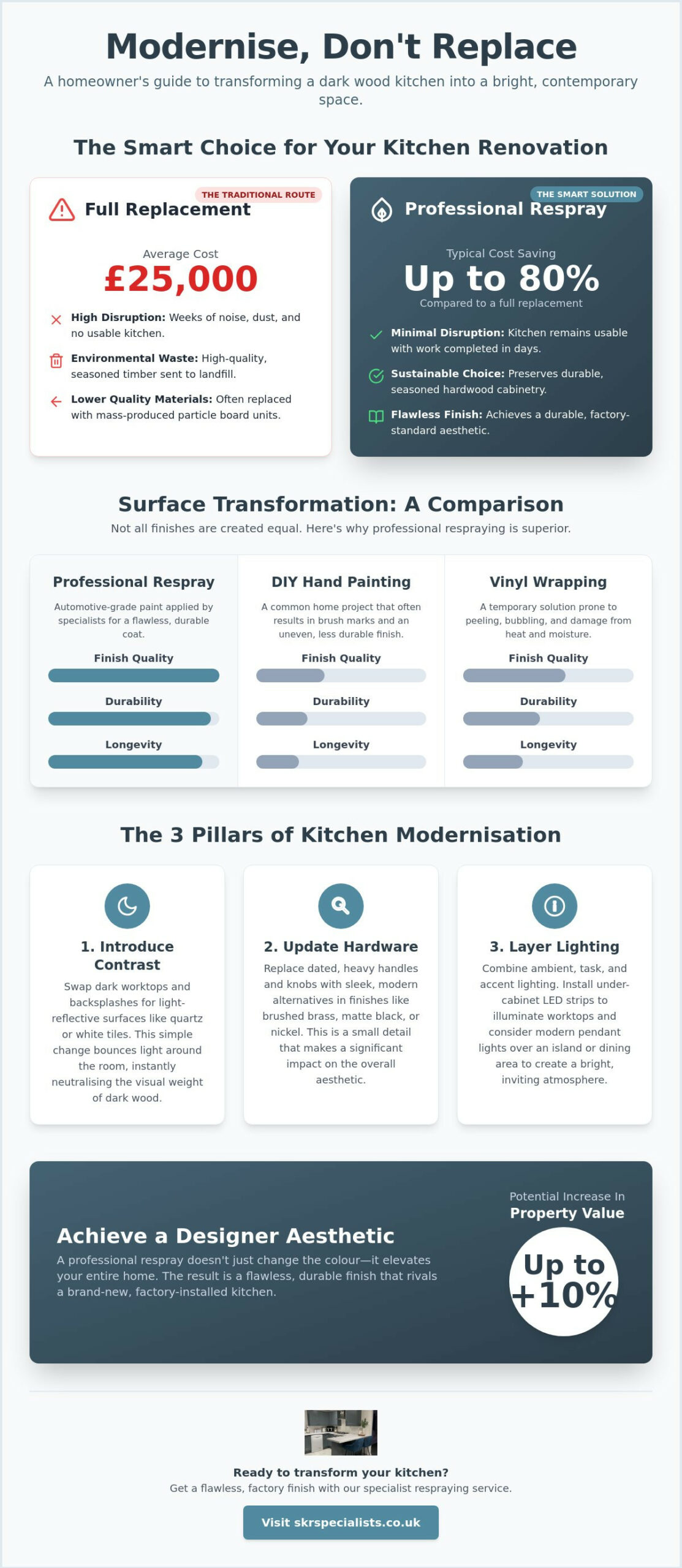
Vinyl wrapping is often marketed as a quick fix, but it acts more like a temporary mask than a permanent solution. Because vinyl is a plastic film applied with adhesive, it’s vulnerable to the heat and moisture found in a working kitchen. It’s common to see wraps peeling or bubbling near kettles, hobs, and dishwashers within just 24 to 36 months. In contrast, a professional respray uses HVLP (High Volume Low Pressure) technology to fuse a factory-grade coating to the timber.
For a detailed breakdown of these methods, you can read our Kitchen Spray Painting vs Wrapping: The Ultimate 2026 Comparison Guide. The 2026 verdict is clear: while a wrap might last three years, a professional respray provides a durable, heat-resistant finish that lasts a decade or more. This makes it the superior choice for anyone looking to modernise a dark wood kitchen without replacing the cabinetry. It delivers the aesthetic of a brand-new kitchen with the resilience required for modern family life.
The Three Pillars of Kitchen Modernisation: Hardware, Lighting, and Contrast
While a professional respray provides the canvas for your renovation, the final transformation relies on three supporting pillars: hardware, lighting, and floor contrast. These elements act as the finishing touches that ground a designer aesthetic. To successfully modernise a dark wood kitchen without replacing the cabinetry, you must look beyond the wood grain and address the secondary features that date the room. When these components are updated in unison, the kitchen stops feeling like a “refurbished old space” and starts feeling like a bespoke modern installation.
Hardware: The Jewellery of the Kitchen
Handles and pulls are often described as the jewellery of the kitchen. Traditional dark wood units are frequently paired with ornate, “country-style” brass or iron hardware that feels heavy and cluttered. Swapping these for sleek matt black or brushed brass alternatives provides an instant modern edge. Most older cabinets use standard 96mm or 128mm hole spacing; this allows you to upgrade your handles without the need for drilling new holes or filling old ones. For 2026, we are seeing a significant shift toward knurled textures and oversized T-bars that add a tactile, high-end feel to the doors. If your kitchen features exposed hinges, replacing them with hidden, soft-close versions will further streamline the cabinet profile, removing unnecessary visual distractions.
In addition to cabinet hardware, your sink’s fixtures play a vital role in the room’s utility; you can explore Plumbing solutions to find a contemporary tap that complements your new designer aesthetic.
Layered Lighting Strategies
Dark wood survives on light. A common mistake in older UK kitchens is relying on a single central “big light” that casts shadows into the corners and under the wall units. Modernisation requires a layered approach. Installing LED under-cabinet strips eliminates dark “dead zones” on your worktops and highlights the quality of your new surface finish. Plinth lighting is another expert-level addition; by illuminating the base of the cabinets, you create a “floating” effect that makes heavy timber feel lighter and more architectural. When choosing bulbs, pay attention to the Colour Rendering Index (CRI). A high CRI (90+) ensures that your chosen paint colours appear true and vibrant, preventing your new finish from looking “muddy” under artificial light.
Contrast can also be achieved through the “Two-Tone” trend. You don’t necessarily have to cover every inch of timber. Many homeowners choose to modernise a dark wood kitchen without replacing it by spraying the wall units in a light taupe or mushroom tone whilst retaining the natural wood grain on the island or base units. This creates a sophisticated, anchored look that celebrates the original timber without allowing it to overwhelm the room. Finally, consider the floor. Replacing a dark or orange-toned tile with a light oak LVT or stone-effect floor “lifts” the cabinetry off the ground, creating a clear vertical break that makes the room feel taller. To see how these elements work together in a real-world setting, you can view our kitchen unit respray gallery for inspiration on hardware and colour pairings.
Achieving a Designer Aesthetic with SKR Specialists’ Professional Respray
While decorative updates and new lighting provide essential support, the cornerstone of a successful renovation is the quality of the cabinet surface itself. To truly modernise a dark wood kitchen without replacing it, you require a finish that transcends the limitations of domestic paint. At SKR Specialists, we apply automotive-grade precision to the heart of your home. Our background in high-precision technical trades allows us to deliver a level of detail that general practitioners simply cannot replicate. We don’t just “paint” your kitchen; we chemically renew it.
Our meticulous 10-step respray process is designed to overcome the specific challenges of dark, oily timbers like oak and walnut. We begin with a deep, industrial-strength degreasing to remove decades of cooking residues that would cause standard paint to fail. Following this, we perform precision repairs to any minor dents or scratches. The magic happens during the application phase, where we use High Volume Low Pressure (HVLP) technology to apply multiple layers of specialist coatings. This process ensures a perfectly level, glass-smooth finish that completely obscures the heavy, dated grain of the original wood. Most projects are completed within just 3 to 5 days, offering a rapid alternative to the weeks of dust and chaos associated with a full kitchen replacement.
The SKR Difference: Beyond General Trade
We distinguish ourselves from the “man with a brush” approach by using industrial-grade acid-catalyst lacquers. These coatings are far superior to retail emulsions because they create a cross-linked chemical bond with the substrate. This results in a surface that is exceptionally hard-wearing and resistant to the unique stresses of a kitchen environment. Our respray finish provides a factory-standard bond that resists moisture, heat, and daily grease. By using specialist extraction equipment and on-site spray booths, we maintain a clean-room environment in your home, ensuring that your new designer aesthetic is free from the dust and imperfections common in DIY projects.
Your Transformation Starts Here
Choosing to modernise a dark wood kitchen without replacing the units is a savvy financial decision that delivers a significant return on investment. You achieve the look of a £25,000 designer kitchen for a fraction of the cost, all whilst preserving the high-quality timber carcasses that are already part of your home. Our digital-first approach makes starting your project effortless. Simply send us a few clear photos of your current kitchen, and we can provide an immediate, accurate quote based on the size and complexity of your cabinetry. If you are ready to see your dark, heavy space transformed into a bright, contemporary masterpiece, enquire about our Kitchen Unit Respray service today.
Step Into Your Contemporary Kitchen
Your kitchen’s structural integrity is a valuable asset that shouldn’t be discarded. By choosing to modernise a dark wood kitchen without replacing the cabinetry, you preserve the superior craftsmanship of seasoned timber whilst completely redefining the room’s energy. We’ve explored how the intersection of professional surface renewal, updated hardware, and layered lighting creates a space that feels expansive and bespoke. You don’t need a full structural remodel to achieve a designer standard; you simply need the right technical approach.
SKR Specialists provides a national UK service delivered by specialist craftsmen who bring automotive-grade precision to every project. We complete most transformations in just 3 to 5 days, ensuring minimal mess and zero disruption to your daily routine. Our factory-standard finish offers a level of durability and aesthetic value that general trade methods cannot match. It’s time to stop tolerating a heavy, dated environment and start enjoying the bright, sophisticated home you deserve.
Transform your kitchen for a fraction of the cost; Get your free respray quote now
Frequently Asked Questions
Can you really modernise dark wood without painting over it?
Yes, you can achieve a contemporary look through high-contrast decorative updates such as installing light-coloured quartz worktops or a reflective glass backsplash. These elements break up the visual dominance of dark timber by introducing light-reflective planes. However, if the goal is a total transformation of the room’s energy, most homeowners find that a professional surface renewal provides the most comprehensive results for those who want to modernise a dark wood kitchen without replacing the cabinetry.
Is it better to respray or replace dark wood kitchen doors?
Respraying is almost always the superior choice if your original doors are made from solid, seasoned timber. Many older dark wood kitchens feature a build quality that far exceeds modern flat-pack alternatives. By choosing a professional respray, you retain this structural excellence whilst achieving a factory-standard aesthetic. It’s a faster, more sustainable, and more cost-effective solution than a full replacement, which often involves unnecessary structural upheaval and waste.
How long does a professional kitchen respray last on dark wood?
A professional respray typically lasts for a decade or more when applied using industrial-grade acid-catalyst lacquers. Unlike standard retail paints or DIY finishes, these specialist coatings create a permanent chemical bond with the wood surface. This finish is specifically engineered to resist the daily heat, moisture, and grease found in a busy UK kitchen. It’s a durable investment that maintains its designer-standard appearance without the peeling or bubbling associated with temporary vinyl wraps.
Will the wood grain still show after a professional respray?
You can choose between a finish that highlights the natural grain or one that provides a perfectly smooth, glass-like surface. For open-grain woods like oak, a standard respray will often leave a subtle, sophisticated texture that signals the quality of the underlying timber. If you prefer a completely flat, modern look, we can apply additional high-build primers and sanding stages to obscure the grain entirely before the final colour coat is applied.
How much does it cost to modernise a kitchen without replacing the units?
Modernising your existing units typically costs a fraction of the £15,000 to £35,000 required for a full kitchen replacement in the UK. The exact investment depends on the number of units, the complexity of the door designs, and your choice of new hardware. Most property owners find that this route offers the highest return on investment, often adding up to 10% to the property’s value whilst saving thousands compared to buying new cabinetry.
What is the most popular colour for modernising a dark wood kitchen in 2026?
Earth-led tones such as mushroom, clay, and taupe have become the most popular choices for 2026, successfully replacing the cool greys of previous years. These warmer neutrals harmonise beautifully with the remaining natural elements in a home. For those seeking a bolder statement, deep olive greens and charcoal blacks are also trending, providing a sophisticated “quiet luxury” aesthetic that feels both modern and timeless in a renovated space.
How do you prevent dark wood tannins from bleeding through new paint?
We prevent tannin bleed by applying industrial-strength, chemical-blocking primers specifically designed for hardwoods. Dark timbers like mahogany and oak contain acidic tannins that can seep through standard water-based paints, causing unsightly yellow stains. Our 10-step process includes a rigorous sealing stage that creates an impermeable barrier. This ensures that even the lightest paint colours remain crisp and untarnished over the long term, regardless of the original wood’s darkness.
Can I still use my kitchen whilst it is being modernised?
Yes, you can continue to use your kitchen for the duration of the project with minimal disruption. Our specialist craftsmen complete the majority of the work in 3 to 5 days, with most of the spraying conducted in a controlled, off-site environment. We mask and protect all stationary surfaces on-site with meticulous care, ensuring there is no mess left behind. It’s a seamless process designed to modernise a dark wood kitchen without replacing the functionality of your home.