Overspray in Kitchen Resprays – What Homeowners Must Know
Spotted streaks of paint on worktops or appliances after a kitchen makeover can quickly overshadow the excitement of a fresh look. For homeowners across England, the reality of overspray during kitchen resprays is more than just a cosmetic concern, as airborne paint particles can travel well beyond the intended surfaces. Understanding what causes these fine droplets and how professionals control them is key to safeguarding your kitchen, health, and investment in any renovation project.
Table of Contents
- Defining Overspray In Kitchen Resprays
- Common Causes And Types Of Overspray
- How Professionals Prevent Kitchen Overspray
- Potential Risks And Damage From Overspray
- Effective Ways Homeowners Can Stay Protected
Key Takeaways
| Point | Details |
|---|---|
| Understanding Overspray | Overspray can damage nearby surfaces and pose respiratory health risks, necessitating effective control measures. |
| Spraying Techniques Matter | The choice of spraying method significantly influences overspray levels, with HVLP techniques reducing dispersion. |
| Preventative Strategies | Professionals employ various methods, including protective sheeting and ventilation, to minimise paint particle distribution. |
| Homeowner Preparedness | Homeowners should communicate clearly with respray specialists and prepare their environment to avoid contamination. |
Defining Overspray in Kitchen Resprays
Kitchen resprays involve a precise painting technique that can inadvertently produce overspray, a phenomenon with significant implications for homeowners. Aerosol paint particles represent microscopic droplets that extend beyond the targeted surface during spray painting, creating potential contamination risks.
Overspray occurs when fine paint particles become airborne during the spraying process, travelling well beyond the intended painting area. These minuscule droplets can deposit onto nearby surfaces, furniture, appliances, and flooring, potentially causing unintended discolouration, texture changes, and aesthetic disruption. Professional kitchen respray technicians understand that controlling overspray requires exceptional skill, specialised equipment, and meticulous preparation of the surrounding environment.
The health and environmental implications of overspray extend beyond cosmetic concerns. Airborne paint particles can pose respiratory risks, particularly when containing volatile organic compounds (VOCs) or other hazardous substances. Proper containment strategies, including protective sheeting, ventilation management, and precise spraying techniques, are crucial in minimising these potential risks during kitchen respray projects.
Pro tip: Always request detailed overspray protection protocols from your kitchen respray professional, including comprehensive surface coverage and containment strategies before commencing any painting work.
Common Causes and Types of Overspray
Kitchen resprays involve complex painting processes where multiple factors contribute to potential overspray. Spray equipment configurations play a critical role in determining the extent and characteristics of paint particle dispersion, with conventional compressed air systems being particularly prone to extensive misting.
The primary causes of overspray stem from several technical and environmental variables. These include high spray pressure, inappropriate nozzle dimensions, suboptimal spray gun settings, and external conditions like wind speed and ambient humidity. Professional painters recognize that equipment selection dramatically impacts overspray generation. High-volume low-pressure (HVLP) spraying techniques, for instance, substantially reduce unintended paint particle distribution compared to traditional compressed air methods.
Different types of overspray emerge depending on specific spraying techniques and material properties. Spray technique variations can produce fine mists ranging from light aerosol dispersions to dense particulate clouds. Airless spraying systems, electrostatic spraying methods, and conventional compressed air techniques each generate unique overspray patterns, influenced by factors such as paint viscosity, solvent content, and application pressure.
The following table compares popular kitchen respray spraying methods and their effects on overspray:
| Spraying Method | Overspray Level | Equipment Complexity | Typical Use Case |
|---|---|---|---|
| HVLP Spray Gun | Low | Advanced | Modern kitchen renovations |
| Compressed Air Sprayer | High | Standard | General household painting |
| Airless Spraying System | Moderate | Specialised | Large surface coverage projects |
| Electrostatic Spraying | Minimal | Highly technical | Industrial and engineered spaces |
Pro tip: Ask your kitchen respray professional about their specific overspray mitigation techniques and equipment to ensure minimal paint particle dispersion during your kitchen transformation project.
How Professionals Prevent Kitchen Overspray
Professional kitchen respray technicians employ sophisticated strategies to minimise paint particle dispersion during painting projects. Local exhaust ventilation techniques are critical in controlling and containing potential overspray, ensuring precise and clean application of paint across kitchen surfaces.
Technical prevention methods involve multiple layers of control. Specialists carefully select advanced spray equipment like high-volume low-pressure (HVLP) spray guns, which dramatically reduce unintended paint misting. They meticulously adjust spray tip sizes, regulate application pressure, and create controlled environmental conditions. Protective measures include comprehensive surface masking, strategically positioned extraction systems, and precise spray booth configurations that capture and contain airborne paint particles.
Safety protocols form another crucial dimension of overspray prevention. Professionals wear comprehensive personal protective equipment, including specialised respirators and fully enclosed protective suits. Spray equipment control procedures mandate rigorous training, ensuring technicians understand exact spray distances, application angles, and environmental factors that influence paint distribution. Regular equipment maintenance and calibration further minimise the risk of uncontrolled paint dispersion.
Pro tip: Request a comprehensive overspray prevention plan from your kitchen respray specialist, including specific equipment, protective measures, and environmental control strategies before commencing your project.
Potential Risks and Damage From Overspray
Kitchen overspray represents far more than a cosmetic inconvenience, presenting substantial risks to property and personal health. Hazardous aerosol mists can cause significant damage, potentially contaminating surfaces and creating serious respiratory health challenges for homeowners.
The physical damage from overspray extends across multiple dimensions. Paint particles can settle on unprotected surfaces, causing irreversible discolouration, texture disruption, and permanent staining of kitchen worktops, appliances, and flooring. Electronic equipment, delicate kitchen fixtures, and unsealed surfaces are particularly vulnerable to microscopic paint contamination. These unintended deposits often require expensive professional cleaning or complete replacement, dramatically increasing unexpected renovation costs.
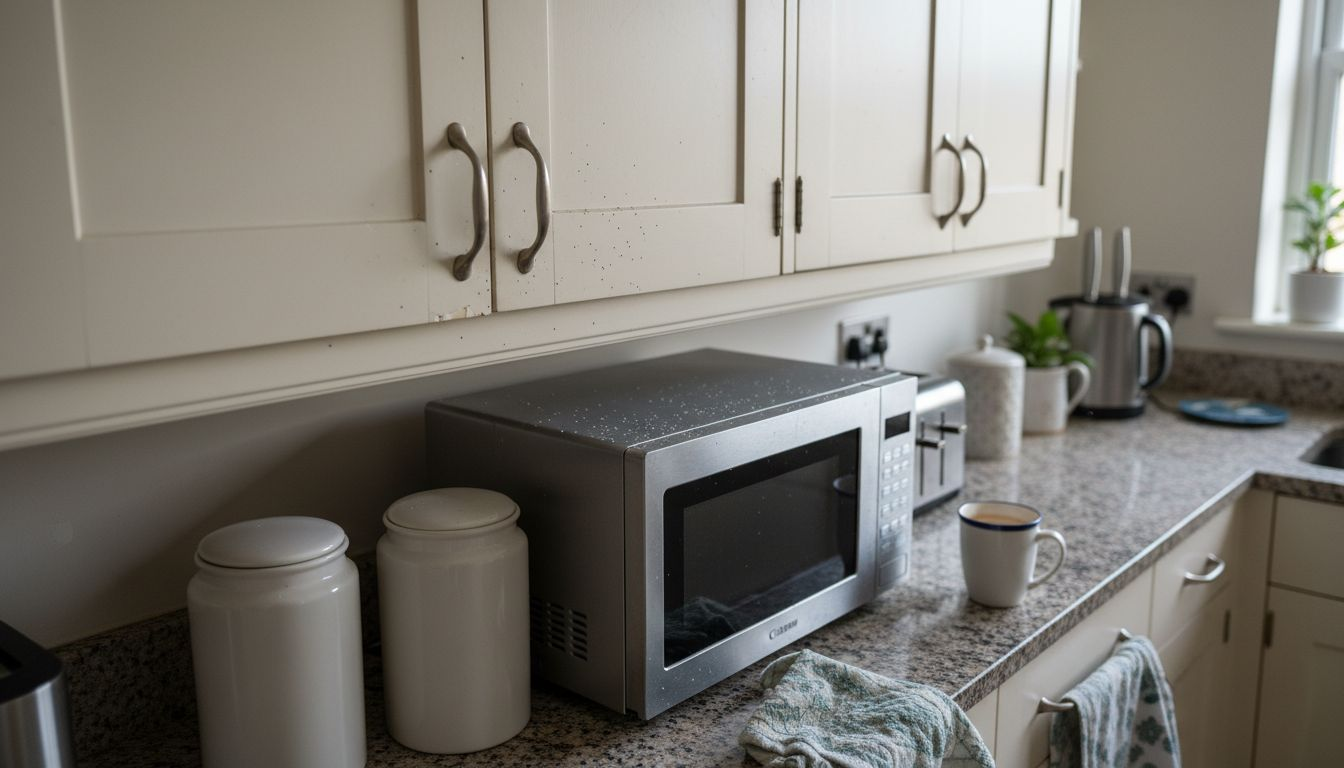
Kitchen environment contamination poses particularly serious health risks. Overspray containing chemical residues can compromise food preparation areas, potentially introducing toxic substances that might trigger allergic reactions, respiratory issues, or long-term health complications. Isocyanates and volatile organic compounds present in some spray paints can create invisible hazards, potentially attracting pests and disrupting the hygienic standards critical in food preparation spaces.
Pro tip: Insist on comprehensive protective sheeting and containment strategies during your kitchen respray to minimise the risk of uncontrolled paint particle distribution and potential surface contamination.
Effective Ways Homeowners Can Stay Protected
Protecting your home and health during a kitchen respray requires proactive and strategic approaches. Safety standards for professional resprays emphasise the critical importance of understanding and implementing comprehensive protective measures before, during, and after the painting process.
Homeowners should prioritise thorough communication and due diligence when selecting a kitchen respray specialist. This involves requesting comprehensive documentation of their safety protocols, verifying their professional certifications, and understanding their specific overspray prevention techniques. Crucial protective strategies include ensuring the professional uses appropriate personal protective equipment, implements robust containment measures, and provides clear guidance about staying away from the working area during and immediately after the spraying process.
Practical protective steps extend beyond hiring the right professional. Homeowners must prepare their kitchen environment meticulously, which includes removing sensitive items, covering immovable appliances and surfaces with high-quality protective sheeting, and ensuring adequate ventilation. Creating a controlled environment minimises the potential for unintended paint particle distribution and reduces the risk of surface contamination or respiratory exposure to potentially harmful aerosols.
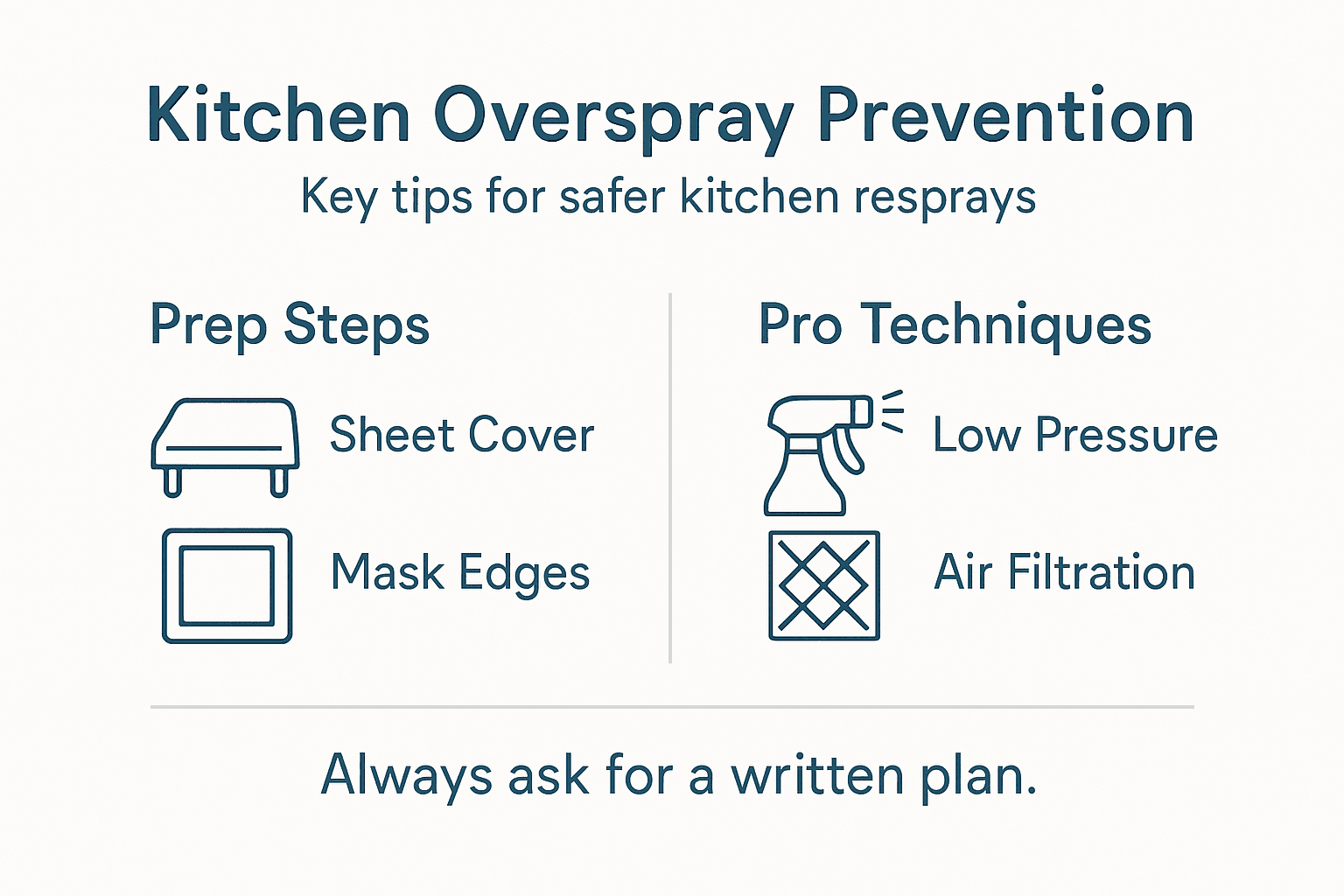
Here’s a summary of recommended homeowner protection strategies during kitchen resprays:
| Protection Strategy | Purpose | Benefit to Homeowner |
|---|---|---|
| Detailed professional protocol | Ensures safety standards | Reduces health and property risk |
| Removal of sensitive items | Limits surface contamination | Prevents damage to valuables |
| Use of protective sheeting | Shields surfaces and appliances | Minimises clean-up effort |
| Ventilation management | Disperses hazardous aerosols | Enhances indoor air quality |
Pro tip: Request a detailed written overspray prevention plan from your kitchen respray professional, including specific containment strategies, ventilation protocols, and post-application cleaning procedures.
Protect Your Home from Overspray with Expert Kitchen Respray Services
Undertaking a kitchen respray can bring remarkable transformation but managing overspray is a complex challenge that risk damaging your surfaces and affecting indoor air quality. We understand the critical importance of minimising paint particle dispersion, controlling hazardous aerosols, and preserving your kitchen environment. At SKR Specialists, we combine advanced spray techniques with meticulous containment strategies to ensure a flawless finish without the unwanted risks of overspray.

Choose professional kitchen respray services that prioritise your safety and property. Visit our main site SKR Specialists to learn how our skilled technicians use High-Volume Low-Pressure spraying and comprehensive protective sheeting to prevent overspray damage. Safeguard your investment and enjoy peace of mind by contacting us today for a detailed overspray prevention plan tailored to your project.
Frequently Asked Questions
What is overspray in kitchen resprays?
Overspray refers to unintended paint particles that become airborne during the spray painting process, landing on nearby surfaces, furniture, and flooring, causing potential discolouration and damage.
How can professionals prevent overspray during kitchen resprays?
Professionals use advanced techniques such as high-volume low-pressure (HVLP) spray guns, apply thorough surface masking, set up local exhaust ventilation, and ensure controlled environmental conditions to minimise overspray.
What are the health risks associated with overspray?
Overspray can pose respiratory risks, particularly if it contains volatile organic compounds (VOCs) or hazardous chemicals, which may trigger allergies, respiratory issues, or long-term health problems.
How can homeowners protect their property during a kitchen respray?
Homeowners should communicate safety protocols with their kitchen respray specialist, remove sensitive items, use protective sheeting, and ensure proper ventilation to minimise risks of paint contamination and respiratory exposure.