
Kitchen Respray Mistakes – How They Impact Results
Most British homeowners believe a fresh kitchen look demands major construction, but professional kitchen respraying offers a transformation at a fraction of the cost and time. When considering this modern renovation, proper knowledge can protect you from expensive mistakes that can undermine stunning results. Discover how expert-approved techniques and a clear understanding of the process help British households achieve flawless, long-lasting kitchen aesthetics and make smarter improvement decisions.
Table of Contents
- Kitchen Respraying Defined And Common Misconceptions
- Key Materials And Surface Suitability Issues
- Essential Preparation Steps Most Overlook
- Choosing Paints And Application Techniques Wisely
- DIY Pitfalls Versus Professional Results
- Long-Term Consequences Of Common Mistakes
Key Takeaways
| Point | Details |
|---|---|
| Professional Expertise Required | Kitchen respraying is a complex process that necessitates professional skills for optimal results, far surpassing simple DIY techniques. |
| Comprehensive Surface Preparation | Proper surface assessment and meticulous preparation are vital for effective paint adhesion and achieving a durable finish. |
| Material Compatibility is Key | Understanding surface materials and their preparation requirements is crucial to ensure lasting results and avoid costly mistakes. |
| Long-Term Considerations | Investing in professional respraying leads to enhanced durability and aesthetic value, whereas DIY attempts may incur frequent repair costs. |
Kitchen Respraying Defined And Common Misconceptions
Kitchen respraying is a professional renovation technique that transforms existing kitchen surfaces without complete replacement. This process involves carefully applying specialised paint to cabinets, worktops, and other kitchen elements to create a fresh, updated appearance. Kitchen respray terminology reveals the nuanced craft behind this cost-effective home improvement method.
Contrary to popular belief, kitchen respraying is not a simple DIY spray job. Professional respraying requires extensive surface preparation, including thorough cleaning, repairing minor damages, sanding, and applying specialist primers. The goal is achieving a factory-like finish that can dramatically enhance a kitchen’s aesthetic while extending surface longevity. Homeowners often mistakenly assume respraying is a temporary cosmetic fix, when in reality, expert techniques can produce durable results lasting up to 12 years.
The process involves multiple critical stages that distinguish professional respraying from amateur attempts. These include:
- Comprehensive surface assessment
- Precise colour matching
- Professional-grade paint application
- Meticulous finish refinement
Expert Tip: Always request a detailed preparation and application plan from your kitchen respray professional to ensure optimal results.
Key Materials And Surface Suitability Issues
Kitchen respraying demands precise understanding of different surface materials and their unique preparation requirements. Kitchen respray best practices highlight the critical importance of matching paint systems to specific surface compositions to achieve durable, professional-quality finishes.
Organic materials like solid wood and medium-density fibreboard (MDF) typically offer excellent respraying potential when correctly prepared. These surfaces require thorough sanding to create a smooth, receptive base and application of specialist primer to ensure paint adhesion. In contrast, non-porous surfaces such as laminate and vinyl demand more sophisticated preparation techniques, including specialised bonding primers that create a strong interface between the original surface and new paintwork.
The surface compatibility assessment involves several critical evaluation criteria:
Below is a summary of surface types and optimal preparation methods in kitchen respraying:
| Surface Material | Preparation Required | Primer Type |
|---|---|---|
| Solid wood | Intensive sanding, cleaning | Adhesion-promoting primer |
| MDF | Fine sanding, degreasing | Specialist wood primer |
| Laminate | Chemical cleaning, abrasion | Bonding primer |
| Vinyl | Delicate sanding, solvent degrease | Specialist bonding primer |
- Material porosity
- Current surface condition
- Previous coating history
- Chemical composition
- Anticipated mechanical stress
Pro Tip: Always request a comprehensive surface compatibility test from your kitchen respray professional to guarantee optimal paint performance and longevity.
Essential Preparation Steps Most Overlook
Kitchen respraying demands meticulous preparation that goes far beyond simple surface cleaning. Kitchen respraying stages reveal a comprehensive process that homeowners frequently underestimate, requiring precision and technical expertise to achieve professional results.

Thorough preparation involves multiple critical stages that directly impact the final finish. Degreasing is paramount, as kitchen surfaces accumulate years of cooking residues, grease, and microscopic contaminants that can prevent paint adhesion. Professionals use specialised industrial degreasers to remove these stubborn layers, creating a pristine surface that allows paint to bond effectively. This process goes beyond standard household cleaning, involving chemical treatments that strip away years of accumulated grime without damaging the underlying material.
The preparation process typically encompasses several essential steps:
- Comprehensive surface cleaning and degreasing
- Precise masking of adjacent surfaces
- Careful sanding to create optimal paint adhesion
- Protecting appliances and surrounding areas
- Identifying and repairing surface imperfections
Pro Tip: Invest in professional-grade masking materials and take time to meticulously protect surrounding surfaces to prevent unexpected paint splatter or damage.
Choosing Paints And Application Techniques Wisely
Selecting the appropriate paint and application technique is fundamental to achieving a professional kitchen respray. Kitchen paint finish guide demonstrates that not all paints are created equal, with specific formulations designed for high-moisture, high-traffic kitchen environments.
Professional kitchen respraying requires understanding the nuanced characteristics of specialist paint systems. Durability is paramount, with kitchen surfaces enduring constant temperature fluctuations, moisture exposure, and frequent cleaning. Specialist paints formulated for kitchen use offer superior resistance to grease, steam, and mechanical wear. These paints typically feature enhanced adhesion properties, micro-ceramic technologies, and chemical compositions that prevent chipping, peeling, and discolouration.
Key considerations when selecting paint and application techniques include:
- Paint chemical composition
- Surface material compatibility
- Required finish (matte, semi-gloss, high-gloss)
- Durability and wear resistance
- Cleaning and maintenance requirements
Pro Tip: Always consult a professional about paint compatibility with your specific kitchen surface materials to ensure optimal long-term performance and aesthetic results.
DIY Pitfalls Versus Professional Results
Homeowners contemplating kitchen resprays frequently underestimate the complexity of achieving a flawless finish. Why avoid DIY kitchen spraying highlights the critical differences between amateur attempts and professional results, revealing numerous technical challenges that can compromise the entire project.
Professional kitchen respraying demands precision beyond basic painting skills. DIY enthusiasts often struggle with critical technical elements such as surface preparation, equipment calibration, and paint application techniques. Professionals utilise specialised spray booths, industrial-grade filtration systems, and controlled environments that ensure consistent paint coverage, eliminate dust contamination, and create smooth, even finishes. Amateur attempts frequently result in uneven coatings, visible brush or roller marks, drips, bubbling, and premature paint failure due to inadequate surface preparation or improper application methods.
Key differences between DIY and professional kitchen resprays include:
Here is how professional and DIY kitchen respraying approaches differ:
| Aspect | Professional Respraying | DIY Attempt |
|---|---|---|
| Preparation Quality | Comprehensive, meticulous | Often rushed or incomplete |
| Equipment Used | Specialist spray booths | Basic brushes or rollers |
| Finish Consistency | Factory-smooth, even layers | Tend to show streaks or bumps |
| Durability of Result | Up to 12 years, highly resistant | Usually shorter, prone to failure |
| Overall Cost | Higher upfront, lower long term | Potential frequent repairs needed |
- Surface preparation techniques
- Quality of professional equipment
- Paint material selection
- Controlled application environment
- Long-term durability and finish quality
Pro Tip: Request professional portfolio samples and detailed preparation plans before committing to a kitchen respray to understand the level of expertise required for exceptional results.
Long-Term Consequences Of Common Mistakes
Kitchen respray troubleshooting reveals that seemingly minor application errors can precipitate extensive damage to kitchen surfaces, transforming what appears to be a cost-saving approach into a financially burdensome renovation nightmare.
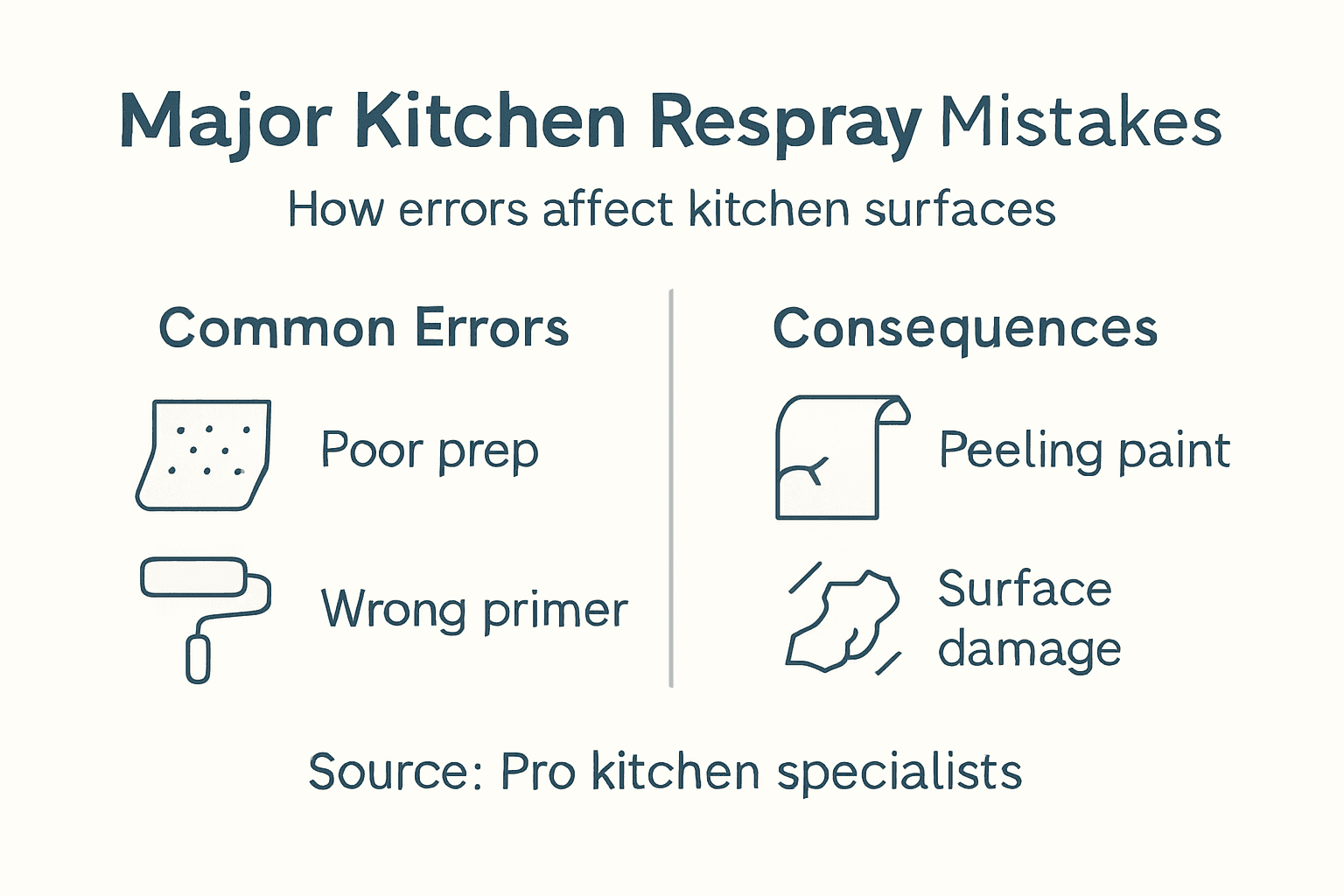
Improper surface preparation and application techniques create cascading structural issues that extend far beyond cosmetic imperfections. Compromised paint adhesion leads to moisture penetration, which can cause wood swelling, underlying material degradation, and potential structural weakening of cabinetry. Microfractures and uneven coating invite rapid deterioration, with paint layers peeling, blistering, and creating unsightly patches that dramatically reduce the kitchen’s aesthetic appeal and property value.
Potential long-term consequences of kitchen respray mistakes include:
- Accelerated surface material degradation
- Increased maintenance and repair costs
- Reduced kitchen aesthetic value
- Potential structural damage to cabinetry
- Compromised surface integrity and protection
Pro Tip: Invest in professional assessment and preparation to prevent costly long-term renovation complications that can far exceed initial respray expenses.
Avoid Common Kitchen Respray Mistakes With Expert Help
If you have read about how kitchen respray mistakes can damage surfaces and reduce longevity you understand the importance of a professional approach. Pain points like poor surface preparation and weak paint adhesion can lead to costly repairs and ruined kitchen aesthetics. At Uncategorized Archives – WordPress we focus on ensuring that your kitchen respray uses meticulous preparation steps and specialist paints designed for durability and flawless finishes.

Don’t risk turning your kitchen upgrade into a lengthy and expensive problem. Trust our professional team at SKR Specialists to deliver a high quality kitchen respray service that preserves your cabinets and worktops in-situ with expert care. Visit our site now to take the first step towards a kitchen transformation that lasts up to 12 years.
Frequently Asked Questions
What are common mistakes in kitchen respraying?
Common mistakes include inadequate surface preparation, using the wrong type of primer or paint, rushing the process, and not allowing sufficient drying time between coats. These errors can lead to poor adhesion, uneven finishes, and premature wear.
How does improper surface preparation affect kitchen respraying results?
Improper surface preparation can lead to poor paint adhesion, resulting in peeling, bubbling, or cracking. This can cause long-term damage to the underlying materials and reduce the overall aesthetic value of the kitchen.
What is the importance of using specialist primers when respraying a kitchen?
Using specialist primers is crucial as they ensure proper adhesion to various surface types, such as laminate or MDF. They create a strong bond between the substrate and the paint, enhancing durability and preventing future paint failure.
How can I avoid mistakes when respraying my kitchen?
To avoid mistakes, ensure thorough surface cleaning and degreasing, choose appropriate primers and paints, allow proper drying times, and consider hiring professionals for their expertise and equipment, which can significantly improve the final results.