
What Is Satin Finish and Why It Matters
Finding the right kitchen surface finish can be a challenge when durability, style, and practicality matter in equal measure. For homeowners in England considering a kitchen respray, the choice of finish affects not only how your kitchen looks but also how easy it is to live with every day. A satin finish delivers a striking balance with its subtle, elegant sheen and low reflectivity, enhancing both appearance and function for busy households.
Table of Contents
- Defining Satin Finish for Kitchen Surfaces
- How Satin Compares to Matt and Gloss
- Key Benefits and Aesthetic Qualities
- Maintenance, Durability, and Cleaning Needs
- Costs, Value, and Common Mistakes to Avoid
Key Takeaways
| Point | Details |
|---|---|
| Satin Finish Benefits | Satin finishes offer a balance of visual appeal and practical performance, providing durability and ease of cleaning suitable for busy kitchens. |
| Versatility in Design | Satin adapts well to various lighting conditions, enhancing kitchen aesthetics across different styles from contemporary to traditional. |
| Maintenance and Care | Regular light cleaning with mild solutions preserves satin’s surface integrity, making it a practical choice for high-traffic areas. |
| Cost-Effectiveness | While slightly more expensive than matt finishes, satin offers long-term durability, reducing the frequency of repainting and ensuring lasting visual sophistication. |
Defining Satin Finish for Kitchen Surfaces
A satin finish represents a nuanced approach to kitchen surface treatments, offering homeowners in England a sophisticated middle ground between traditional paint finishes. Unlike glossy or entirely matte surfaces, satin provides a subtle, elegant sheen that transforms kitchen aesthetics while delivering practical benefits.
Satin finishes are characterised by their unique visual and functional properties:
- Low reflectivity with gentle lustre
- Smooth, consistent surface texture
- Enhanced durability compared to standard paint
- Reduced visibility of fingerprints and smudges
- Superior corrosion resistance
The smooth surface characteristics make satin an ideal choice for busy kitchen environments. Its moderate sheen creates depth without overwhelming reflectiveness, striking a delicate balance between matte and glossy appearances.
When applied professionally, a satin finish offers remarkable versatility. It can appear slightly different depending on lighting conditions – sometimes looking almost flat, other times revealing a gentle shimmer. This adaptability means satin works beautifully across various kitchen design styles, from contemporary minimalist to traditional English cottage interiors.
Pro tip: Select satin finishes for high-traffic kitchen areas where durability and easy cleaning are paramount.
How Satin Compares to Matt and Gloss
In the world of kitchen surface finishes, satin offers a sophisticated compromise between matt and gloss options. Paint finish characteristics reveal a nuanced spectrum of visual and functional properties that dramatically impact kitchen aesthetics and performance.
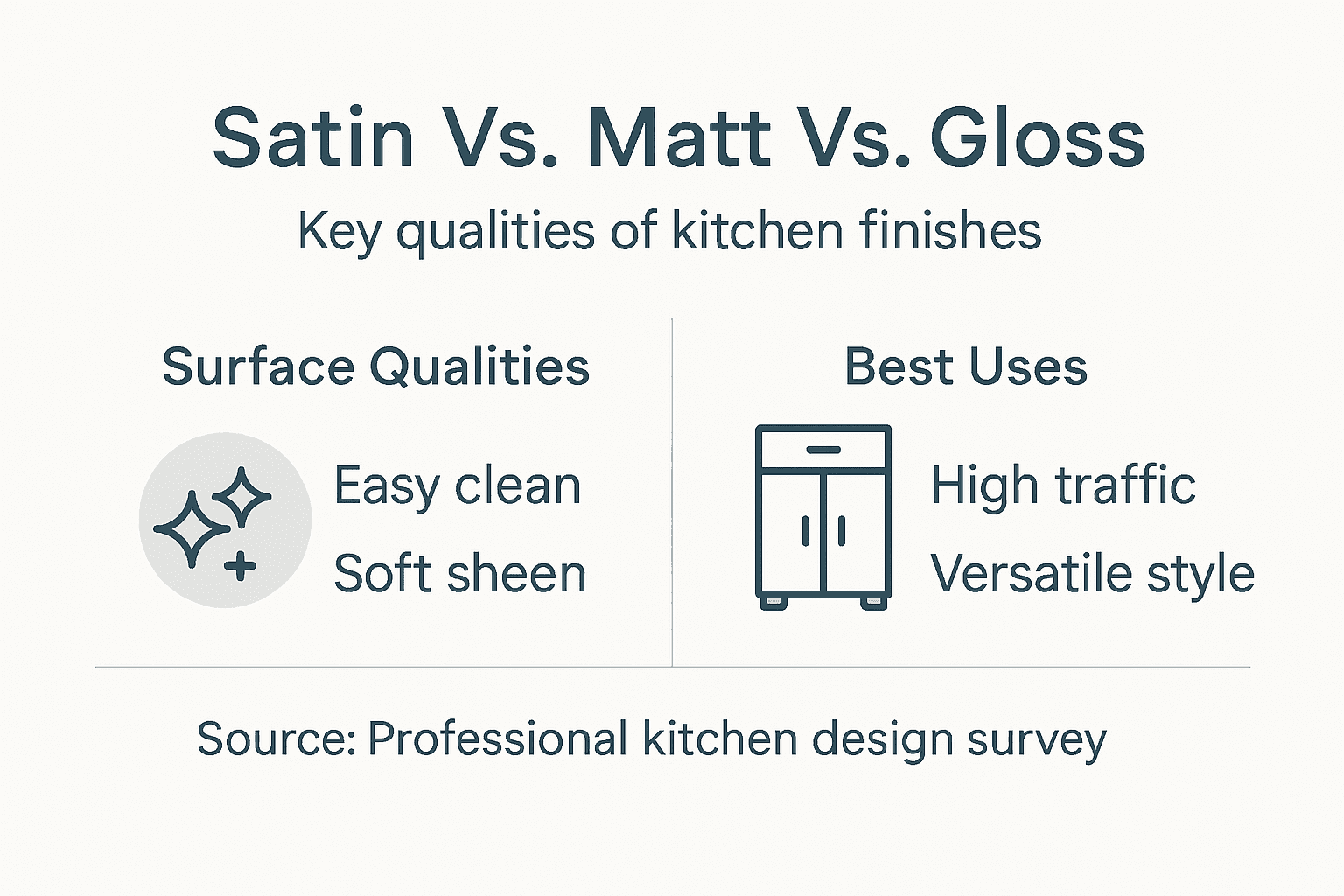
The key differences between these finishes can be compared across several critical dimensions:
-
Matt Finish
- Non-reflective surface
- Excellent at hiding surface imperfections
- Lower durability
- Absorbs light completely
-
Satin Finish
- Moderate light reflection
- Gentle, subtle sheen
- Better durability than matt
- Easier to clean
-
Gloss Finish
- High light reflectivity
- Intense shine
- Maximum durability
- Highlights surface flaws
For homeowners in England seeking a balanced approach, satin emerges as the most versatile option. Its moderate sheen provides visual depth without the intense shine of gloss, while offering superior cleanability compared to matt finishes.
Professional kitchen designers often recommend satin for its remarkable adaptability. The finish can transform slightly under different lighting conditions, creating visual interest without overwhelming the space. This makes it particularly suitable for contemporary and traditional kitchen designs alike.
Pro tip: Consider your kitchen’s natural lighting and cleaning requirements when selecting between matt, satin, and gloss finishes.
To help you decide which finish suits your kitchen best, here is a quick comparison of their suitability in various scenarios:
| Scenario | Matt Finish Advantage | Satin Finish Advantage | Gloss Finish Advantage |
|---|---|---|---|
| Busy households | Hides minor marks well | Easy to clean, resists scuffs | Most resilient to heavy use |
| Period properties | Authentic, classic look | Versatile for modern/traditional | Brightens vintage spaces |
| Open-plan kitchens | Reduces glare | Adds depth without overpowering | Maximises light reflection |
| Low natural light | May feel dull | Enhances brightness subtly | Creates maximum brightness |
Key Benefits and Aesthetic Qualities
A satin finish transforms kitchen surfaces through elegant aesthetic properties that balance visual appeal with exceptional functionality. This nuanced surface treatment offers homeowners in England a sophisticated solution that goes far beyond simple paint application.
The key aesthetic and functional benefits include:
-
Visual Elegance
- Soft, subtle sheen
- Smooth, velvety texture
- Enhanced colour depth
- Gentle light reflection
-
Practical Performance
- Superior durability
- Scuff and mark resistance
- Easy maintenance
- Fingerprint reduction
-
Space Enhancement
- Creates visual brightness
- Softens harsh lighting
- Adds depth to surfaces
- Complements various design styles
Unlike high-gloss finishes that can appear harsh or matt surfaces that seem flat, satin strikes a perfect balance. Its moderate reflectivity creates a luminous effect that makes kitchen spaces feel more open and inviting while maintaining a contemporary, understated elegance.
Professional kitchen designers appreciate satin finishes for their remarkable versatility. The finish adapts beautifully to different lighting conditions, revealing subtle variations that add sophistication to kitchen environments. This adaptability makes satin an ideal choice for both traditional and modern kitchen designs.
Pro tip: Choose satin finishes in rooms with varied lighting to maximise visual depth and aesthetic appeal.
Maintenance, Durability, and Cleaning Needs
For homeowners in England, a satin finish represents more than aesthetic appeal – it’s a practical solution for kitchen surfaces that demand careful maintenance while remaining resilient to daily wear and tear.
Key maintenance characteristics include:
-
Cleaning Requirements
- Gentle wiping technique
- Soft, non-abrasive cloths
- Mild cleaning solutions
- Avoid harsh scrubbing
-
Durability Factors
- Resistant to frequent cleaning
- Superior wear performance
- Moderate moisture protection
- Maintains surface integrity
-
Protective Strategies
- Regular light cleaning
- Immediate spill management
- Avoid harsh chemical cleaners
- Use microfibre cloths
Unlike high-maintenance gloss finishes or easily damaged matt surfaces, satin provides a balanced approach to kitchen surface care. Its moderate sheen allows for straightforward cleaning while maintaining a sophisticated appearance that resists everyday kitchen challenges.
Professional kitchen designers recommend specific cleaning protocols to preserve the satin finish’s elegant appearance. Microfibre cloths, gentle cleaning agents, and minimal moisture are key to maintaining the surface’s unique characteristics without compromising its aesthetic quality.
Pro tip: Always test cleaning solutions on a small, inconspicuous area before applying across the entire kitchen surface.
Costs, Value, and Common Mistakes to Avoid
Homeowners considering a satin finish for their kitchen surfaces must navigate a nuanced landscape of investment and potential pitfalls. The finish offers an attractive balance between aesthetic appeal and practical performance, but understanding its true value requires careful consideration.
Common financial and application considerations include:
-
Cost Factors
- Slightly higher price than matt finishes
- Lower cost compared to gloss
- Long-term durability reduces replacement expenses
- Balanced price-to-performance ratio
-
Potential Mistakes
- Applying on highly textured surfaces
- Neglecting surface preparation
- Over-scrubbing during cleaning
- Ignoring lighting conditions
-
Value Evaluation
- Durability extends surface lifespan
- Reduces frequent repainting needs
- Maintains aesthetic appeal longer
- Adds visual sophistication
The true value of a satin finish lies not just in its initial cost, but in its ability to withstand daily kitchen challenges. Its moderate sheen provides a forgiving surface that masks minor imperfections while offering superior durability compared to standard paint finishes.
Professional kitchen designers emphasise the importance of proper application and maintenance. A well-applied satin finish can transform kitchen surfaces, providing a resilient and visually appealing solution that represents a smart long-term investment for homeowners.
Pro tip: Invest in professional application to maximise the performance and longevity of your satin finish.
Here are common mistakes and how to avoid them when choosing a satin finish for your kitchen:
| Mistake | Impact on Outcome | How to Avoid |
|---|---|---|
| Skipping surface prep | Visible flaws under finish | Thorough sanding and cleaning first |
| Overusing harsh cleaners | Damages surface sheen | Use mild cleaning agents |
| Applying on rough walls | Uneven light reflection, patchy look | Stick to smooth, prepared surfaces |
| Ignoring lighting tones | Finish appears too flat or shiny in some settings | Test samples under different lights |
Elevate Your Kitchen with a Professional Satin Finish Respray
Choosing the perfect satin finish for your kitchen surfaces requires expert application and careful maintenance to achieve that elegant, durable look highlighted in the article. At SKR Specialists, we understand the challenges of balancing aesthetic beauty with practical durability in busy kitchens across England. Our professional kitchen respray service transforms your existing surfaces in-situ, ensuring a smooth, consistent satin sheen that reduces fingerprints and scuffs while enhancing colour depth and brightness.
Don’t settle for uneven finishes or time-consuming maintenance routines. Experience the difference of a carefully prepared and expertly applied satin finish that complements your kitchen’s lighting and style. Visit our homepage to discover how we provide long-lasting value with hassle-free cleaning benefits. Ready to revitalise your kitchen now Visit SKR Specialists Kitchen Respray for your personalised consultation and take the first step towards a sophisticated satin finish you can trust.
Frequently Asked Questions
What is a satin finish?
A satin finish refers to a surface treatment that provides a subtle sheen, sitting between matt and gloss finishes. It features a smooth texture with low reflectivity, making it ideal for kitchen surfaces.
What are the benefits of using a satin finish in the kitchen?
Satin finishes offer several advantages, including enhanced durability, easy cleaning, reduced visibility of fingerprints and smudges, and a gentle luster that adds visual depth to the kitchen environment.
How does satin finish compare to matt and gloss finishes?
Satin finishes provide moderate light reflection and better cleanability than matt finishes, while offering less intense shine than gloss finishes. This makes satin a versatile choice that balances aesthetics and functionality.
What maintenance is required for satin finish surfaces?
Satin finish surfaces require gentle cleaning with non-abrasive cloths and mild cleaning solutions. Regular light cleaning and immediate spill management are recommended to maintain the finish’s appearance and durability.